Nature’s Unique Dads: The Fascinating Biology of Male Seahorse Pregnancy
An Evolutionary Marvel of the Ocean In the vast and diverse underwater kingdom, few creatures challenge traditional biological norms quite like the seahorse (genus Hippocampus). While the animal kingdom overwhelmingly assigns the role of pregnancy to females, these remarkable teleost fish have flipped the script, making male pregnancy one of nature’s most captivating phenomena. The […]
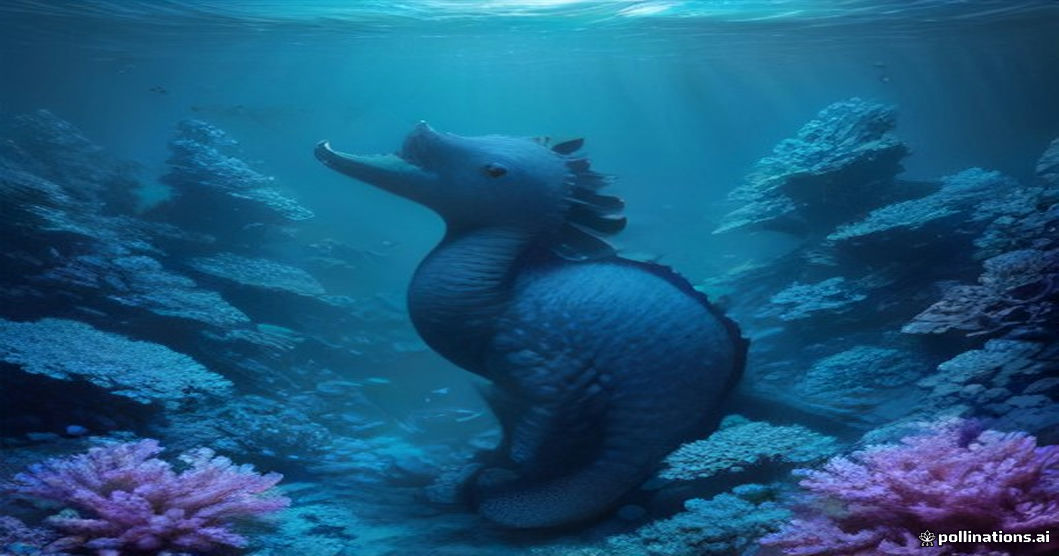
An Evolutionary Marvel of the Ocean
In the vast and diverse underwater kingdom, few creatures challenge traditional biological norms quite like the seahorse (genus Hippocampus). While the animal kingdom overwhelmingly assigns the role of pregnancy to females, these remarkable teleost fish have flipped the script, making male pregnancy one of nature’s most captivating phenomena.
The Brood Pouch: Nature’s Aquatic Placenta
The reproductive process begins with an elaborate courtship dance, after which the female seahorse deposits her mature eggs into a specialized pouch located on the male’s abdomen, known as the brood pouch or marsupium. Once the eggs are safely inside, the male fertilizes them internally.
Far from being a simple storage pocket, this highly vascularized pouch acts in a manner strikingly similar to a mammalian placenta. As a professional veterinarian and animal health expert, it is fascinating to observe how the male’s pouch actively adapts to support embryonic development. It provides vital oxygen through a dense network of capillaries, meticulously regulates the internal salt balance (osmoregulation) to ensure a safe aquatic environment for the growing embryos, and even secretes nutrient-rich fluids to nourish the developing young.
From Vulnerable Embryos to Independent Fry
After a gestation period that typically lasts anywhere from two to four weeks—depending on the species and water temperature—the male experiences intense muscular contractions to release the fry. With dramatic bursts, the father expels dozens, and sometimes hundreds, of microscopic, fully formed miniature seahorses into the water column.
Once birth is complete, the parental care concludes instantly. These tiny newborns must immediately fend for themselves in the vast ocean currents, relying solely on their innate survival instincts to hunt microscopic zooplankton and evade predators.
Conservation and Aquatic Welfare
Understanding the delicate biology and reproductive cycles of seahorses is crucial for marine conservationists and public aquarists alike. As human activities continue to impact coral reefs and seagrass meadows, protecting these iconic fish ensures that this extraordinary evolutionary wonder continues to thrive in our oceans for generations to come.
Written by Mohammed Murtaja
Editor-in-Chief & Executive Publisher of ZooPulse. Senior investigative journalist directing evidence-based research, veterinary science verification, and editorial governance.
Related Stories
 Uncategorized
The Lechwe Antelope: A Master of Savanna Wetlands and Aquatic Adaptations
As a veterinarian and wildlife enthusiast, I am always fascinated by how species evolve unique physiological traits to thrive in challenging environments. The Lechwe antelope (Kobus leche), a remarkable savanna dweller belonging to the waterbuck genus, stands out as a prime example of such evolutionary brilliance. Physical Characteristics and Sexual Dimorphism Standing at a maximum […]
 Uncategorized
Unveiling the Marabou Stork: Giants of the Avian World
Introduction to the Mighty Marabou Stork Among all storks, the marabou stands out for its truly impressive size and distinctive appearance. Scientifically categorized into three subspecies—Indian, African, and Javan—these magnificent birds command attention wherever they roam. Here, we take a closer look at the African marabou (Leptoptilos crumeniferus), a species known as much for its […]
 Uncategorized
Healing in the Shadow of Fujiyama: Veterinary Care and Pet Wellness Near Japan’s Iconic Peak
Introduction to Mount Fuji’s Unique Pet Culture Nestled in the breathtaking landscape surrounding Mount Fuji, or Fujiyama, the relationship between humans and their animal companions takes on a serene and harmonious quality. As one of Japan’s most revered cultural and natural landmarks, the Fujiyama region offers a unique blend of traditional Japanese pet care philosophies […]