Northwestern Australia Emerges as a Vital ‘Lifeboat’ for Endangered Green Sawfish
When people think of Australian wildlife, the green sawfish (Pristis zijsron) might not be the first creature that comes to mind. However, groundbreaking new research has revealed that northwestern Australian waters could serve as a crucial ‘lifeboat’ for this critically endangered species. A Global Stronghold for an Endangered Icon Easily recognized by the tooth-lined ‘saw’ […]
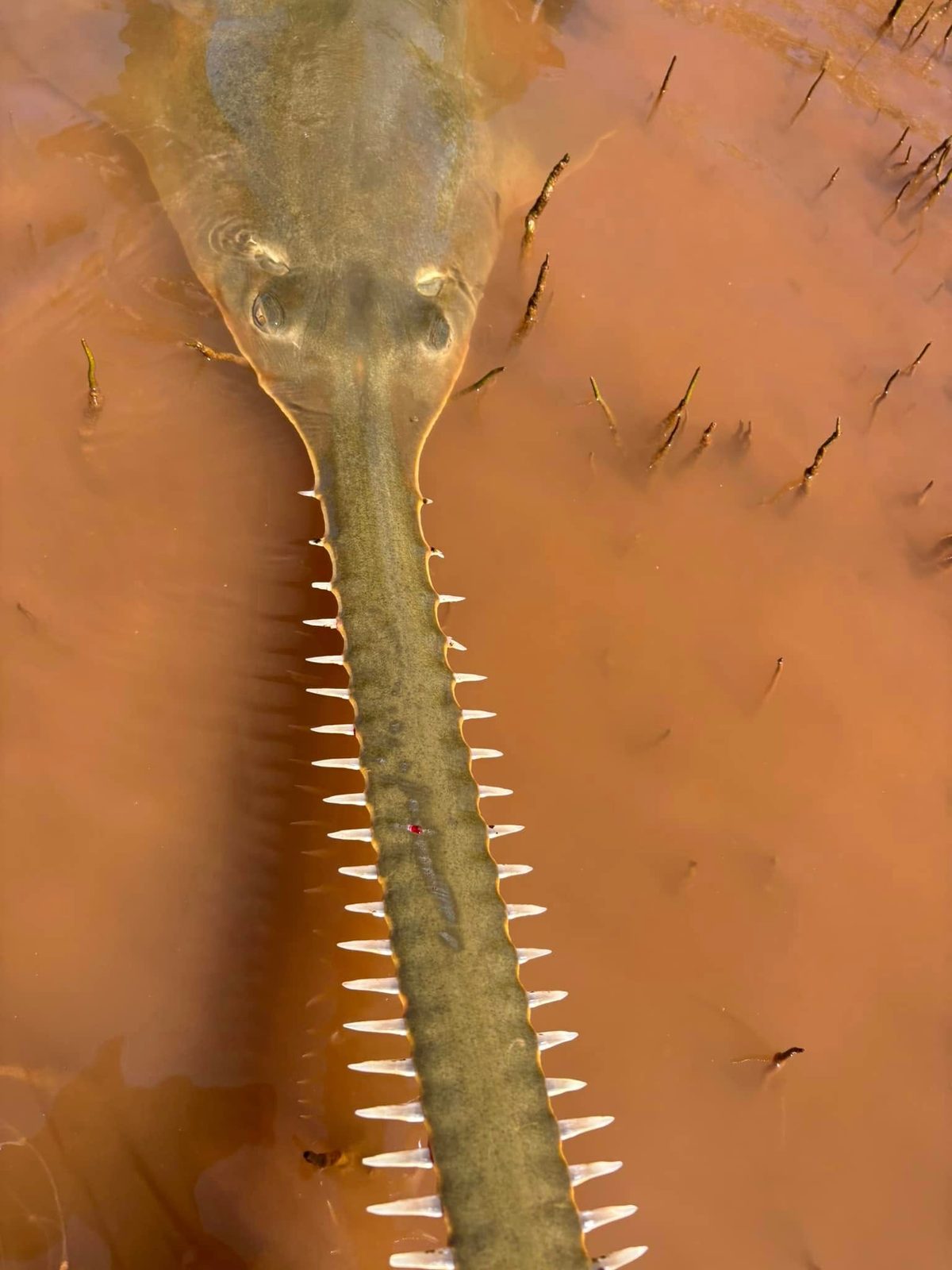
When people think of Australian wildlife, the green sawfish (Pristis zijsron) might not be the first creature that comes to mind. However, groundbreaking new research has revealed that northwestern Australian waters could serve as a crucial ‘lifeboat’ for this critically endangered species.
A Global Stronghold for an Endangered Icon
Easily recognized by the tooth-lined ‘saw’ on the front of their bodies and their unique coloration, green sawfish are currently on the verge of extinction primarily due to overfishing and habitat loss. Yet, a comprehensive study conducted by Murdoch University’s Centre for Sustainable Aquatic Ecosystems in Perth indicates that northwestern Australia could play a pivotal role in their ultimate recovery.
By reviewing decades of scientific research, a team of experts hoped to chart a clearer path for future conservation efforts. Lead author and Murdoch University researcher Jack Ingelbrecht noted that effective research depends heavily on available specimens, meaning opportunities are naturally higher where the species still thrives in relatively healthy numbers.
The Pilbara Region: A Critical Sanctuary
Published in the journal Reviews in Fish Biology and Fisheries, the study emphasizes that northern Australian waters represent one of the last remaining global strongholds for the green sawfish. While populations have been virtually wiped out across parts of Africa and southern Asia, Australia has maintained its status as a global leader in green sawfish research and preservation.
Within Western Australia, the Pilbara region stood out remarkably, boasting a research output higher than all other regions in the state combined. Associate Professor David Morgan, a co-author of the study, highlighted that the Pilbara continues to support relatively robust populations while offering essential critical habitats.
Bridging Knowledge Gaps for Future Conservation
Despite these positive findings, the review also pointed out significant knowledge gaps that must be urgently addressed. Researchers admitted that crucial data regarding the exact size of remaining populations, the precise locations of critical habitats, and the total number of mature individuals in the wild remains sparse.
Even so, the research team remains optimistic about the future. With targeted support, enhanced research initiatives, and robust conservation strategies, experts believe there is still a genuine opportunity to reverse the decline and ensure the long-term survival of the green sawfish.
Written by Mohammed Murtaja
Editor-in-Chief & Executive Publisher of ZooPulse. Senior investigative journalist directing evidence-based research, veterinary science verification, and editorial governance.
Related Stories
 Wildlife
Biomechanical Superiority: How the Crowned Eagle Crushes Primate Skulls
An in-depth veterinary analysis of Stephanoaetus coronatus, exploring its devastating pedal crushing force, hunting ecology, and urban conservation status.
 Wildlife
Rare Raptor Clash: Ornate Hawk-Eagle Slays Crested Owl in Costa Rica
Scientists in Costa Rica have documented an extraordinary and previously unrecorded predation event in the lowland forests of Corcovado National Park, capturing a rare interaction between three distinct raptor species. During a recent field excursion, researchers observed an ornate hawk-eagle (Spizaetus ornatus) successfully catching and killing a crested owl (Lophostrix cristata). According to authors Pablo […]
 Wildlife & Nature
Apex Predators and Trophic Cascades: How Keystone Wildlife Species Sustain Global Ecological Stability
From gray wolves in Yellowstone to tiger sharks in seagrass meadows, apex carnivores regulate ecosystem health from the top down. Discover the profound science of trophic cascades and modern wildlife conservation.