
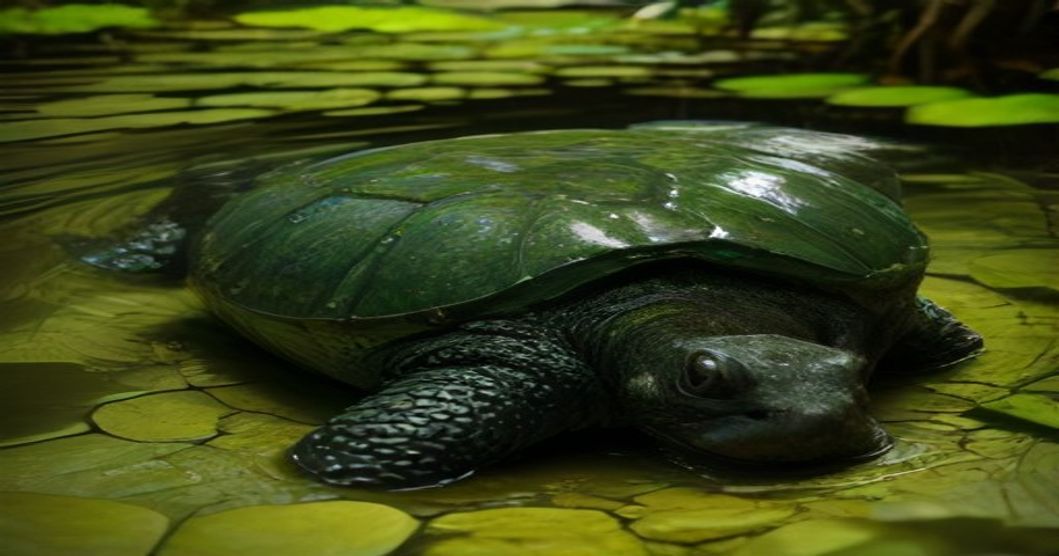
An Introduction to Chelydra Serpentina
The Common Snapping Turtle (Chelydra serpentina) is one of North America’s most iconic and misunderstood freshwater reptiles. Known for its prehistoric appearance and formidable reputation, this ancient species plays a vital role as both an apex predator and essential scavenger in aquatic ecosystems.
Impressive Anatomy and Physical Characteristics
A true heavy-weight among freshwater reptiles, the snapping turtle features a rugged carapace that can reach lengths of up to 35 centimeters. While standard adult specimens typically weigh around 14 kilograms, older or exceptionally well-nourished individuals can reach massive weights of up to 30 kilograms. Their physical structure includes a small, cross-shaped plastron (under-shell), a remarkably long and muscular neck, and a powerful tail lined with prominent dinosaur-like ridges.
Decoding the Famous Defensive ‘Snap’
The snapping turtle earned its common name due to its distinct defensive strategy when encountered on dry land. Because its reduced bottom shell leaves its limbs and soft tissues relatively exposed, the turtle feels uniquely vulnerable out of the water. To compensate, it swiftly extends its long, flexible neck and snaps its powerful, hooked beak with impressive speed and force. Interestingly, when fully submerged in water, snapping turtles are far more docile, usually preferring to glide away silently or conceal themselves in the muddy substrate when startled.
Extreme Cold Tolerance and Winter Brumation
One of the most biologically remarkable traits of Chelydra serpentina is its astonishing cold hardiness. In northern reaches of its geographic range, freezing temperatures force these reptiles into a state of winter hibernation (brumation) that can last from October all the way through May. During this extended period, they bury themselves deep in the mud at the bottom of lakes, ponds, and slow-moving rivers.
During brumation, their metabolic rate drops drastically, allowing them to survive under ice with minimal oxygen absorbed through specialized tissues in their throat and cloaca. Remarkably, these turtles remain active even under severe cold conditions; wildlife observers occasionally spot them slowly swimming beneath transparent surface ice or even walking across frozen landscapes during temporary winter thaws.
Coexisting Safely with Wildlife
Understanding the natural instincts and physiological adaptations of the snapping turtle allows us to appreciate its ecological value. During late spring and early summer, females often trek overland to locate suitable egg-nesting sites. If you cross paths with a snapping turtle on land, it is best to observe from a respectful distance and let this resilient reptile continue its ancient journey uninterrupted.