
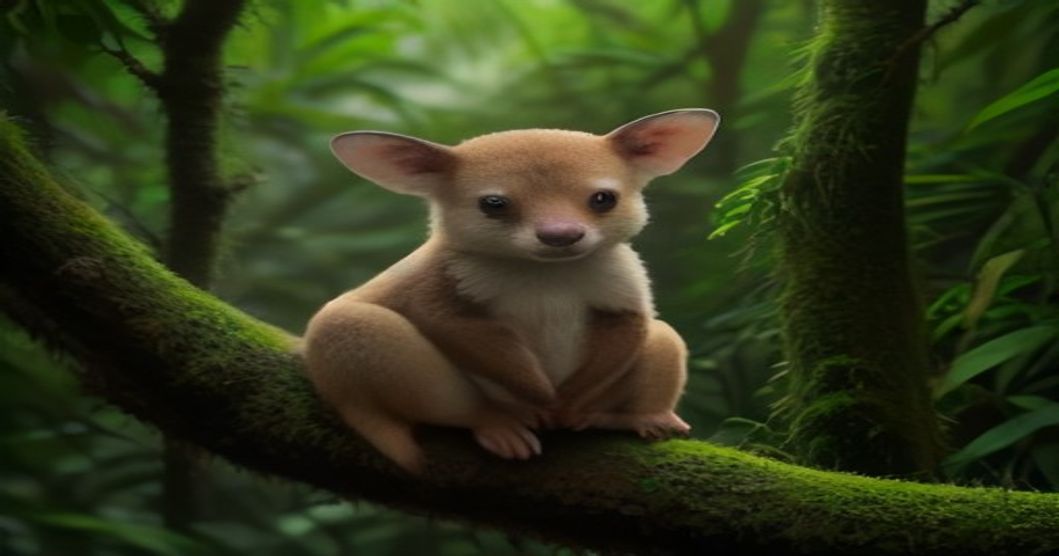
Meet the Tree Kangaroo (Dendrolagus)
When we think of kangaroos, the vast, dusty plains of Australia usually come to mind. However, the animal kingdom holds endless surprises, including a remarkable marsupial that has traded the ground for the treetops: the tree kangaroo, belonging to the genus Dendrolagus. As a veterinarian and pet care expert, I am always fascinated by how species adapt to their environments, and the tree kangaroo is a prime example of evolutionary ingenuity.
Adapted for an Arboreal Lifestyle
Like their terrestrial cousins, tree kangaroos possess a long tail and a specialized pouch for carrying their young. However, they are much smaller in size and have evolved specific physical traits for life high in the forest canopy. Instead of hopping across the ground, they leap gracefully from branch to branch. Their heavily curved claws provide a secure grip on tree bark, while their long, powerful tails act as dynamic balancing poles during daring leaps.
Clumsy on Land, Fearless in the Air
While they are absolute acrobats in the trees, tree kangaroos are a stark contrast when they touch the ground. Because their hind legs are relatively short and their tails are quite heavy, their terrestrial locomotion is slow and somewhat clumsy. Consequently, they rarely descend from the safety of the canopy. When they do need to move between distant trees or escape danger, however, they display breathtaking agility—easily leaping from heights of up to ten meters (and sometimes up to a staggering 18 meters or 60 feet!) between trees.
Life High Above the Forest Floor
Living high in the trees offers significant evolutionary advantages. Up in the lush canopy, tree kangaroos face very few natural predators and enjoy an abundant supply of nutritious plant food, including leaves, fruits, and bark. Their specialized digestive systems are well-adapted to process this fibrous herbivorous diet. Understanding the unique biology and behavioral needs of such specialized exotic animals reminds us of the incredible diversity of mammalian life and the importance of preserving their natural forest habitats.