
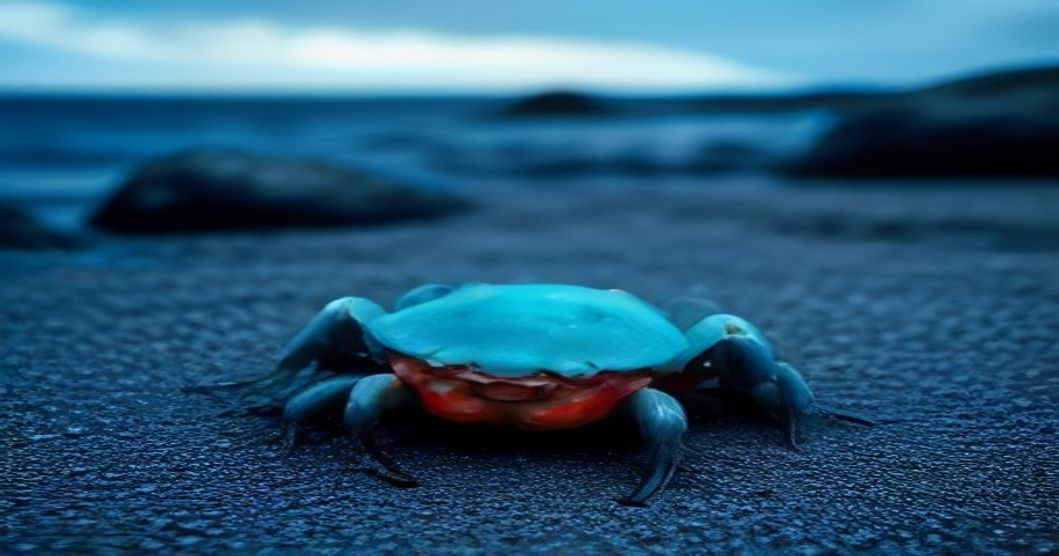
The Agile Acrobats of the Shore
In the rugged volcanic landscapes of the Galapagos Islands, the Grapsus grapsus—commonly known as the Sally Lightfoot crab—performs a daily feat of survival. These vibrant crustaceans are masters of the intertidal zone, famous for their breathtaking agility. Their common name, which traces back to a Caribbean dancer, perfectly describes their fluid, swift movements across jagged lava rocks.
Masters of Evasion
These crabs have earned the nickname “Lightfoot” for a reason. Equipped with remarkable speed and the ability to climb near-vertical slopes, they appear to dance across the coastline. Their primary mission? Avoiding the water. While they are aquatic creatures, they spend much of their time on land, utilizing their superior jumping and scrambling skills to navigate the hazardous terrain and escape predators.
A Deadly Partnership
However, the land is far from safe. A sophisticated predator, the Echidna catenata (or Chain Moray eel), often teams up with local octopuses in a rare, strategic display of interspecies cooperation. These hunters will literally slither onto the shoreline to ambush the crabs, turning the rocky coast into a high-stakes hunting ground. Observing the Sally Lightfoot crab as it navigates this precarious environment is a testament to the evolutionary marvels of the Galapagos, where every leap is a calculated move for survival.