
Introduction to the Sultan’s Bird
The Purple Swamphen, scientifically celebrated and often majestically referred to as ‘Sultan’s Bird,’ is one of the most visually arresting waterfowl species found across the Eastern Hemisphere. Spanning regions from Europe and Africa all the way to Australia and New Zealand, this remarkable avian thrives primarily in tropical and subtropical climates.
Habitat and Secretive Lifestyle
In our cooler latitudes, spotting a Purple Swamphen is an exceptional rarity, leading to its protected status in the Red Books of several countries. These birds naturally inhabit the tranquil shores of marshes, small lakes, and sheltered sea bays that feature dense thickets of reeds, sedges, or bulrushes. They tend to spend the vast majority of their lives in secretive seclusion within these lush aquatic sanctuaries.
Diet and Unique Physical Adaptations
As an omnivorous forager, the Purple Swamphen primarily feeds on various tender parts of aquatic plants. To a lesser extent, its diet is supplemented by snails, small crustaceans, insects, fish eggs, and frogs. A closer look at the bird reveals its exceptionally long toes—a brilliant evolutionary adaptation that allows it to walk effortlessly across shallow water by distributing its weight over floating leaves and the intricate root systems of aquatic vegetation.
A Striking Appearance
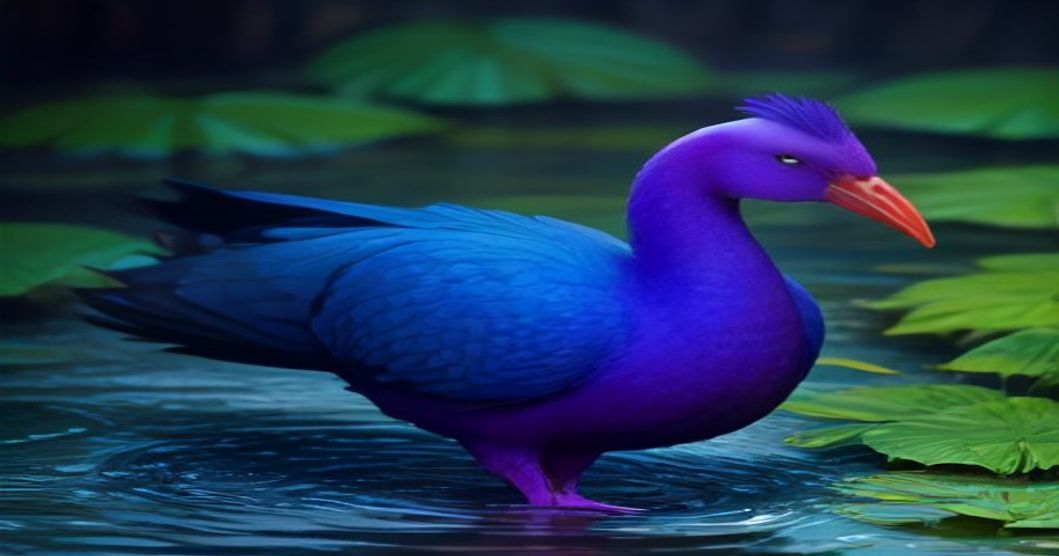
Beyond its ecological fascinating traits, the Purple Swamphen is globally recognized for its breathtaking beauty. It boasts vibrant, iridescent purple-blue plumage contrasted dramatically by a bold red bill and a distinctive, stark white shield on its forehead, making it a true masterpiece of the natural world.