
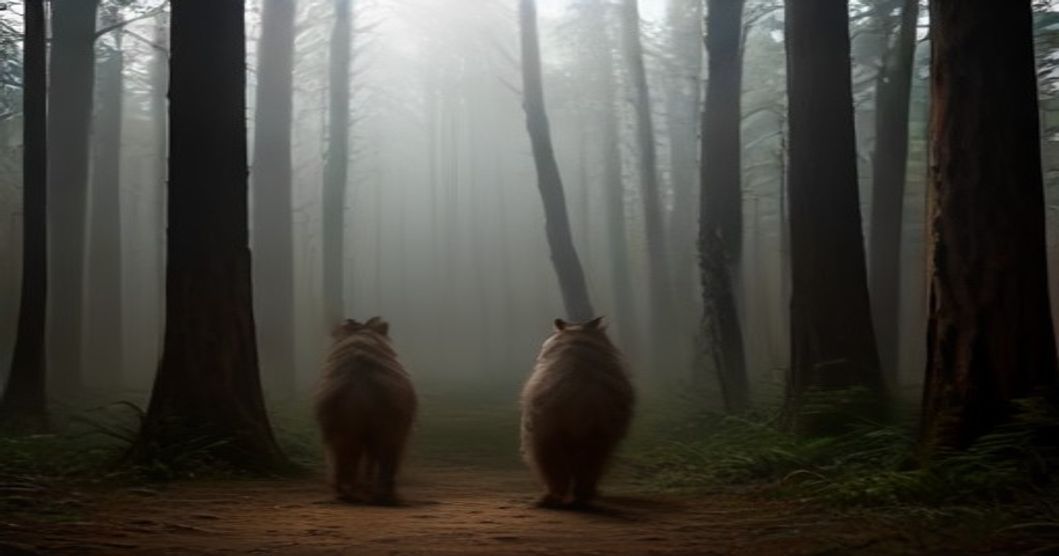
In the annals of natural history, few creatures possess a legacy as enigmatic and poignant as the Tasmanian Tiger (Thylacinus cynocephalus). As the largest native carnivorous marsupial to survive into modern times, this apex predator occupied a vital ecological niche in the Australian ecosystem. Despite its common name and tiger-like stripes, the thylacine was neither a feline nor a canine, but a unique product of millions of years of evolutionary isolation.
A Masterclass in Convergent Evolution
From a veterinary and anatomical perspective, the Tasmanian Tiger stands as one of the most extraordinary examples of convergent evolution ever documented. Convergent evolution occurs when unrelated species independently evolve similar physical and behavioral traits to adapt to comparable ecological roles. To the untrained eye, the thylacine closely resembled a large wild dog or wolf, complete with a stiff tail, powerful jaws, and a digitigrade stance designed for efficient movement across varied terrain.
However, beneath its canine-like exterior lay the biology of a marsupial. Like kangaroos and koalas, female thylacines possessed a pouch—albeit one that opened rearward—where they nurtured and carried their young. They possessed a wide jaw gape, capable of opening to an astonishing 80 degrees, a feature distinct from any modern wild canid. This striking combination of dog-like predatory adaptations and marsupial reproductive biology made the thylacine a truly singular creature in the animal kingdom.
From Mainland Dominance to Island Refuge
Paleontological evidence indicates that just a few thousand years ago, thylacines roamed extensively across mainland Australia and New Guinea. However, shifting climatic conditions, competition with introduced species such as the dingo, and changing prey dynamics eventually led to their complete disappearance from the mainland prior to European colonization.
The island of Tasmania became the species’ final refuge. Isolated from mainland pressures, a stable population thrived in the dense forests and open grasslands of the island. Regrettably, the arrival of European settlers in the 19th century brought catastrophic pressure upon the remaining population. Misguidedly labeled as a threat to livestock, intensive bounty hunting, combined with habitat fragmentation and potential introduced diseases, rapidly decimated the thylacine population within decades.
The Final Chapter and the Legacy of Benjamin
The tragic turning point for the species came in 1936. In a Hobart zoo, the last known living thylacine—a male named Benjamin—succumbed to exposure and neglect. With his passing, an entire evolutionary lineage was brought to a sudden end. Shortly thereafter, the species was officially declared extinct, serving as a stark reminder of humanity’s impact on vulnerable wildlife populations.
Despite official extinction status, the Tasmanian Tiger continues to hold a powerful grip on the popular imagination. Dense, unexplored regions of Tasmania frequently yield alleged sightings and unverified reports from hopeful enthusiasts. While rigorous scientific consensus confirms that the species is gone, these ongoing searches highlight our deep collective fascination with this lost predator and the enduring mystery of Australia’s wild places.