
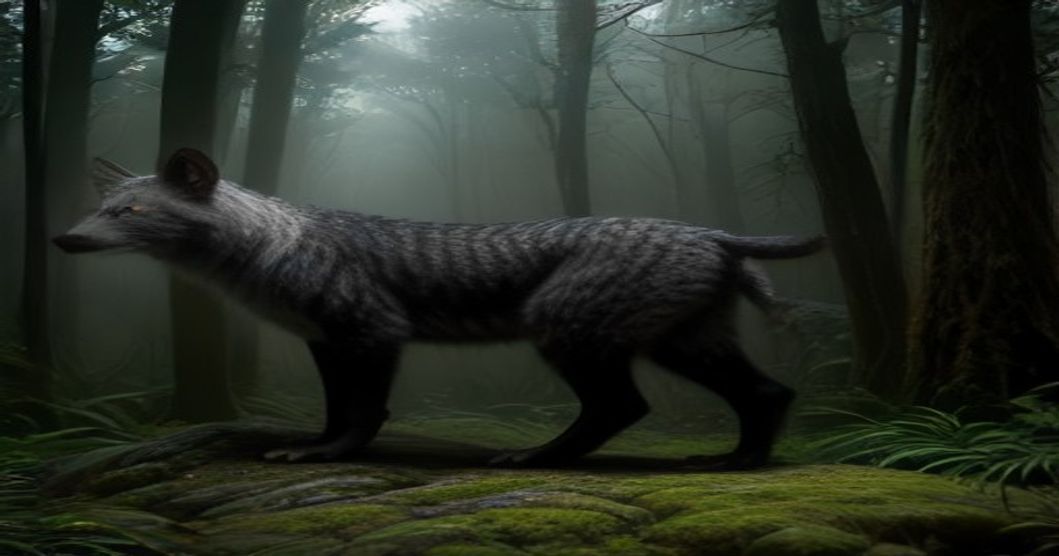
The Tasmanian Tiger, scientifically known as Thylacinus cynocephalus, stands as one of the most intriguing and tragic figures in modern natural history. As the largest native apex predator in Australia to survive into the 20th century, this extraordinary creature occupied a unique ecological niche. Despite its common name, the Tasmanian Tiger was not a feline at all, but rather a carnivorous marsupial closely related to kangaroos and wombats, complete with a abdominal pouch to carry its young.
An Evolutionary Wonder: Convergent Evolution at Its Peak
To the untrained eye, the thylacine strongly resembled a medium-to-large dog or wolf, characterized by a stiff tail, a head shape surprisingly similar to a canine, and distinctive dark transverse stripes across its lower back. This remarkable likeness is one of the biology world’s premier examples of convergent evolution. Living thousands of miles apart and stemming from vastly different evolutionary lineages, canines and thylacines independently developed almost identical physical forms and hunting behaviors to adapt to similar ecological roles in their respective environments.
From Continent-Wide Roamer to Island Sanctuary
Paleontological evidence indicates that just a few thousand years ago, the Tasmanian Tiger roamed widely across the entire Australian mainland and New Guinea. However, factors such as competition with introduced dingoes and changing climatic conditions eventually drove the mainland population to extinction. By the time European settlers arrived in the 18th century, the species had become restricted entirely to the lush, isolated wilderness of the island of Tasmania.
The Tragedy of Extinction
The arrival of European colonists marked the beginning of the end for the thylacine. Erroneously blamed for widespread livestock predation, the animal faced intense eradication campaigns, habitat destruction, and bounty hunting sponsored by governments and private farming enterprises. The population crashed rapidly. In September 1936, the last known living Tasmanian Tiger—a male affectionately named Benjamin—passed away due to exposure in a private zoo in Hobart, just months after the species was granted official protected status.
Modern Echoes and Scientific Legacy
Although the international scientific community universally agrees that the Tasmanian Tiger is extinct, its legacy endures. Remote areas of Tasmania continue to attract cryptozoologists and enthusiasts who hold out hope that small, elusive populations might still survive hidden deep within untouched rainforests. While reported sightings remain unverified, modern genetic science has turned its focus toward the thylacine, using preserved specimens to explore possibilities of de-extinction. Ultimately, the story of Thylacinus cynocephalus serves as a powerful, cautionary reminder of humanity’s impact on vulnerable wildlife and the critical importance of modern biodiversity conservation.