
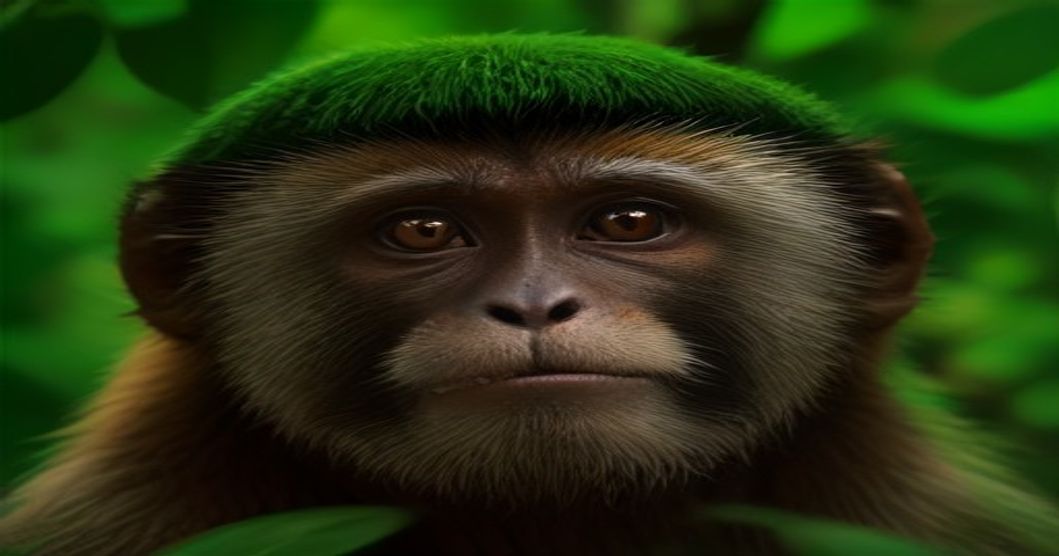
Introduction to De Brazza’s Monkey
Native to the lush landscapes of Central Africa, De Brazza’s Monkey (Cercopithecus neglectus) is one of the most visually striking and fascinating primate species. Named in honor of the renowned French explorer Pierre de Brazza, these arboreal creatures captivate wildlife enthusiasts and researchers alike with their unique appearance and remarkable survival strategies.
Distinctive Appearance and Natural Camouflage
One of the most remarkable features of De Brazza’s monkeys is their distinct coloration. They boast a vibrant orange forehead stripe coupled with striking white facial fur that gracefully forms what looks like a distinguished “beard and mustache.” This unique facial patterning is not just for show; it plays a critical role in their survival. Thriving in diverse habitats ranging from dry mountain forests to marshy areas with tall grasses, their coat allows them to blend seamlessly with the dense green vegetation. When faced with a potential threat, these master illusionists freeze instantly, rendering themselves nearly invisible to predators.
Social Structure and Sexual Dimorphism
De Brazza’s monkeys maintain a tightly knit social structure, typically living in small family groups. Each group is led by a single dominant male. This species exhibits pronounced sexual dimorphism, meaning there is a significant physical size difference between the sexes—the dominant male is often nearly twice the size of the females, establishing a clear hierarchy within the family unit.
Diet and Foraging Behavior
Primarily arboreal by nature, De Brazza’s monkeys spend a significant portion of their lives high up in the forest canopy. Their diverse diet consists mainly of seeds, leaves, fresh fruits, and insects. However, they are opportunistic feeders and will occasionally supplement their diet with bird eggs, small chicks, and even small reptiles. While they prefer the safety of the trees, they do not hesitate to descend to the ground when searching for choice food items.
Conservation and Conclusion
As a veterinarian and pet care expert, studying wild primates like De Brazza’s monkey reminds us of the incredible diversity and adaptability of animal life. Protecting their natural habitats in Central Africa is crucial to ensuring these magnificent masters of disguise continue to thrive in the wild for generations to come.