
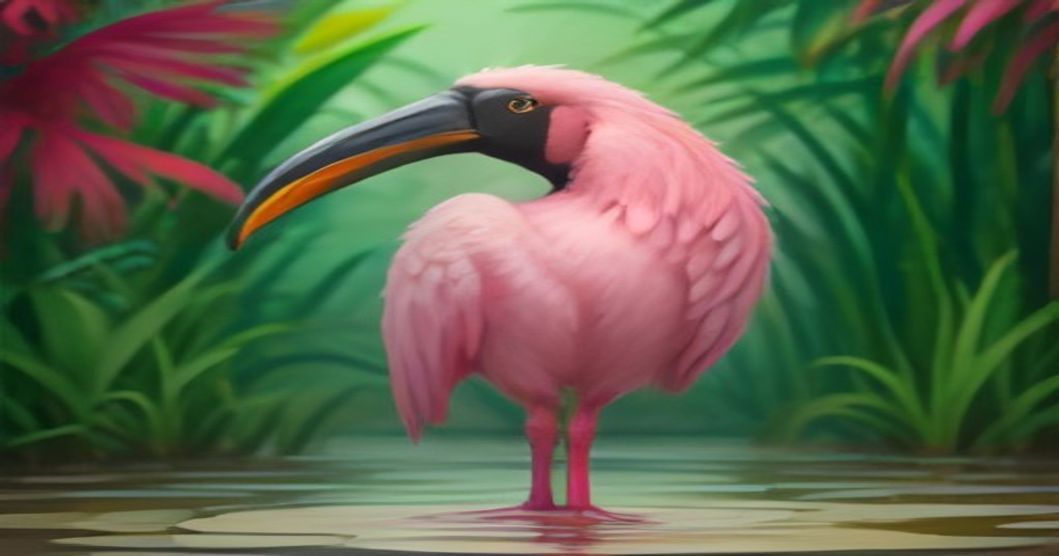
Harmonious Coexistence in the Aviary Pond
In the vibrant ecosystems of mixed-species habitats, fascinating social dynamics often emerge. Toucans (Rhamphastos sulfuratus) and Roseate Spoonbills (Ajaia ajaia) frequently share a pond in apparent peace, though keen observers might notice the spoonbills often act as if they hold a higher social status. This delightful contrast in personality and appearance makes them favorites among wildlife enthusiasts and aviculturists alike.
The Marvel of the Spoon-Shaped Bill
Did you notice the funny spoon-shaped bill of the Roseate Spoonbill? This specialized anatomical feature is a marvel of evolutionary adaptation, perfectly designed for sweeping side-to-side to strain mud and water. As a professional veterinarian, I often marvel at how form meets function in avian biology; this unique bill allows the spoonbill to expertly forage for a diverse diet consisting of small aquatic animals, including crustaceans—which are actually the biological source of their stunning pink and red plumage—along with insects and their larvae, mollusks, frogs, and small fish.
Conservation History and Migration Vulnerability
Beyond their striking appearance, these birds carry a sobering historical legacy. In a fascinating fun fact of fashion history, the feathers of Roseate Spoonbills were once extraordinarily prized by designers to adorn ladies’ dresses, a practice that drove the species to the brink of near extinction. Today, while conservation efforts ensure they are relatively safe at their primary nesting sites, these magnificent birds still face significant threats from illegal hunting during their winter migrations across South America.
Behavioral Quirks and Roosting Habits
Understanding avian behavior provides deep insight into their health and welfare. Roseate Spoonbills, much like other stork-like wading birds, exhibit a distinct flight pattern, soaring with their heads stretched forward in a long, elegant line. Throughout the day, they frequently exhibit a classic resting posture, dozing while standing steadfastly on one leg and tucking their distinctive bill securely against their chest or under their wing. As night falls, they seek safety by roosting in well-hidden, secluded spots nestled deep within impenetrable swamps, safeguarding themselves from potential nocturnal predators.