
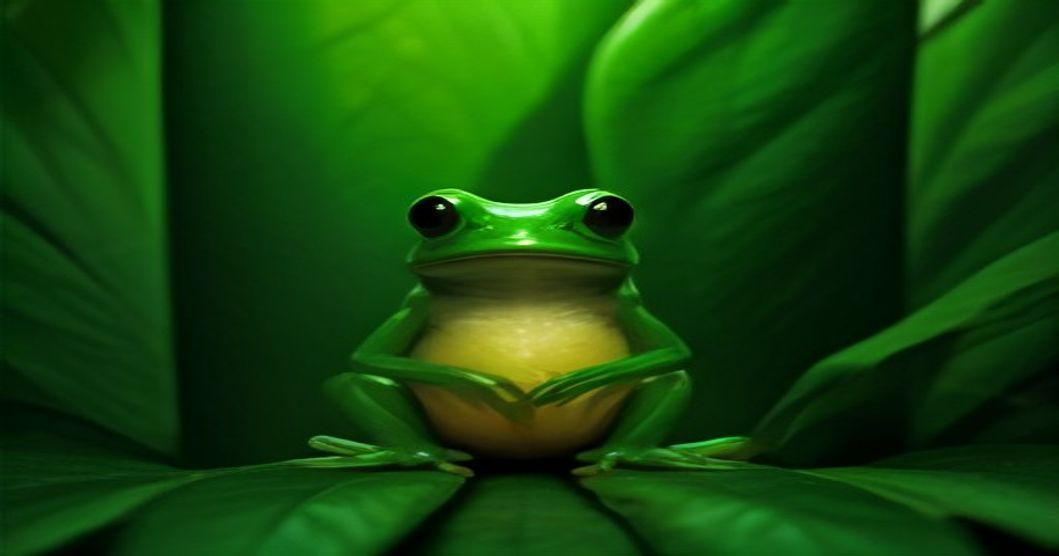
Meet the Remarkable Glass Frog
Hailing from the lush rainforests of South and Central America, the glass frog (family Centrolenidae) is one of the most mesmerizing amphibians on our planet. Famed for their remarkable translucent skin, these tiny tree-dwellers offer a literal window into their biology, allowing observers to see their internal organs—including their beating hearts—pumping away beneath the surface.
The Evolutionary Advantage of Transparency
While their translucent appearance makes them a marvel to behold, it is actually a vital evolutionary survival mechanism. Because their skin is so thin and transparent, sunlight partially passes right through them, casting only a very faint shadow. When these frogs rest on the undersides of tree leaves, their silhouettes remain invisible to hungry predators lurking below.
How Edge Diffusion Protects Against Predators
From above, staying hidden is equally important. Researchers studying these unique amphibians photographed 55 glass frogs against both green leaves and a white background. Using advanced computer analysis designed to mimic the vision of various natural predators, the scientists evaluated the frogs’ color and outlines. They discovered that the frogs naturally appeared lighter or darker depending on the immediate background.
Interestingly, this adaptive visual effect is not achieved through active color change—like the mechanisms seen in chameleons—but is instead a passive benefit of their semi-transparency. The researchers noted that the visible brightness of their more transparent limbs changed significantly more than that of their main body, effectively blurring their outline and helping them seamlessly blend into the vibrant foliage of their rainforest habitat.