
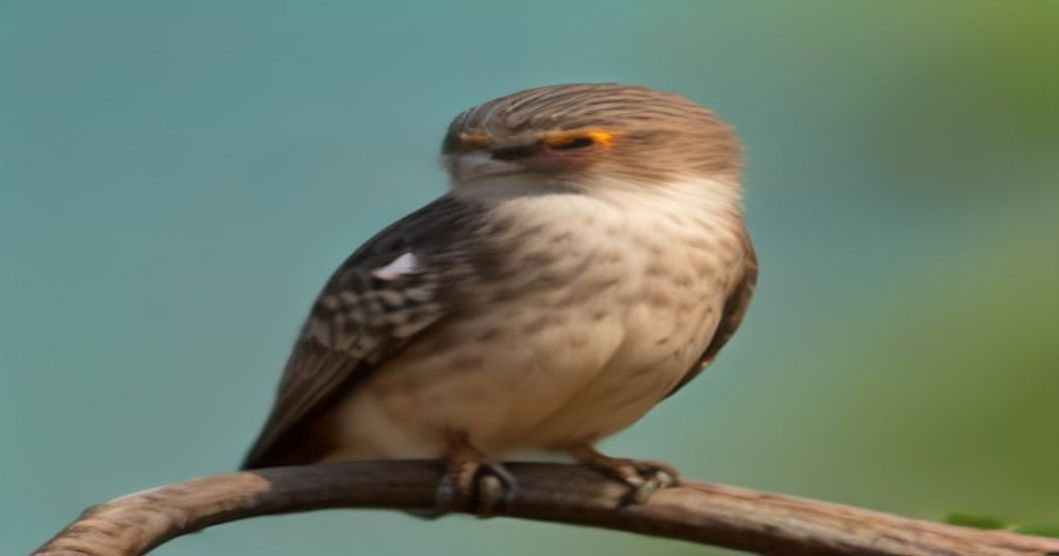
When we think of raptors, majestic creatures like bald eagles or soaring hawks often come to mind. However, the animal kingdom holds incredible diversity at the opposite end of the size spectrum. Enter the African pygmy falcon (Polihierax semitorquatus), the smallest bird of prey on the entire African continent. Measuring a mere 19 to 20 centimeters in length and weighing less than a golf ball, this pint-sized predator commands our attention not through sheer size, but through its fierce tenacity, fascinating social structures, and remarkable survival strategies.
Habitat and Distribution: Surviving the Arid Scrub
Native to the arid and semi-arid regions of eastern and southern Africa, the African pygmy falcon thrives in dry savanna and scrubland environments. These resilient birds are uniquely adapted to harsh climates where water is scarce. Rather than building elaborate nests from scratch, they exhibit a brilliant ecological partnership by moving into the abandoned stick nests of sociable weavers—large, apartment-like communal nests built in acacia trees. By utilizing these ready-made structures, African pygmy falcons gain protection from the scorching sun, freezing night temperatures, and potential predators.
Diet and Hunting Prowess
Despite weighing a mere 60 grams, the African pygmy falcon is a formidable carnivore. Its diet consists primarily of large insects, such as grasshoppers, beetles, and locusts, but it is also fully capable of taking small lizards, rodents, and occasionally small passerine birds. Utilizing a ‘sit-and-wait’ hunting strategy, the falcon perches quietly on an exposed branch, scanning the ground below before launching into a rapid, agile dive to snatch its unsuspecting prey with razor-sharp talons.
Social Structure and Breeding Habits
One of the most intriguing aspects of the African pygmy falcon is its complex social behavior. Unlike many solitary raptors, they often live in small family groups consisting of a breeding pair and several ‘helpers’—usually offspring from previous clutches. These helpers assist in defending the territory, feeding the incubating female, and caring for the newly hatched chicks. This cooperative breeding system significantly increases the survival rate of the young in a challenging and unpredictable environment.
Conservation Status and Human Interaction
Currently, the African pygmy falcon is classified as a species of Least Concern by the IUCN, thanks to its wide distribution and stable population numbers. However, like many African wildlife species, they face localized threats from habitat degradation and climate change altering their arid ecosystems. As a veterinarian and avian conservation advocate, I cannot stress enough the importance of preserving these unique natural habitats, ensuring that even the smallest predators continue to thrive in the wild.