
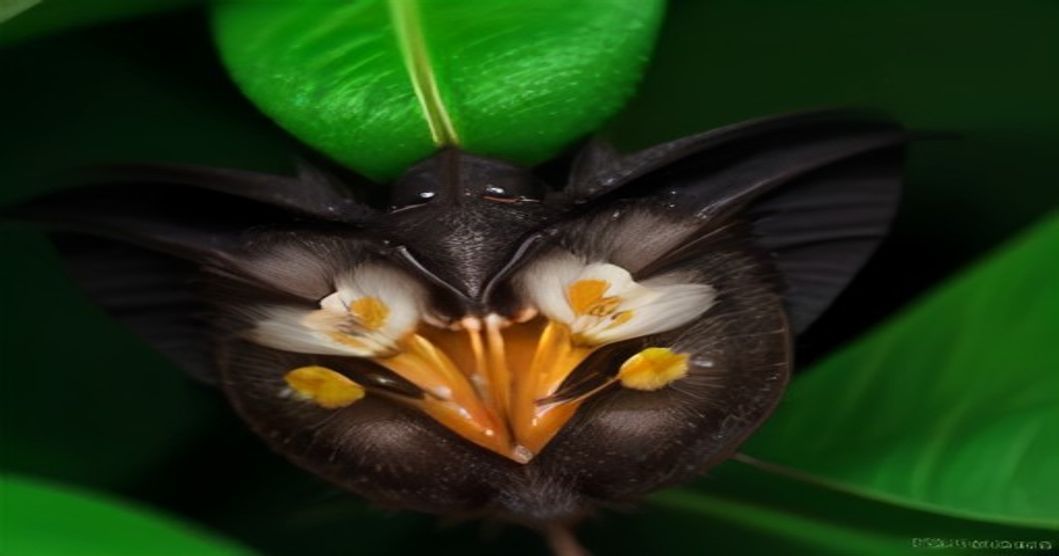
Anatomy of a Record-Breaker
In the fascinating world of mammalian biology, few creatures boast adaptations as extreme as the tube-nosed bat (Anoura fistulata). Most notably, this remarkable species possesses a tongue that stretches nearly 8.5 centimeters in length—an astonishing 1.5 times the length of its entire body. To put this into perspective, this places the tube-nosed bat as a record-holder among all mammals, second only to chameleons in the entire vertebrate kingdom.
The Perfect Evolutionary Match
This incredible anatomical feature is not just for show; it is an evolutionary masterpiece designed for a very specific purpose. The tube-nosed bat relies on its exceptionally long tongue to reach deep into the nectar of the Centropogon nigrican flower, a plant featuring an equally impressive and deep corolla. This specialized feeding mechanism ensures a reliable food source for the bat while facilitating a vital ecological partnership.
Crucial Ecosystem Contributions
Beyond their fascinating physical traits, nectar bats play an irreplaceable role in their natural habitats. As they travel from flower to flower in search of sustenance, they act as crucial pollinators, directly aiding in plant reproduction and helping to maintain the delicate biodiversity of their tropical ecosystems. Understanding and protecting these unique flying mammals is essential for preserving the health of our planet’s interconnected natural networks.