
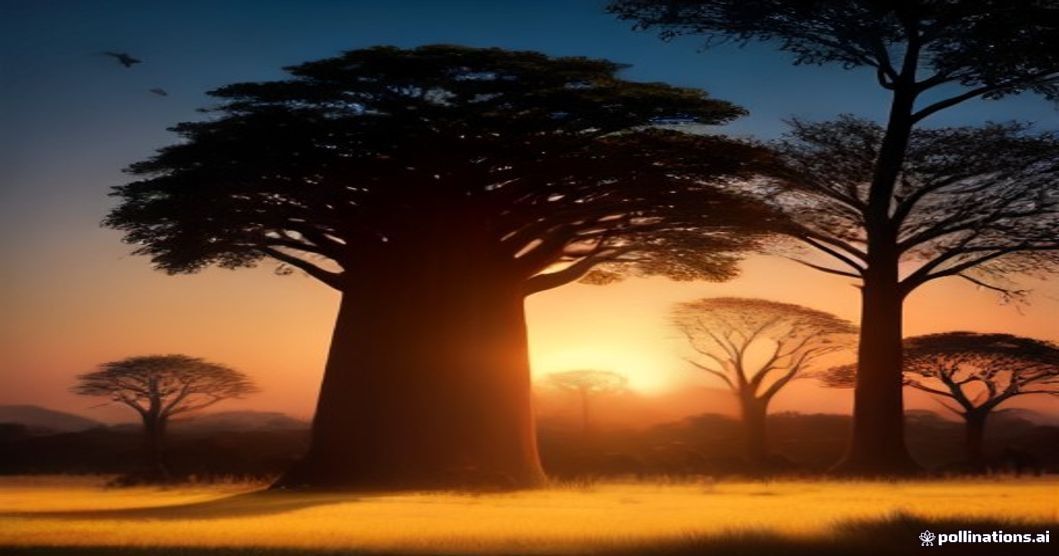
When exploring the breathtaking landscapes of the African savanna, one botanical giant immediately commands attention: the Adansonia digitata, commonly known as the African baobab. Often celebrated as one of the thickest and longest-lived trees in the world, this iconic symbol of the wild is far more than just a magnificent plant—it is a cornerstone of survival for countless animal species.
A Living Oasis in Arid Lands
With trunks that can expand to immense proportions, baobabs act as natural reservoirs. During the harsh dry seasons, their spongy wood stores millions of liters of water. For veterinary experts and wildlife conservationists, the baobab is recognized as a vital lifeline. Elephants, baboons, and various bird species frequently strip the bark or chew on the trunk to extract moisture when waterholes dry up, showcasing the tree’s indispensable ecological value.
Habitat and Sanctuary for Wildlife
Beyond hydration, the massive hollows and sprawling branches of ancient baobabs provide critical shelter. Birds of prey, such as the Verreaux’s eagle-owl, frequently nest in their upper canopy, while reptiles, bats, and small mammals find safe refuge within the tree’s natural cavities. From a zoological perspective, the preservation of these botanical giants is directly tied to the health and biodiversity of the local fauna.