
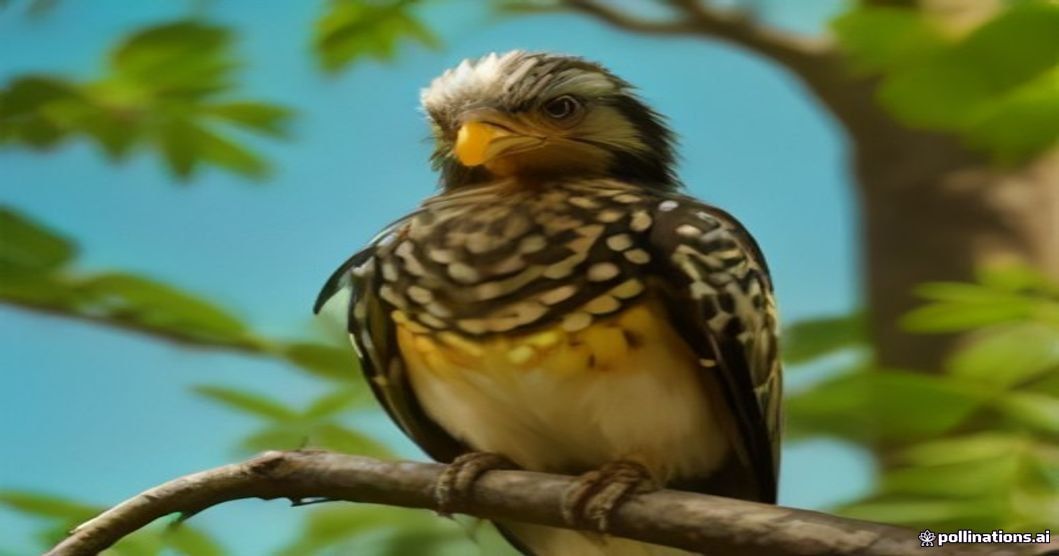
Introduction to the Southern Yellow-billed Hornbill
Native to the sun-drenched savannas and woodlands of southern Africa—including Angola, Namibia, Botswana, South Africa, and Mozambique—the Southern Yellow-billed Hornbill (Tockus leucomelas) is a truly captivating avian species. Measuring between 40 to 60 cm in length, this medium-sized bird is well-adapted to the arid and semi-arid environments it calls home.
Distinctive Physical Characteristics
This species is instantly recognizable by its magnificent, curved long yellow bill, which features a prominent casque at the base. Interestingly, this casque is a sexually dimorphic trait, meaning it is only present in males. Complementing their striking bill is the bare skin around their eyes and distinct cheek patches, which glow in a vibrant, contrasting red color, adding to the bird’s charismatic appearance.
Diet and Foraging Behavior
Southern Yellow-billed Hornbills are primarily ground-foragers, spending a significant portion of their day walking across the earth in search of sustenance. Their omnivorous diet includes a rich variety of seeds, small insects, spiders, and even venomous scorpions. However, during the harsh dry season when resources are scarce, their preferred meals shift to swarming termites and ants, which provide vital hydration and energy.
Remarkable Nesting Habits
One of the most fascinating aspects of the Southern Yellow-billed Hornbill’s biology is its unique and highly specialized breeding behavior. During the nesting season, the female confines herself inside a secure tree cavity. Using a mixture of mud, food remains, and her own droppings, she essentially seals the entrance from the inside, leaving only a tiny vertical slit. Throughout incubation and the early rearing stages, the dedicated male acts as the sole provider, delivering food to his imprisoned mate and their developing chicks through the narrow opening.