
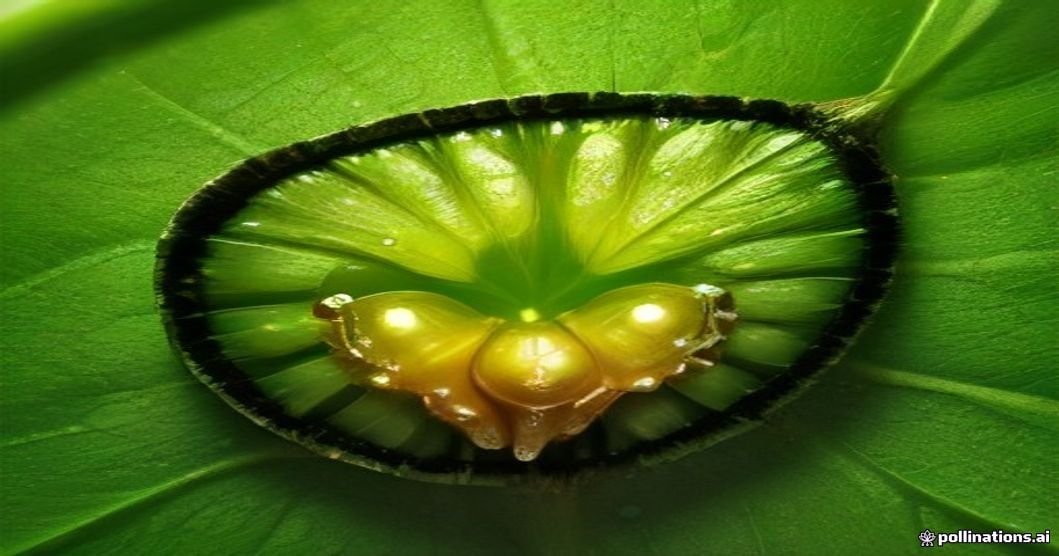
In the vast tapestry of North American entomology, few specimens evoke as much wonder as the golden tortoise beetle (Charidotella sexpunctata). Measuring a modest 5 to 7 millimeters in length, this diminutive member of the leaf beetle family (Chrysomelidae)—and distant relative of the notorious Colorado potato beetle—resembles a droplet of molten gold rather than a living insect. Beneath its striking exterior lies a masterclass in structural coloration, specialized feeding ecology, and dynamic physiological adaptation.
Taxonomy and Morphological Marvels
The golden tortoise beetle derives its common name from its carapace-like shell, which extends outward in wide, transparent margins reminiscent of a tortoise’s shell. This expanded cuticle shields the beetle’s delicate ventral anatomy while granting it an almost supernatural appearance. Within this transparent perimeter sits an opaque dome that glimmers with the luster of polished gold, often accented by subtle undertones of iridescent green, copper, and rose.
Its appendicular anatomy provides functional elegance. The legs and antennae display a vivid, clear yellow coloration, with the antennae concluding in contrasting, black clubbed tips that house sensitive chemoreceptors. These sensory structures allow the beetle to navigate foliage, identify conspecifics, and detect host plants with remarkable precision.
Structural Optics: The Secret to Shifting Hues
Perhaps the most extraordinary feature of Charidotella sexpunctata is its ability to rapidly alter its coloration. Unlike organisms that rely strictly on chemical pigments, the beetle’s metallic brilliance is an optical illusion created by structural coloration. The outer shell contains microscopic, tiered cuticular layers interspersed with tiny fluid-filled channels.
Through neuromuscular control, the beetle operates microscopic valves that regulate the moisture level between these layers. When fully hydrated, the smooth liquid layers reflect light uniformly, mimicking a brilliant, mirror-like gold nugget. Under stress, mating arousal, or changing environmental conditions, the beetle drains this fluid, disrupting the reflective interference and transforming the insect into an unreflective, dull brownish-orange or reddish hue. This dynamic camouflage serves as a sophisticated survival mechanism against avian and predatory insect threats.
Dietary Specialization and Ecological Impact
From an ecological standpoint, the golden tortoise beetle maintains a highly selective diet. It is an obligate feeder on specific members of the morning glory family (Convolvulaceae), primarily feeding upon sweet potato leaves, field bindweed, and wild morning glory native to its geographic range. Both the larvae and adults feed on the foliage, chewing small, characteristic ‘shot-holes’ into the leaves.
Larval stages exhibit their own eccentric defensive strategy: they carry a ‘fecal shield’ constructed of cast skins and frass held over their bodies via specialized caudal forks, deterring predators through physical and chemical repulsion. While heavy infestations on agricultural sweet potato crops can cause cosmetic foliage damage, their populations rarely reach economically devastating thresholds, making them a largely harmless curiosity in balanced garden ecosystems.
Preserving Micro-Biodiversity
In the study of veterinary and entomological sciences, macro-invertebrates like the golden tortoise beetle underscore the critical importance of micro-habitats. Their specialized dietary relationships and complex optical bio-mechanisms remind researchers and naturalists alike that remarkable physiological adaptations often thrive in the most delicate, overlooked corners of the natural world.