
Unraveling the Wilderness Myth
For generations, popular culture and wildlife folklore have painted a vivid picture of the lynx: a stealthy phantom of the forest, perched high upon snow-dusted tree branches, waiting to plunge dramatically onto unsuspecting prey below. However, as any wildlife biologist or veterinarian specializing in carnivorous mammal behavior will tell you, this cinematic image is largely a misconception.
The Ground-Level Reality
Contrary to popular belief, the lynx does not typically jump on prey from tree branches. While these magnificent wild felines are undeniably agile and fully capable of climbing trees to escape danger or survey their territory, arboreal ambush is simply not their primary hunting strategy. Instead, the lynx is primarily a terrestrial hunter, relying on patience, camouflage, and stealth at ground level.
Mastering the Art of the Ambush
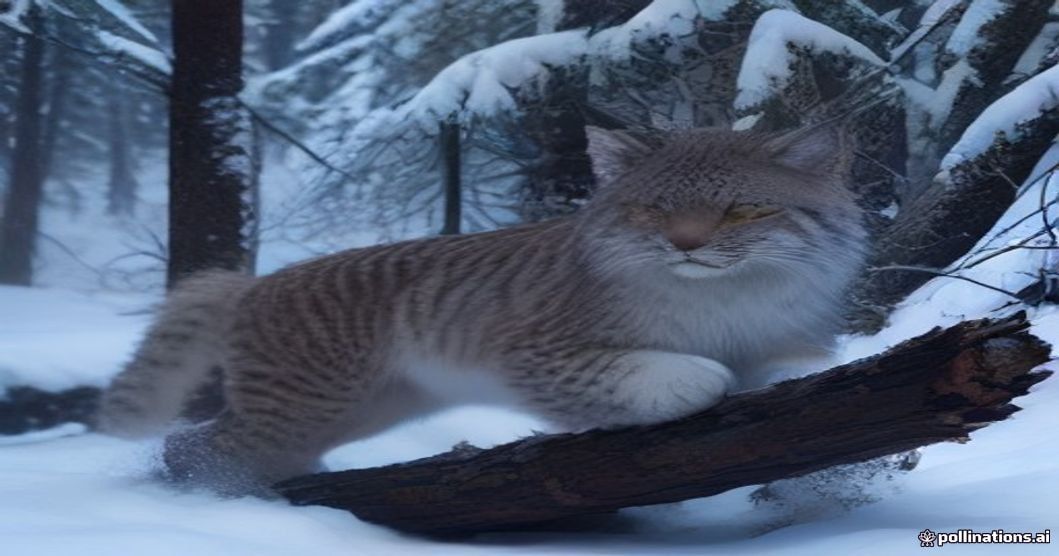
When it comes to securing a meal—most notably their preferred staple, the snowshoe hare—lynxes rely on two main tactics: ground-level ambushing and meticulous stalking. A lynx will often utilize natural cover such as fallen logs, dense thickets, or snowdrifts to remain completely hidden. They patiently wait for prey to wander within striking distance, or they slowly and silently sneak up on their target before launching into a high-speed, short-distance pursuit.
Anatomical Adaptations for Snow and Earth
Every aspect of the lynx’s anatomy is uniquely adapted for ground-level survival and hunting. Their extraordinarily large paws act as natural snowshoes, distributing their weight evenly across deep snowpack to prevent sinking. If they were primarily tree-ambush predators, such specialized snow-walking adaptations would offer far less evolutionary advantage. By staying grounded, the lynx maximizes its efficiency in harsh, wintry biomes, proving that nature’s most effective hunters often rely on quiet ground game rather than theatrical leaps from the canopy.