
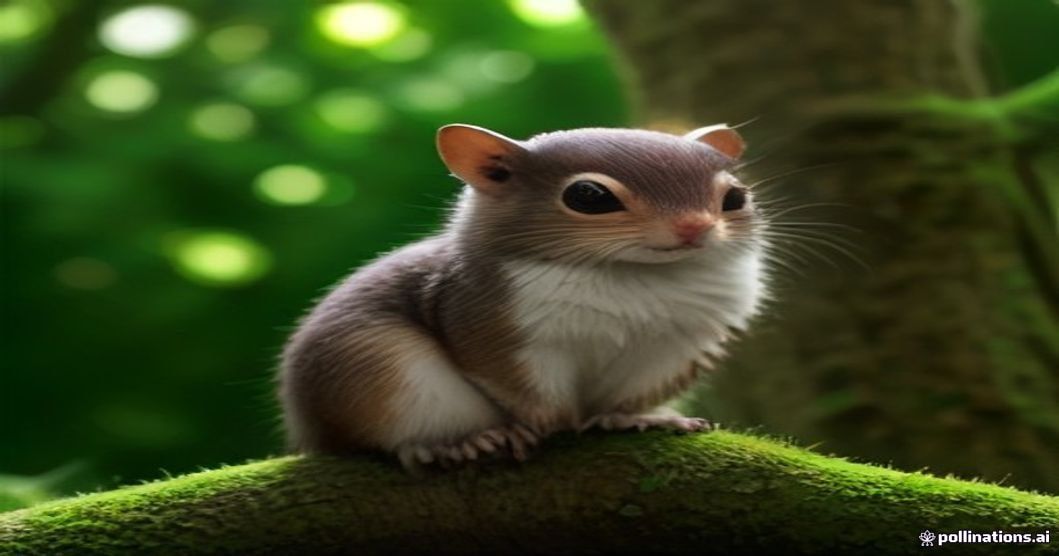
Introduction to the Pteromys Genus
Derived from the Ancient Greek words meaning “winged mouse,” the genus Pteromys encompasses fascinating rodents within the squirrel family. This group primarily features two remarkable species: the common flying squirrel and the enchanting Japanese dwarf flying squirrel. Known for their incredible aerial agility, these small mammals have adapted brilliantly to life in the forest canopy.
Habitat and Physical Characteristics of the Japanese Dwarf Flying Squirrel
The Japanese dwarf flying squirrel is native to the lush evergreen mountain forests found on the islands of Honshu and Kyushu. Despite their diminutive size—measuring a mere 15 to 20 centimeters in body length, with a tail ranging from 10 to 14 centimeters, and weighing approximately 200 grams—these creatures possess extraordinary capabilities. A standout feature is their patagium, a specialized furry membrane stretching between their limbs that acts like a parachute. This adaptation allows them to glide up to an astonishing 90 meters in a single leap!
Behavioral Patterns and Daily Routine
Unlike some hibernating mammals, Eurasian and Japanese flying squirrels remain active year-round. They lead a predominantly nocturnal and crepuscular lifestyle, emerging under the cover of twilight or darkness. However, exceptions occur; nursing females and developing youngsters may occasionally be spotted foraging during daylight hours. In fact, a significant portion of their active time is dedicated to searching for essential nourishment to fuel their high-energy lifestyle.
Nesting Habits and Interactions with Humans
When it comes to shelter, these resourceful rodents are highly adaptable. They construct secure nests in natural tree hollows, abandoned woodpecker nesting holes, old nests left by squirrels and magpies, and occasionally even within rock crevices. Typically, they prefer elevated locations, choosing hollows situated between 3 and 12 meters off the ground. While they thrive in deep forests, they are also known to occasionally settle near human habitations, readily moving into suitably sized birdhouses placed in quiet gardens.