
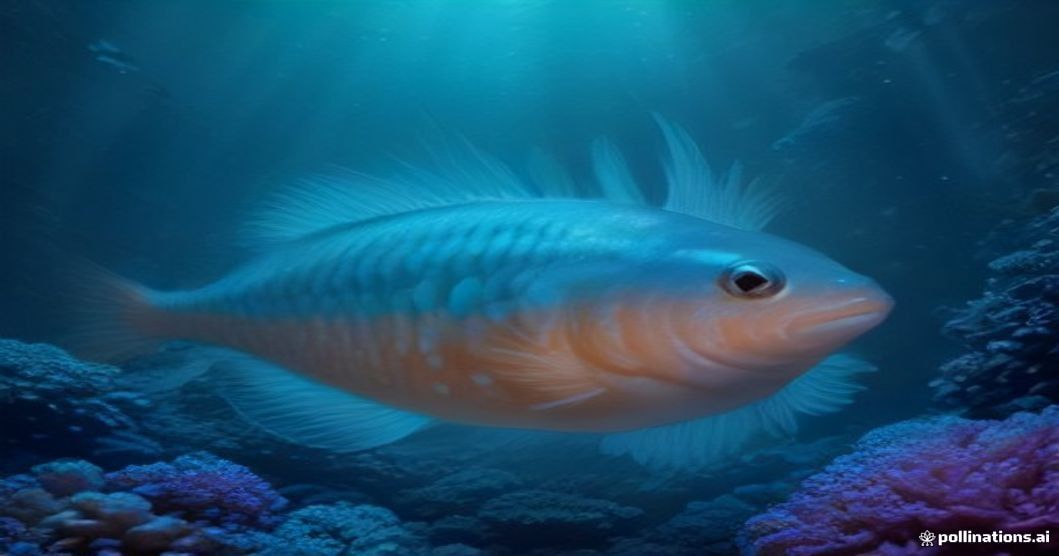
Among the vast biodiversity of coral reef ecosystems, few species boast an anatomical adaptation as astonishing as the sling-jaw wrasse (Epibulus insidiator), colloquially known in various regions as the Big-Mouthed Guban. Native to the tropical waters of the Indo-Pacific, this striking marine fish captivates marine biologists and advanced aquarists alike with an evolutionary marvel: a hyper-extendable jaw apparatus capable of capturing prey before the target even senses the incoming strike.
The Marvel of Extreme Jaw Protrusion
In the teleost fish world, suction feeding is common, but Epibulus insidiator takes cranial kinesis to an extraordinary extreme. Through a highly modified system of skeletal linkages and specialized ligaments, the fish can extend its jaws forward up to 65% of the length of its head. During normal swimming and resting states, this mechanism is entirely folded within the head profile, rendering the fish virtually indistinguishable from other standard reef wrasses. Upon encountering unsuspecting prey—such as small crustaceans, shrimp, or juvenile fish—the sling-jaw wrasse thrusts its mouth forward into a tubular siphon in a fraction of a second, generating powerful negative pressure that vacuums the prey directly into its buccal cavity.
Ecological Role and Predatory Efficiency
This rapid strike allows Epibulus insidiator to exploit narrow crevices, coral branches, and hiding spots where typical predators cannot fit their bodies. By projecting the jaw forward rather than accelerating its entire body, the sling-jaw wrasse minimizes the bow wave—the hydrodynamic disturbance that alert prey to an incoming attack. In the wild, this adaptation ensures efficient energy conservation and high hunting success rates along outer reef slopes and sheltered lagoons.
Husbandry, Health, and Aquarium Considerations
For dedicated marine hobbyists and public aquaria, maintaining Epibulus insidiator requires a deep understanding of its behavioral and physiological requirements. Reaching lengths of up to 35 to 54 centimeters, adult specimens demand substantial swimming volume—typically aquariums exceeding 180 to 250 gallons—with pristine water quality and ample rockwork mimicking reef shelves.
Veterinary and husbandry considerations center heavily on nutrition and cranial health. In captivity, these fish must receive a varied diet rich in high-quality crustaceans (such as whole mysis, krill, and table shrimp) and small feeder fish to satisfy their natural feeding drives and prevent nutritional deficiencies. Due to the delicate biomechanics of their multi-jointed jaw structures, careful monitoring is essential; mechanical impacts against hard tank surfaces during rapid strikes can result in jaw subluxation or soft-tissue trauma. Ensuring a stress-free environment with compatible, non-aggressive tankmates helps safeguard their delicate physical adaptations and overall longevity.