
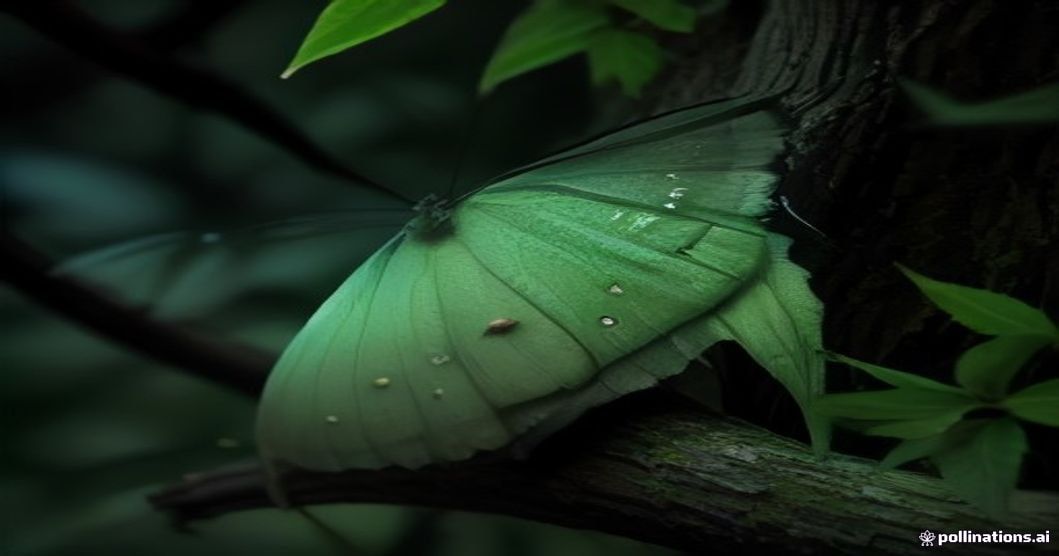
Introduction to the Luna Moth
The Luna Moth (scientifically known as Actias luna and often referred to colloquially as the luna butterfly or luna cloth) is one of North America’s most mesmerizing and recognizable Saturniid moths. Spanning regions from Canada down through the United States into Mexico and Guatemala, this magnificent insect captures the imagination of wildlife enthusiasts and nature lovers alike with its ethereal beauty and unique biological traits.
Physical Characteristics and Habitat
Recognized by their impressive size, the wingspan of a mature Luna Moth typically ranges from 8 to 11.5 cm (approximately 3.1 to 4.5 inches). One of their most striking features is their pale green coloration, which is attributed to a specialized pigment known as ‘luna green,’ found exclusively in this remarkable species. As crepuscular and nocturnal creatures, they are primarily active during twilight and nighttime hours, with male luna moths exhibiting significantly more flight activity than females as they search for mates.
A Fascinating Life Cycle Without Eating
Perhaps one of the most intriguing biological facts about the adult Luna Moth is that it possesses only rudimentary, non-functional mouthparts. Because adult moths cannot feed, their entire adult lifespan—which lasts merely about one week—is sustained entirely by the fat reserves accumulated earlier during their voracious caterpillar stage. Despite their fleeting adult lives, these gentle giants play a vital ecological role in our forests, serving as an important part of the nocturnal wildlife ecosystem.