
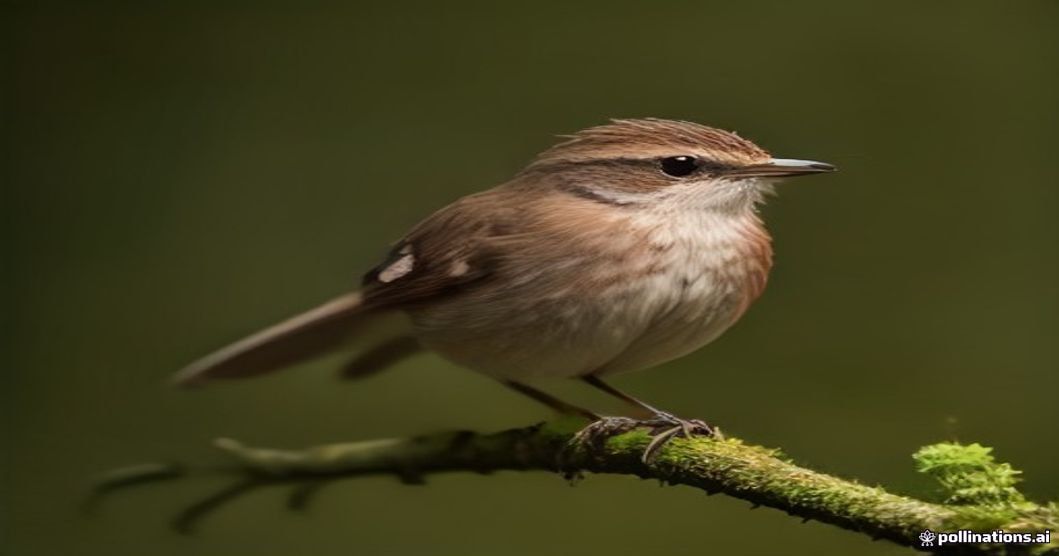
Introduction to the Eurasian Wren
The Eurasian Wren (Troglodytes troglodytes) is a marvel of the avian world, proving that size is no indicator of character. Appearing as a tiny, soft, fluffy ball of feathers with a distinctive short tail that sticks upright, this bird is a favorite among naturalists and bird watchers alike. Despite its diminutive stature, the wren is an incredibly active species, constantly flitting through undergrowth and exploring its environment with relentless energy.
The Power of the Wren’s Song
Perhaps the most surprising attribute of the wren is its voice. For a bird of its size, the wren possesses an unusually loud and complex song. Male wrens are particularly vocal, utilizing high-altitude perches to broadcast their unique, hurried melodies. These songs are filled with rapid-fire trills and loud, clear notes, serving as a powerful tool to mark and defend their surprisingly large territories during the breeding season.
Etymology: The ‘Cave Dweller’
The scientific name Troglodytes troglodytes carries a fascinating historical connection. Derived from the ancient Greek word for “cave dweller,” the term was historically used to describe prehistoric people who inhabited caverns. The wren earned this name due to its architectural prowess. They construct thick-walled, spherical nests that, from the outside, closely resemble small caves, providing a secure and sheltered environment for their offspring.
Physical Characteristics and Global Presence
As one of the smallest birds in Europe, the Eurasian Wren is a study in compact biological design. It typically measures between 9 and 11 cm in length, with a modest wingspan of 15 to 17 cm. Tipping the scales at a mere 8 to 12 grams, it is exceptionally lightweight. This adaptability has allowed the species to thrive across a vast geographical range, with populations found throughout Eurasia, North Africa, and North America.
Conservation and Habitat
Wrens are highly adaptable and can be found in a variety of habitats, from dense woodlands to urban gardens. Their presence is often a sign of a healthy ecosystem rich in the insects and spiders they rely on for food. As a professional pet and wildlife expert, observing these birds provides valuable insight into the resilience of small avian species in the wild.