
Introduction to the Ruffed Grouse
The Ruffed Grouse (Bonasa umbellus) stands as one of the most iconic forest-dwelling gamebirds in North America. Widely celebrated for its explosive flushes and the male’s distinctive drumming courtship display, this resilient gallinaceous bird occupies a vital ecological niche across the United States, Central Alaska, and Canada. From a wildlife biology and avian health perspective, the Ruffed Grouse exemplifies anatomical and behavioral adaptations tailored specifically to northern forest ecosystems.
Physical Characteristics and Sexual Dimorphism
In terms of biometrics, the Ruffed Grouse is a medium-sized bird built for burst flight and navigating dense undergrowth. An adult grouse typically measures between 43 and 48 centimeters in total body length, complemented by a fan-shaped tail spanning 12 to 20 centimeters. Their wingspan averages approximately 60 centimeters, providing the surface area necessary for rapid takeoffs when escaping predators.
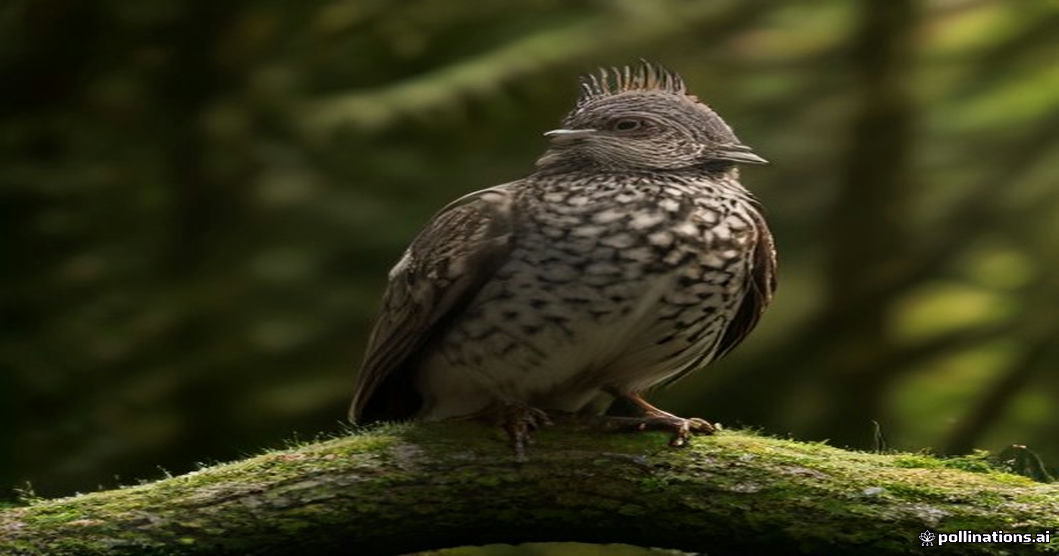
Weight in adult specimens typically ranges between 500 and 650 grams. However, sexual dimorphism is pronounced; mature males frequently attain larger masses, with well-conditioned individuals weighing up to 800 grams. Beyond body mass, males possess a distinctly more pronounced erectile crest atop the crown. Both sexes boast a lustrous, cryptically patterned plumage adapted to mimic the dappled forest floor, but males are renowned for their signature neck ruffs. These tufts of elongated, dark, iridescent feathers can be erected during courtship displays and territorial defense, instantly transforming the bird’s profile into an imposing spectacle.
Habitat Preferences and Ecological Distribution
The Ruffed Grouse demonstrates exceptional adaptability within early successional and mature woodland habitats. Its primary range encompasses both dense coniferous stands, dominated by pine and fir, and mixed deciduous forests rich in aspen, birch, and oak. Early-successional forests, particularly young aspen stands, provide the structural cover and nutrient-dense forage essential for survival across seasons.
Beyond contiguous canopy forests, Ruffed Grouse are frequently documented along ecotones—transitional zones such as logging roads, forest clearings, meadows, and agricultural borders. They are equally resilient in extreme geographical margins, inhabiting zones bordering northern tundra and open prairies, as well as steep, rocky mountain slopes carpeted with evergreens and low-lying shrubs. Populations flourish across a wide altitudinal gradient, thriving reliably from lowland river valleys up to elevations of approximately 1,000 meters above sea level.
Physiological Adaptations and Seasonal Resilience
Surviving the severe winters of Canada and northern United States requires remarkable physiological efficiency. During winter, Ruffed Grouse develop pectinations—comb-like fleshy projections along their toes—which function as natural snowshoes, allowing them to traverse deep snow and roost within subnivean (under-snow) snow caves to conserve critical body heat. Their diet transitions dynamically from summer insects, berries, and green foliage to highly fibrous winter fare, primarily tree buds, catkins, and twigs. The bird’s robust cecum—a specialized gastrointestinal organ—expands seasonally to ferment and extract maximal nutrients from this woody vegetation, demonstrating exceptional metabolic plasticity.
Avian Health and Conservation Considerations
Maintaining vigorous Ruffed Grouse populations depends heavily on active forest management and disease surveillance. Like many wild Phasianidae, grouse can be vulnerable to pathogens such as West Nile Virus, avian pox, and internal parasites. Habitat fragmentation and forest maturation pose ongoing challenges to local population densities. Ensuring a mosaic of varied-age forest tracts remains the gold standard in supporting resilient, disease-resistant populations of this quintessential North American gamebird.