
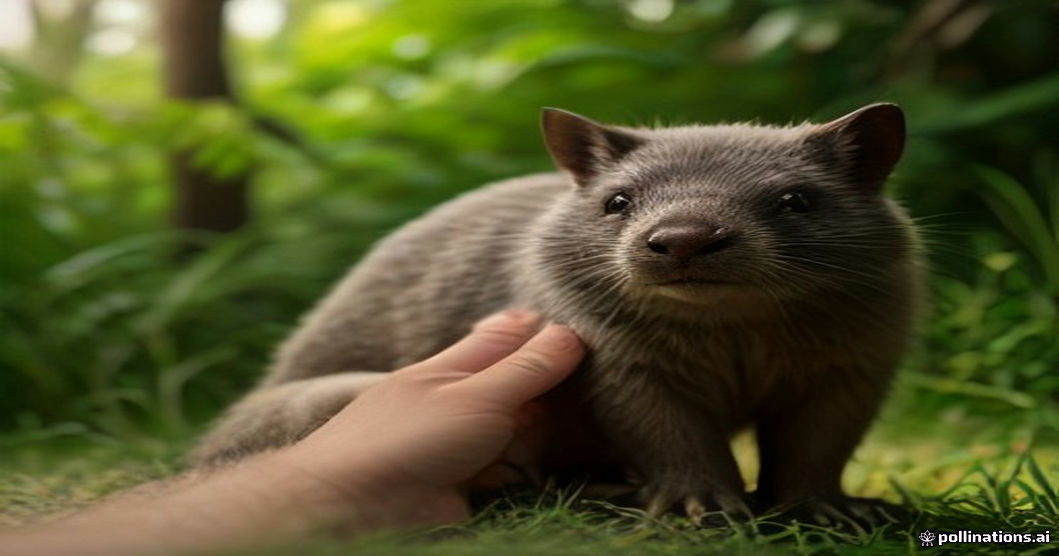
Wombats are often perceived as slow, docile marsupials grazing peacefully along Australian bushlands. However, behind their stocky silhouette lies immense power, remarkable speed, and an intensely territorial nature. Weighing up to 35 kilograms and capable of sprinting at bursts of up to 40 kilometers per hour, a direct collision between two combatants carries tremendous kinetic energy. When two wombats collide violently—whether in aggressive territory disputes or territorial chases—the resulting trauma can prove catastrophic, sometimes resulting in immediate fatalities.
Understanding Wombat Biomechanics and Territorial Defense
To understand the severity of intraspecific trauma in wombats, one must examine their unique anatomy. Wombats possess a heavily reinforced skeletal structure and an extraordinary dermal shield over their hindquarters, composed of thick skin, cartilage, and fused bone plates. While this adaptation protects them from predators entering their burrows, their forequarters and cranium remain vulnerable to high-velocity, head-on impacts. During periods of heightened competition—often exacerbated by drought, habitat encroachment, or the breeding season—males vigorously defend territory through charging, biting, and blunt-force body slams. When an impact occurs head-to-head or strikes vulnerable soft-tissue zones, the blunt force trauma mimics that of a low-speed vehicular collision.
Veterinary Assessment of Blunt Force Marsupial Trauma
In wildlife clinical medicine, arriving at the scene of a fatal wombat collision requires systematic forensic and clinical evaluation. For the surviving animal, immediate veterinary triage is paramount. Common consequences of high-impact collisions include acute traumatic brain injury (TBI), cervical spinal fractures, severe hemothorax, diaphragmatic ruptures, and ruptured abdominal viscera such as the liver or spleen. Shock is the primary immediate threat to the surviving wombat, characterized by pale mucous membranes, hypothermia, bradycardia, and profound lethargy. Clinicians immediately initiate fluid resuscitation, potent analgesia through multimodal pain management, and stabilization inside a quiet, climate-controlled, dark environment to minimize stress-induced capture myopathy.
Emergency Rehabilitation and Pouch Checks
In any incident involving wombat casualties, field responders and veterinarians must perform an immediate inspection for pouch young. Female wombats carry a single joey in a backward-facing pouch. Even if the mother succumbs immediately to impact injuries, an insulated pouch often preserves the life of the joey for hours or even days. Rescuers must exercise extreme care when extracting a joey, avoiding traction injuries to the immature mouth or fragile limbs. Once secure, the joey requires specialized marsupial formula, temperature regulation, and specialized wildlife care protocols.
Conservation and Mitigation of Wildlife Conflicts
High rates of territorial conflict and road mortality frequently point to broader environmental pressures. As natural habitats become fragmented by human development and agriculture, wombats are forced into higher population densities within smaller pockets of viable bushland. Veterinary teams collaborate with conservation biologists to monitor territorial clashes, manage disease vectors such as sarcoptic mange—which escalates behavioral agitation—and advocate for wildlife corridors. Mitigating habitat loss remains the most sustainable veterinary and conservation measure to prevent fatal collisions and preserve these resilient Australian icons.