Adventures at the Edge: A Veterinarian’s Guide to Exploring Rugged Waterfall Terrains with Your Dog
Nature possesses an unmatched ability to humble and inspire us, and few spectacles embody raw power quite like Dettifoss, Europe’s most voluminous waterfall set amidst the stark, volcanic expanse of northern Iceland. For adventurous pet guardians, dramatic landscapes like these beckon as the ultimate trekking destination. However, navigating such rugged, elemental environments with a canine […]
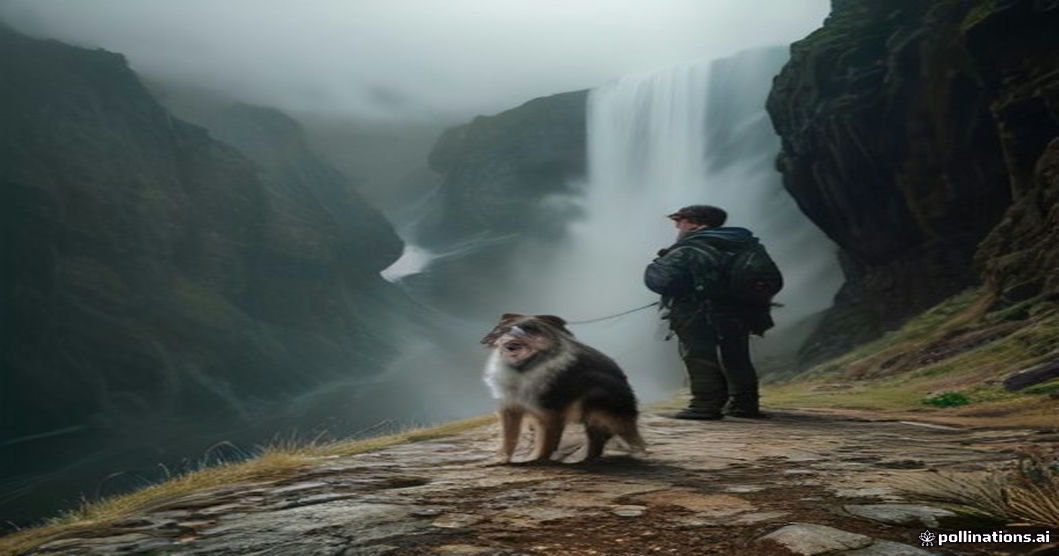
Nature possesses an unmatched ability to humble and inspire us, and few spectacles embody raw power quite like Dettifoss, Europe’s most voluminous waterfall set amidst the stark, volcanic expanse of northern Iceland. For adventurous pet guardians, dramatic landscapes like these beckon as the ultimate trekking destination. However, navigating such rugged, elemental environments with a canine companion demands rigorous preparation, an understanding of animal physiology, and dedicated safety protocols.
Understanding the Hazards of Volcanic and Rocky Terrain
Glacial canyons and volcanic fields present immediate mechanical risks to your dog’s paws and joints. Substrates composed of basalt, sharp pumice, and loose scree act like coarse sandpaper on sensitive footpads. A common emergency encountered in high-latitude, rocky environments is pad ulceration or deep lacerations, which can render an active dog completely immobile miles from veterinary care.
Before embarking on hikes through jagged topography, condition your pet’s pads gradually using veterinary-approved paw waxes containing natural protectants like beeswax and vitamin E. For genuinely austere landscapes, invest in heavy-duty, puncture-resistant canine hiking booties. Ensure your dog is desensitized to wearing them well before the journey begins, and inspect paw pads at every rest stop for foreign debris, tears, or early signs of abrasion.
Sensory Overload: Auditory Stress and Torrential Mists
The sheer acoustic intensity of a massive waterfall can produce profound anxiety in sound-sensitive canines. With water thundering into a canyon at tens of thousands of cubic feet per second, the low-frequency vibrations and immense decibel levels can disorient pets, triggering a fight-or-flight response. A sudden panic near sheer cliff edges presents a catastrophic risk.
Always maintain control using a non-restrictive, ergonomic Y-harness with dual clip points paired with a durable, non-retractable leash. Never allow dogs off-leash near canyon rims or spray zones. Additionally, persistent cold mist generated by powerful cascades can rapidly saturate a dog’s double coat, stripping away insulating air layers and predisposing them to hypothermia, even in moderate ambient temperatures. Equip your companion with a wind- and water-resistant shell to retain core body heat.
Hydration Hazards: The Danger of Glacial Silt
When traversing landscapes shaped by glacial runoff, it is tempting to let dogs drink from streams and pools. However, glacial water often carries dense concentrations of suspended sediment, known as ‘rock flour’ or glacial silt. Ingesting this fine mineral particulate can irritate the gastrointestinal lining, leading to severe vomiting, mechanical diarrhea, and subsequent dehydration.
Furthermore, seemingly calm pools near turbulent rivers can hide treacherous undercurrents and freezing temperatures that trigger cold shock or cramping. Always pack an adequate supply of clean, potable water and a collapsible bowl, discouraging your dog from lapping up wild runoff or approaching unstable riverbanks.
Post-Excursion Veterinary Assessment
After conquering demanding trails through rugged northern landscapes, perform a comprehensive nose-to-tail examination. Check the interdigital webbing for micro-abrasions, palpate major muscle groups and joints for heat or swelling, and monitor energy levels. Extreme adventures forge unbreakable bonds between pets and their handlers, provided we honor our responsibility to protect their well-being against nature’s most formidable elements.
Written by Mohammed Murtaja
Editor-in-Chief & Executive Publisher of ZooPulse. Senior investigative journalist directing evidence-based research, veterinary science verification, and editorial governance.
Related Stories
 Animal News
Paws in the Snow: Canine Care and Veterinary Insights from Arctic Tromsø, Norway
Introduction to Arctic Pet Ownership High above the Arctic Circle lies Tromsø, Norway, a breathtaking city known for its stunning fjords, vibrant culture, and mesmerizing Northern Lights. But for local veterinarians and pet owners, Tromsø is also a unique environment that presents distinct challenges and rewards for animal health and canine care. From navigating deep […]
 Animal News
Understanding the Crocodile Gallop in Dogs: What Veterinary Science Tells Us
When observing dogs in motion, we often marvel at their agility, speed, and diverse running styles. While most pet owners are familiar with the standard trot or double-suspension gallop, there is a fascinating and specific locomotive pattern known as the “crocodile gallop.” As a veterinarian, I often get asked what this unique movement means for […]
 Animal News
The Ultimate Guide to Red-Eared Slider Turtles: Care, Habitat, and Health
Introduction to the Red-Eared Slider The Red-Eared Slider turtle (Trachemys scripta elegans) is one of the most popular and recognizable aquatic turtle species in the world. Named for the distinct red or orange stripe located just behind each eye and their ability to quickly slide off rocks and logs into the water, these fascinating reptiles […]