Babirusa: Unraveling the Mysteries of Nature’s Most Unusual Wild Pig
Meet the Babirusa: A Marvel of Evolution In the vast and diverse world of wildlife, certain species challenge our preconceived notions of animal anatomy. Enter the babirusa (genus Babyrousa), a truly unique and fascinating member of the suid (pig) family native to the Indonesian islands. Unlike the domestic and wild pigs most people are familiar […]
Meet the Babirusa: A Marvel of Evolution
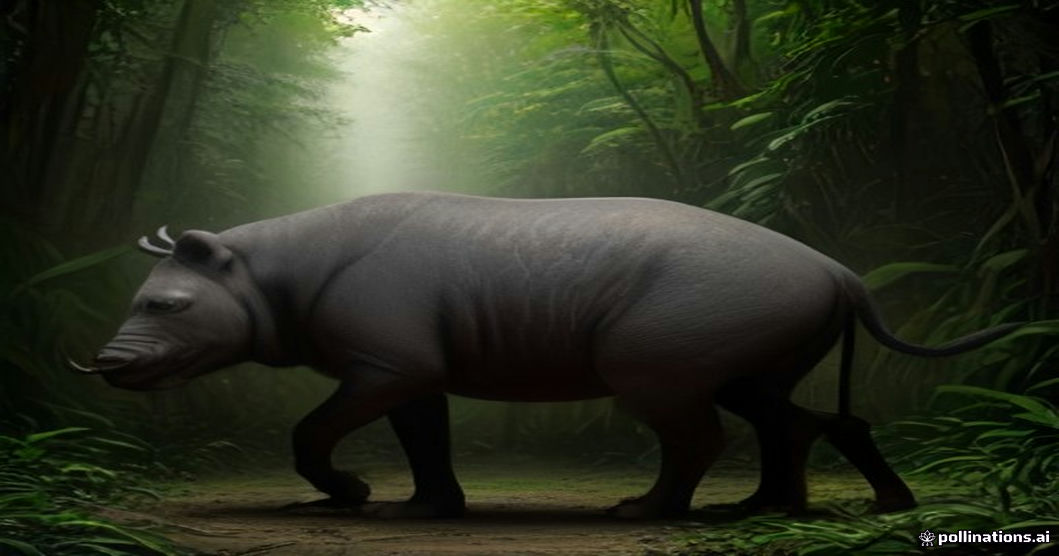
In the vast and diverse world of wildlife, certain species challenge our preconceived notions of animal anatomy. Enter the babirusa (genus Babyrousa), a truly unique and fascinating member of the suid (pig) family native to the Indonesian islands. Unlike the domestic and wild pigs most people are familiar with, this extraordinary creature possesses a distinct morphology characterized by a small head, short ears, a relatively tiny snout, a sharply arched back, and long, slender legs that give it an almost deer-like appearance.
The Enigmatic Tusks of the Male Babirusa
Without a doubt, the most striking and defining feature of the babirusa is its two pairs of large, dramatic, backward-curving tusks. While the exact evolutionary purpose of these appendages remains a subject of ongoing scientific debate, researchers generally believe they serve as a secondary sexual characteristic for males, likely utilized in intra-species combat or display during the breeding season. Males are noticeably larger than females and boast these magnificent tusks. The lower pair erupts from the mouth in a conventional manner, but the upper pair grows in a bizarre fashion—not from the jaw, but directly out through the skin of the snout! In older males, these upper tusks can reach an astonishing 30 to 40 centimeters in length, curving dramatically back toward the forehead or sometimes even forming a complete 180-degree arc, occasionally growing perilously close to or back into the animal’s own skin. In contrast, females typically possess only smaller lower tusks, lacking the upper snout-tusks entirely.
Physical Characteristics and Aquatic Adaptations
As medium-sized mammals, babirusas typically measure between 90 and 100 centimeters in body length. Beyond their skeletal and dental peculiarities, these animals possess a few other surprising traits. As a fun fact for wildlife enthusiasts, babirusas are actually excellent swimmers! In their native rainforest and swamp habitats, they frequently take to the water to cross rivers or evade predators, often using their specialized snouts effectively as biological snorkels while they paddle.
Written by Mohammed Murtaja
Editor-in-Chief & Executive Publisher of ZooPulse. Senior investigative journalist directing evidence-based research, veterinary science verification, and editorial governance.
Related Stories
 Uncategorized
Unveiling the Bobak Marmot: Steppe Dweller and Natural Whistler
Meet the Bobak Marmot The Bobak Marmot (Marmota bobak) stands out as one of the larger species within the marmot family. These robust rodents can reach a body length of up to 59 cm, complemented by a tail measuring up to 15 cm. As they prepare for their annual winter dormancy, adult males can pack […]
 Uncategorized
The Unbreakable Bond: Understanding the Science and Soul of ‘Best Friends’ in the Animal Kingdom
Introduction: More Than Just Companionship When we look at our pets, we often use the phrase “best friends” to describe our relationship with them. But have you ever wondered what this profound connection truly means from a veterinary and behavioral standpoint? As animal health professionals, we witness daily how deeply intertwined the emotional and physical […]
 Uncategorized
Unveiling the Flamboyant Cuttlefish: The Ocean’s Vibrant Master of Disguise
Introduction to the Metasepia pfefferi In the vast and mysterious depths of the ocean, few creatures captivate the imagination quite like the flamboyant cuttlefish (Metasepia pfefferi). As a professional veterinarian and marine life enthusiast, I am continually astounded by the remarkable adaptations found in aquatic species. This small yet mesmerizing cephalopod is a true marvel […]