Leap of Faith: The Astonishing First Flight and Specialized Biology of the Common Merganser
Nature rarely presents a spectacle as heart-stopping and inspiring as the inaugural journey of day-old ducklings embarking on their very first venture into the world. Nestled dozens of feet above the ground in hollow tree trunks, newly hatched chicks of the sawbill family must take a dramatic leap of faith. Without fully developed flight feathers, […]

Nature rarely presents a spectacle as heart-stopping and inspiring as the inaugural journey of day-old ducklings embarking on their very first venture into the world. Nestled dozens of feet above the ground in hollow tree trunks, newly hatched chicks of the sawbill family must take a dramatic leap of faith. Without fully developed flight feathers, these fluffy, fearless hatchlings launch themselves into empty air, relying on sheer buoyancy, lightweight anatomy, and instinctual resilience to tumble safely to the forest floor below, where their mother eagerly calls them toward water.
A Daring Debut: The Tree-Canopy Leap
While many aquatic waterfowl build ground-level nests hidden in reeds, the Common Merganser (Mergus merganser) frequently opts for high-altitude natural tree cavities or woodpecker excavations within mature northern taiga forests. Within twenty-four to forty-eight hours after hatching, the mother emerges, surveys for predators, and softly vocalizes from the base of the tree. Responding to maternal cues, the day-old ducklings scramble up the interior cavity walls using sharp embryonic claws and plunge fearlessly into the open canopy. This breathtaking descent showcases incredible biomechanical adaptation: their minuscule mass and dense down allow them to bounce harmlessly upon leaf litter or moss before dashing directly to the riverbanks.
Anatomy of an Apex Fisher: The Serrated Bill
Surpassing the familiar mallard in both length and streamlined mass, Mergus merganser represents the largest and most widespread of the sawbill ducks. Their evolutionary adaptations are tailor-made for high-speed piscivorous pursuits in deep, crystal-clear taiga lakes and rapid rivers. Unlike dabbling ducks that forage for vegetation, seeds, and aquatic invertebrates, mergansers are specialized aquatic predators. Their narrow, elongated bill is equipped with backward-pointing serrations—sharp, tooth-like keratin cusps—terminating in a pronounced down-turned hook. This structural adaptation provides an unyielding grip on slippery, wriggling fish, allowing them to secure quarry underwater with surgical precision.
Intricate Courtship and Pair-Bonding Rituals
Beyond their dramatic nesting habits and predatory prowess, these birds exhibit some of the most synchronized and complex courtship displays observed in northern waterfowl. During early spring, males attempt to woo females through elaborate behavioral choreography. This includes synchronized aquatic ballets, sudden bursts of surface diving, and energetic head-bobbing displays. A distinctive component of their bonding ritual involves the presentation of nesting material, where the male retrieves twigs or aquatic foliage and gifts them to the female, cementing pair bonds before embarking on the nesting cycle.
Ecological Health and Wildlife Conservation Insights
From an avian health and conservation perspective, the presence of thriving merganser populations serves as a critical bioindicator for intact riparian corridors. Because they rely on old-growth hollow trees for nesting cavities and unpolluted, fish-rich waters to nourish their broods, preserving connected forest-aquatic ecosystems is paramount. Protecting mature nesting trees near clear northern waterways ensures that future generations of these bold ducklings can continue to make their unforgettable leaps from canopy to current.
Written by Mohammed Murtaja
Editor-in-Chief & Executive Publisher of ZooPulse. Senior investigative journalist directing evidence-based research, veterinary science verification, and editorial governance.
Related Stories
 Uncategorized
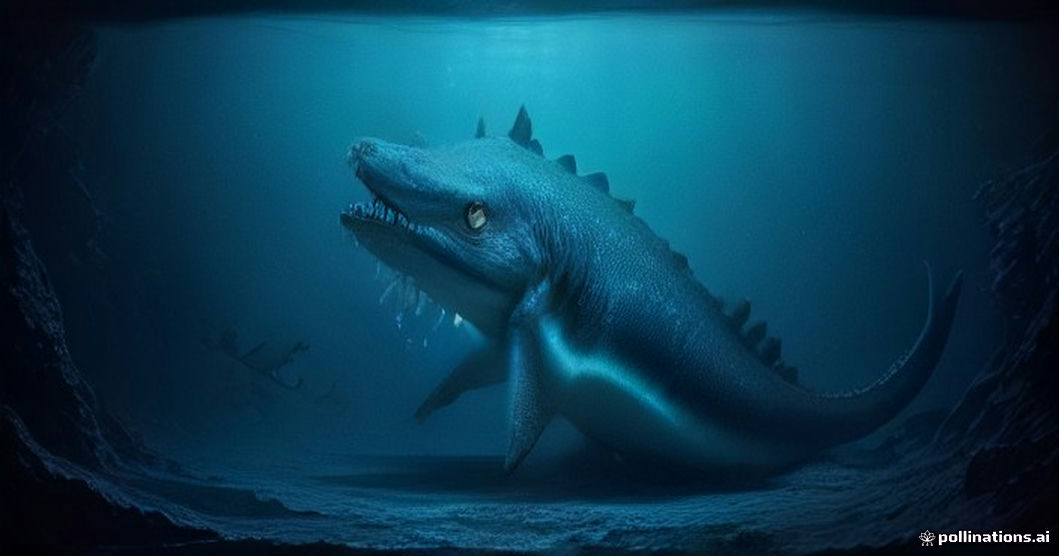
Unveiling the Bathysaurus ferox: The Apex Predator of the Deep Sea
Introduction to the Deep-Sea Monster In the mysterious, pitch-black realms of our planet’s deepest oceans resides a creature that sounds like it was pulled straight from prehistoric fiction. Meet the Bathysaurus ferox, often referred to as the deep-sea lizardfish. With a dinosaur-like appearance and a name that strikes fear into the hearts of benthic prey, […]
 Uncategorized
Unleashing the Inner Warrior: Understanding Ursine Agility, Coordination, and Play Behavior
When we witness footage of a bear spinning a stick with martial arts-like precision, it is hard not to think of classic kung fu movies. While these magnificent creatures are not actually studying ancient eastern philosophies, the viral perception that ‘this bear knows kung fu’ highlights a fascinating aspect of ursine biology: incredible agility, hand-eye […]
 Uncategorized
Unveiling the Indo-Pacific Electric Ray: Nature’s Shocking Panther of the Sea
Introduction to the Indo-Pacific Electric Ray As veterinary professionals and marine life enthusiasts, we are constantly amazed by the diverse and wondrous adaptations found in the animal kingdom. Among the most fascinating marine species is the Indo-Pacific Electric Ray, scientifically known as Torpedo panthera. Inhabiting the warm, coastal waters of the western Indian Ocean—including the […]