Nature’s Master of Stealth: The Invisible World of the Cystisoma
Introduction to the Deep-Sea Ghost In the vast, midnight depths of our oceans lies a creature so perfectly adapted to its environment that it remains virtually invisible to the naked eye. The Cystisoma, a remarkable genus of hyperiid amphipods, represents one of nature’s most sophisticated examples of biological camouflage. Often resembling a translucent shrimp, this […]
Introduction to the Deep-Sea Ghost
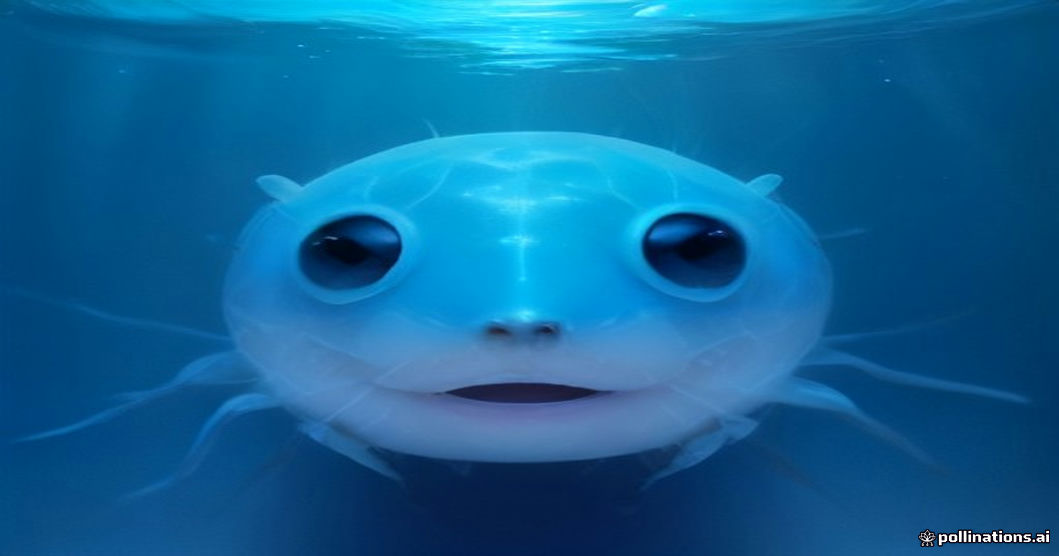
In the vast, midnight depths of our oceans lies a creature so perfectly adapted to its environment that it remains virtually invisible to the naked eye. The Cystisoma, a remarkable genus of hyperiid amphipods, represents one of nature’s most sophisticated examples of biological camouflage. Often resembling a translucent shrimp, this crustacean has evolved unique physiological traits to survive in the pelagic ‘twilight zone’ where light is both a rare resource and a dangerous liability.
The Mastery of Transparency and Shadowless Flight
Transparency in the deep sea is more than just a lack of pigmentation; it is a vital survival strategy known as cryptic coloration. Cystisoma possesses a body that is almost entirely clear, allowing ambient light to pass through its internal organs and exoskeleton without casting a significant shadow. This ‘shadowless’ existence is crucial because many deep-sea predators hunt by looking upward, searching for silhouettes against the faint light filtering from the surface. By minimizing light scattering and absorption, the Cystisoma becomes a phantom of the abyss.
Optical Engineering: The Eyes of a Giant
Perhaps the most striking feature of the Cystisoma is its incredible ocular structure. A massive portion of its head is dedicated entirely to its eyes. These enormous, upward-facing organs are designed to capture the slightest hints of bioluminescence or the dimmest traces of sunlight reaching the depths. By maximizing the surface area of its retinas, the Cystisoma can navigate and identify potential threats or mates in near-total darkness, giving it a distinct advantage in an environment where vision is often the difference between life and death.
Nanotechnology in the Abyss
Recent scientific inquiries have revealed that the Cystisoma’s invisibility is aided by advanced microscopic structures. Its body is often covered in a thin layer of tiny, spherical protuberances or specialized bacteria that function as an anti-reflective coating. This layer helps dampen light reflection, much like the high-tech coatings found on professional camera lenses. To the eyes of a predator, the microscopic reddish spots and the lack of reflection ensure that the crustacean remains a hidden marvel of marine evolution, proving that even in the dark, the most successful predators are those that are never seen.
Written by Mohammed Murtaja
Editor-in-Chief & Executive Publisher of ZooPulse. Senior investigative journalist directing evidence-based research, veterinary science verification, and editorial governance.
Related Stories
 Uncategorized
The Dusky Damselfish: Nature’s Miniature Territorial Guardian
Meet the Brazilian Stegastes In the vibrant, bustling world of the Atlantic coral reefs, few creatures are as dedicated to their patch of ocean as the Brazilian Stegastes (Stegastes fuscus), commonly known as the Dusky Damselfish. While small in stature, this fish commands respect through its bold personality and unwavering commitment to its territory. Territorial […]
 Uncategorized
A Veterinarian’s Guide to Exploring Seljalandsfoss: Traveling Safely with Your Pet
The Majestic Beauty of Seljalandsfoss Seljalandsfoss is one of Iceland’s most famous and picturesque waterfalls, characterized by its stunning 60-meter drop and the unique opportunity for visitors to walk behind the cascading curtain of water. For pet owners, this natural wonder is a bucket-list destination, but as a veterinary professional, I advise that such an […]
 Uncategorized
Nature’s Elegant Fisher: Understanding the Royal Spoonbill (Platalea regia)
Introduction to the Royal Spoonbill The Royal Spoonbill, scientifically known as Platalea regia, stands as one of the most distinctive members of the Threskiornithidae family. Closely related to the ibis, this majestic wading bird is a common sight across the wetlands of Australia, New Zealand, New Guinea, and the surrounding islands of the Pacific. With […]