Rhino Rhinocerotidae: Africa’s Iconic Giant and Master of the Savanna
Introduction to Africa’s Prehistoric Titan The rhinoceros stands proudly as one of Africa’s most iconic and majestic animals, serving as a true living symbol of the continent’s wild heritage. As a revered member of the legendary ‘African Big Five’—alongside the elephant, Cape buffalo, lion, and leopard—this magnificent creature has long captured the human imagination. Historically […]
Introduction to Africa’s Prehistoric Titan
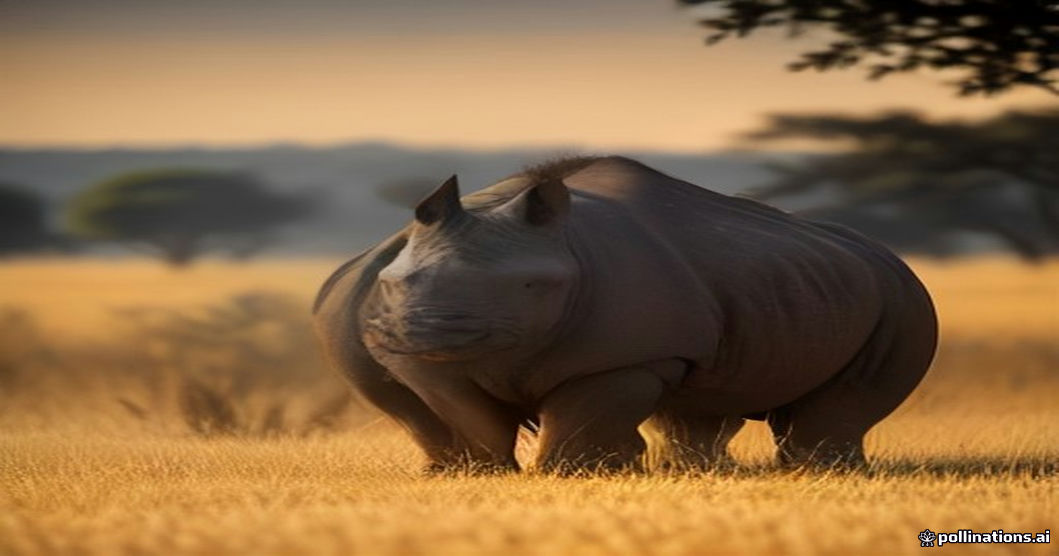
The rhinoceros stands proudly as one of Africa’s most iconic and majestic animals, serving as a true living symbol of the continent’s wild heritage. As a revered member of the legendary ‘African Big Five’—alongside the elephant, Cape buffalo, lion, and leopard—this magnificent creature has long captured the human imagination. Historically grouped among the most prestigious species of the safari, today the rhino represents the pinnacle of prehistoric survival and ecological importance in the modern world.
Sensory Adaptations: Smelling Beyond Brainpower
While rhinos possess notoriously poor eyesight—often relying on movement rather than detail to assess their surroundings—their sensory toolkit is far from lacking. In fact, what they lack in visual acuity, they more than make up for with extraordinary olfactory and auditory capabilities. A rhino’s sense of smell is exceptionally sharp and serves as its primary survival mechanism for detecting predators and navigating its habitat. Fascinatingly, the volume of a rhino’s nasal cavity is actually larger than the total volume of its brain! Complementing this is their remarkably well-developed hearing; their specialized, tube-shaped ears constantly rotate to pick up even the faintest sounds across the vast savanna.
Colossal Proportions and Physical Might
Ranking right behind the elephant as the second-largest land mammal on Earth, the rhinoceros is a powerhouse of natural architecture. An adult rhino can stretch up to 4 meters in length, stand an impressive 2 meters tall at the shoulder, and reach a staggering weight of up to 5 tons. Given this immense size and raw strength, their poor eyesight poses far more of a hazard to anyone or anything in their path than it ever does to the rhino itself. Protecting these gentle yet formidable giants remains a crucial priority for wildlife conservationists and veterinarians dedicated to preserving Africa’s irreplaceable megafauna.
Written by Mohammed Murtaja
Editor-in-Chief & Executive Publisher of ZooPulse. Senior investigative journalist directing evidence-based research, veterinary science verification, and editorial governance.
Related Stories
 Uncategorized
Unveiling the Bobak Marmot: Steppe Dweller and Natural Whistler
Meet the Bobak Marmot The Bobak Marmot (Marmota bobak) stands out as one of the larger species within the marmot family. These robust rodents can reach a body length of up to 59 cm, complemented by a tail measuring up to 15 cm. As they prepare for their annual winter dormancy, adult males can pack […]
 Uncategorized
The Unbreakable Bond: Understanding the Science and Soul of ‘Best Friends’ in the Animal Kingdom
Introduction: More Than Just Companionship When we look at our pets, we often use the phrase “best friends” to describe our relationship with them. But have you ever wondered what this profound connection truly means from a veterinary and behavioral standpoint? As animal health professionals, we witness daily how deeply intertwined the emotional and physical […]
 Uncategorized
Unveiling the Flamboyant Cuttlefish: The Ocean’s Vibrant Master of Disguise
Introduction to the Metasepia pfefferi In the vast and mysterious depths of the ocean, few creatures captivate the imagination quite like the flamboyant cuttlefish (Metasepia pfefferi). As a professional veterinarian and marine life enthusiast, I am continually astounded by the remarkable adaptations found in aquatic species. This small yet mesmerizing cephalopod is a true marvel […]