The Australian Pineapple Fish: Nature’s Armor-Plated Living Lantern
Beneath the coastal waters of Australia resides one of the ocean’s most extraordinary teleost species: the Australian pineapple fish (Cleidopus gloriamaris). Aptly nicknamed for its striking resemblance to the tropical fruit, this unique marine creature captivates marine biologists, aquatic veterinarians, and scuba divers alike with its armored physique and specialized evolutionary adaptations. An Armor-Clad Marine […]
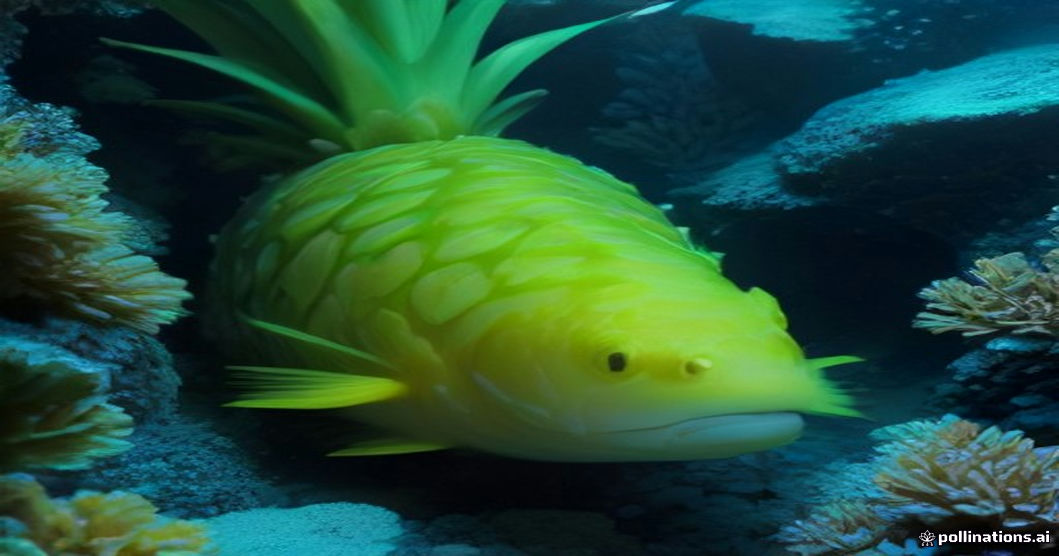
Beneath the coastal waters of Australia resides one of the ocean’s most extraordinary teleost species: the Australian pineapple fish (Cleidopus gloriamaris). Aptly nicknamed for its striking resemblance to the tropical fruit, this unique marine creature captivates marine biologists, aquatic veterinarians, and scuba divers alike with its armored physique and specialized evolutionary adaptations.
An Armor-Clad Marine Marvel
The Latin species name, gloriamaris, translates to ‘glory of the sea,’ a fitting tribute to its brilliant yellow-orange body encased in heavy, plate-like scales outlined in sharp, dark margins. This distinct lattice pattern provides the fish with rigid dermal armor, offering protection against apex predators along the rocky reefs. Unlike fast-swimming pelagic species, the pineapple fish possesses a compact, rigid frame that relies on deliberate, sculling fin motions rather than bursts of speed.
Symbiotic Bioluminescence: The Living Lantern
Beyond its striking visual armor, Cleidopus gloriamaris possesses an astonishing physiological asset: paired bioluminescent photophores situated on either side of its lower jaw. These specialized light-emitting organs are not illuminated by the fish itself, but by billions of symbiotic bioluminescent bacteria, primarily Aliivibrio fischeri. In ambient daylight, these organs appear as small, subtle patches, but in total darkness, they cast a distinct glow. When the fish’s mouth is closed, the light is partially hidden; by dropping its jaw, the pineapple fish can flash light forward like twin headlamps to illuminate prey, signal conspecifics, and disorient potential threats.
Nocturnal Ecology and Foraging Behavior
The pineapple fish is strictly nocturnal and exhibits pronounced photophobia during daylight hours. From shallow harbor reefs down to continental shelf depths of over 150 meters, these fish spend their days secluded inside deep rocky crevices, underwater caverns, and beneath overhanging ledges, often gathering in small social aggregations. As dusk falls, they emerge onto open sandy bottoms and reef margins to hunt, using their bioluminescent headlights to pinpoint benthic invertebrates, especially small crustaceans such as mysid shrimp.
Veterinary and Conservation Considerations
From an aquatic health and husbandry perspective, the Australian pineapple fish presents distinct ecological needs. Due to its specialized nocturnal biology, reliance on delicate symbiotic bacteria, and strict dietary requirements of live marine invertebrates, it is ill-suited for standard home aquaria and is best appreciated in the wild or managed within advanced public aquariums with specialized low-light, temperature-controlled habitats. Protecting coastal reef structures and deep-water rocky substrate is essential to safeguarding the delicate habitat of this luminous marine wonder.
Written by Mohammed Murtaja
Editor-in-Chief & Executive Publisher of ZooPulse. Senior investigative journalist directing evidence-based research, veterinary science verification, and editorial governance.
Related Stories
 Uncategorized
Mysterious Wanderers of the Steppe: Understanding and Protecting the Asian Kulan
Introduction to the Kulan The kulan (Equus hemionus kulan), a magnificent and resilient subspecies of the Asiatic wild ass, is uniquely adapted to thrive in some of the most unforgiving landscapes on Earth. Primarily inhabiting the vast deserts, semi-deserts, and arid steppes of Central Asia, this remarkable equid represents a crucial component of its native […]
 Uncategorized
The Lechwe Antelope: A Master of Savanna Wetlands and Aquatic Adaptations
As a veterinarian and wildlife enthusiast, I am always fascinated by how species evolve unique physiological traits to thrive in challenging environments. The Lechwe antelope (Kobus leche), a remarkable savanna dweller belonging to the waterbuck genus, stands out as a prime example of such evolutionary brilliance. Physical Characteristics and Sexual Dimorphism Standing at a maximum […]
 Uncategorized
Unveiling the Marabou Stork: Giants of the Avian World
Introduction to the Mighty Marabou Stork Among all storks, the marabou stands out for its truly impressive size and distinctive appearance. Scientifically categorized into three subspecies—Indian, African, and Javan—these magnificent birds command attention wherever they roam. Here, we take a closer look at the African marabou (Leptoptilos crumeniferus), a species known as much for its […]