The Brazilian Dwarf Gecko: Nature’s Microscopic Water Walker and Survival Expert
Meet the Brazilian Dwarf Gecko In the vast and biodiverse realm of the Amazon rainforest, diminutive wonders often go unnoticed. Among the most fascinating of these micro-fauna is the Brazilian Dwarf Gecko (Coleodactylus amazonicus). Growing to a staggering maximum length of just 24 mm—about 2.5 cm including its tail—this minuscule reptile is one of the […]
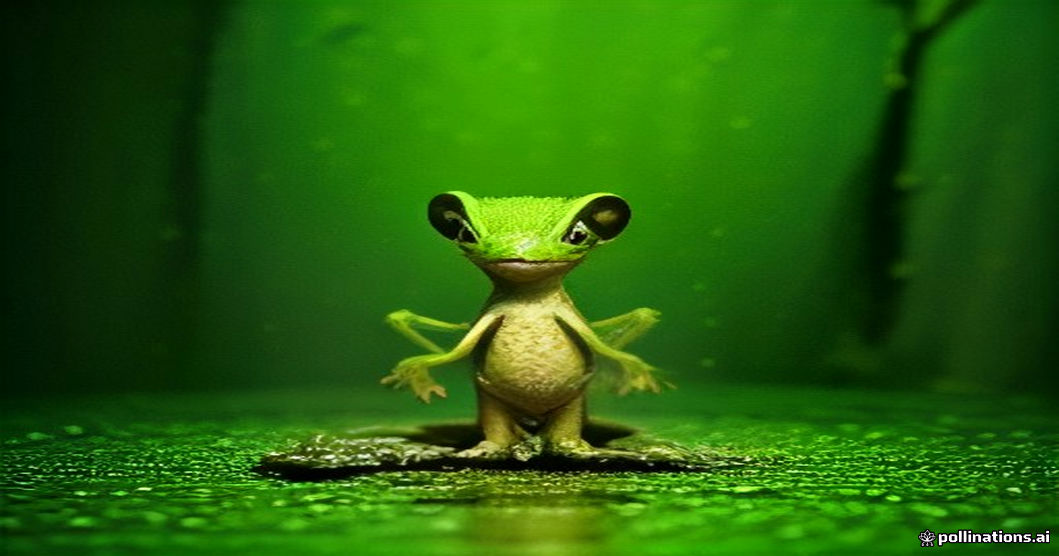
Meet the Brazilian Dwarf Gecko
In the vast and biodiverse realm of the Amazon rainforest, diminutive wonders often go unnoticed. Among the most fascinating of these micro-fauna is the Brazilian Dwarf Gecko (Coleodactylus amazonicus). Growing to a staggering maximum length of just 24 mm—about 2.5 cm including its tail—this minuscule reptile is one of the smallest geckos in the entire world. Despite its miniature stature, it shares its habitat with formidable invertebrates, facing daily threats even from large insects.
The Secret Weapon: Hydrophobic Skin
How does such a tiny creature survive in a harsh environment filled with predators? The answer lies in its remarkable physiology. The Brazilian Dwarf Gecko possesses specialized hydrophobic skin. Its microscopic scales are so fine-tuned to repel moisture that water droplets simply cannot cling to its body. This unique evolutionary adaptation transforms the gecko from a land-dweller into an aquatic acrobat.
Walking and Sleeping on Water
Thanks to its water-repelling properties, this remarkable gecko can actually run across the surface of water and rest upon it as if it were a soft pillow. During torrential tropical downpours, the gecko may occasionally be submerged by heavy raindrop splashes, but its buoyant, hydrophobic body ensures it quickly resurfaces unharmed. Sleeping directly on the water’s surface serves as a brilliant, highly effective anti-predator strategy: no similarly sized terrestrial predator can reach the gecko without risking drowning.
Habitat Preferences and Conservation Insights
Interestingly, despite its affinity for water surfaces, the Brazilian Dwarf Gecko deliberately avoids bodies of water that harbor fish. Instead, it prefers minuscule puddles, damp leaf litter, and temporary water pockets on the forest floor where it can forage safely and thrive without aquatic threats. As pet care experts and herpetology enthusiasts continue to study these microscopic marvels, we gain a deeper appreciation for the boundless ingenuity of nature’s evolutionary adaptations.
Written by Mohammed Murtaja
Editor-in-Chief & Executive Publisher of ZooPulse. Senior investigative journalist directing evidence-based research, veterinary science verification, and editorial governance.
Related Stories
 Animal News
What Are You? Decoding the Mysterious World of Canine and Feline Communication
Introduction: The Age-Old Question As pet care experts and veterinarians, we often find ourselves playing the role of translator between two entirely different species. When we look into our pets’ eyes, we might jokingly ask, ‘What are you? A tiny furry dictator, or a sweet angel?’ But behind this playful question lies a profound truth: […]
 Animal News
The Joyful World of Otter Dances: Behavior, Play, and Animal Health
Understanding the Playful Nature of Otters When we think of aquatic mammals, few capture our hearts quite like the otter. Known for their intelligence, sleek agility, and endearing antics, otters frequently engage in a behavior that observers affectionately call the ‘otter dance.’ Whether spinning in the water, rolling on riverbanks, or sliding down muddy slopes, […]
 Animal News
Majestic Realms: Understanding the Health and Well-Being of Guard and Estate Dogs
When we envision the grandeur of historic castles, we often picture towering stone walls, sweeping courtyards, and centuries of rich history. However, these magnificent estates were rarely empty; they were historically guarded and accompanied by powerful, noble breeds of dogs designed to protect these vast territories. The Legacy of Estate Guardians From the Mastiff pacing […]