The Elusive Strandwolf: Exploring the Biology, Adaptations, and Ecological Role of the Brown Hyena
Introduction to Parahyaena brunnea The brown hyena (Parahyaena brunnea), historically referred to as the Cape hyena or strandwolf, is one of the most enigmatic carnivores inhabiting the arid regions of southern Africa. Often overshadowed by its larger and more vocal relative, the spotted hyena (Crocuta crocuta), the brown hyena possesses unique anatomical adaptations, complex social […]
Introduction to Parahyaena brunnea
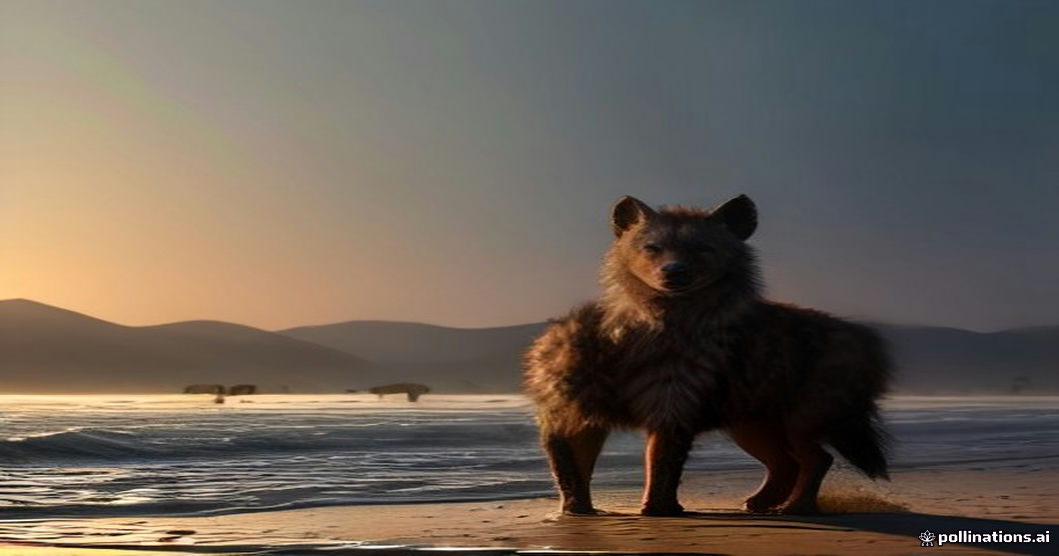
The brown hyena (Parahyaena brunnea), historically referred to as the Cape hyena or strandwolf, is one of the most enigmatic carnivores inhabiting the arid regions of southern Africa. Often overshadowed by its larger and more vocal relative, the spotted hyena (Crocuta crocuta), the brown hyena possesses unique anatomical adaptations, complex social dynamics, and vital ecological functions that make it a cornerstone of coastal and desert ecosystems.
Distinctive Morphology and Physiological Adaptations
Morphologically, the brown hyena is noticeably more compact than the spotted hyena, with adults typically weighing between 35 and 45 kilograms. Despite its smaller frame, it possesses immense upper-body strength, characterized by a robust neck and powerful forequarters designed for carrying large bones over long distances.
Its most defining physical feature is a dense, shaggy dark-brown coat accompanied by a prominent, lighter-colored mantle or mane that flows over its back and shoulders. When threatened or displaying dominance, the animal piloerects these long guard hairs, significantly inflating its apparent body size to deter competitors. This thick pelage also serves a thermoregulatory function, insulating the hyena against the freezing nocturnal temperatures common to the Namib and Kalahari deserts.
Habitat Ecology: Coastal Foraging and Arid Survival
Brown hyenas demonstrate exceptional ecological resilience, predominantly occupying the hyper-arid coastal strips of Namibia and South Africa, as well as the interior semi-deserts. Their strong affinity for marine coastlines has earned them the Afrikaans moniker ‘strandwolf’ (beach wolf). Along the windswept beaches of the Skeleton Coast, these scavengers roam vast territorial ranges in search of washed-up marine carrion, Cape fur seal pups, and dead marine birds, playing a vital role in cleaning the shoreline and recycling organic matter.
Dietary Flexibility and Apex Scavenging Behavior
While often stereotyped merely as passive opportunists, brown hyenas are specialized apex scavengers equipped with dentition engineered to crush mammalian bone. Their primary caloric intake derives from the abandoned kills of apex predators. However, their nutritional profile is remarkably broad; they readily supplement their diet with small rodents, avian eggs, insects, and indigenous desert melons (such as the tsamma melon), which provide critical hydration in environments devoid of standing water.
Brown hyenas also display calculated kleptoparasitic aggression. Despite their solitary foraging habits, their formidable bite force and intimidation tactics allow them to displace mid-sized competitors like black-backed jackals and cheetahs from fresh kills. In documented instances, determined brown hyenas have successfully driven solitary adult leopards off their cached carcasses, underscoring their tenacious demeanor.
Acoustic Communication and Secretive Sociality
Unlike the high-pitched ‘laughter’ and whoops characteristic of spotted hyenas, brown hyenas communicate across vast, wind-scoured landscapes using a repertoire of deep, low-frequency vocalizations. These resonant calls possess remarkable acoustic carrying power, penetrating desert ambient noise and traveling distances of up to 5 kilometers to coordinate territory boundaries or signal presence to clan members.
While individuals generally forage alone to maximize hunting and scavenging efficiency across resource-scarce terrain, they maintain cooperative clan territories. They communicate heavily via chemical signaling, depositing distinct secretions from their anal scent glands onto grass stalks—a complex behavior known as ‘pasting’ that relays identity, territory, and reproductive status.
Conservation and Ecological Significance
From a wildlife health and conservation perspective, the brown hyena serves as an indispensable sanitary agent. By thoroughly consuming rotting carcasses, digesting bone through exceptionally acidic gastric secretions, and disposing of potential pathogens, they prevent the propagation of diseases like anthrax and botulism within delicate desert ecosystems. Protecting these specialized carnivores requires continued mitigation of human-wildlife conflict and preservation of intact coastal and desert corridors across southern Africa.
Written by Mohammed Murtaja
Editor-in-Chief & Executive Publisher of ZooPulse. Senior investigative journalist directing evidence-based research, veterinary science verification, and editorial governance.
Related Stories
 Africa
The Incredible Serval Leap: Anatomy and Athleticism of Africa’s High-Flying Wild Cat
Introduction to the Serval When it comes to acrobatic prowess in the feline world, the serval (Leptailurus serval) stands out as a true master of vertical space. Native to the African savannahs, this medium-sized wild cat is uniquely adapted for a life of high-stakes hunting, most notably characterized by its breathtaking and precise leaping ability. […]
 Africa
The Ghost of the Congo: Exploring the Secretive Life of the African Golden Cat (Caracal aurata)
Introduction to Africa’s Most Elusive Forest Felid Deep within the dense canopy of Equatorial Africa’s tropical rainforests roams one of the most enigmatic carnivores on Earth: the African golden cat (Caracal aurata). Ranging from Senegal in the west to southern Kenya in the east, and southward to northern Angola, this solitary predator finds its primary […]