The Jewel of the Wet Tropics: Unveiling Queen Victoria’s Riflebird
Introduction to Australia’s Diminutive Bird-of-Paradise Tucked within the dense, humid rainforests of northeastern Queensland, Australia, resides one of the avian world’s most captivating wonders: Queen Victoria’s Riflebird (Ptiloris victoriae). While the Paradisaeidae family is famous for flamboyant plumage and elaborate displays across New Guinea, this species stands out as the smallest representative among the birds-of-paradise. […]
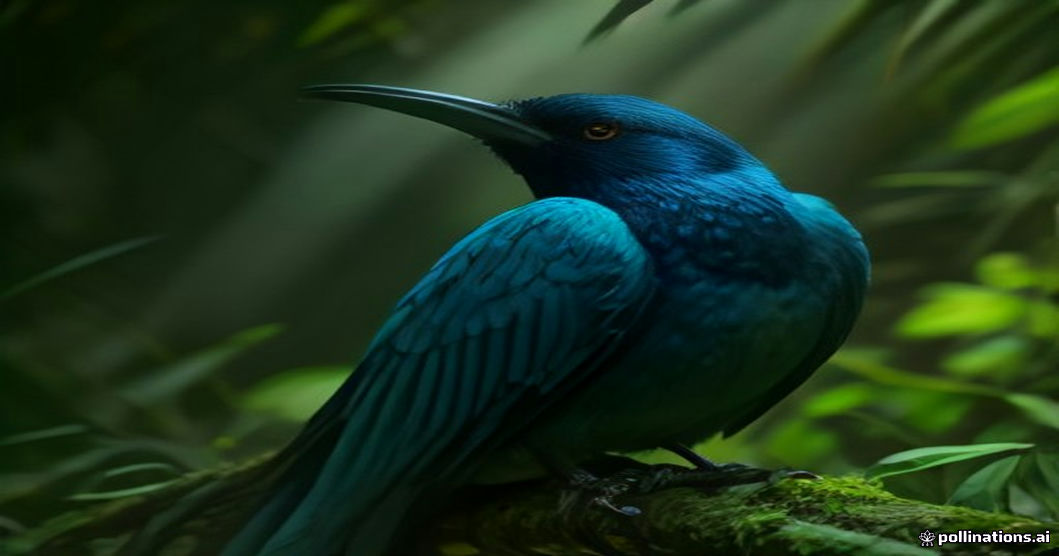
Introduction to Australia’s Diminutive Bird-of-Paradise
Tucked within the dense, humid rainforests of northeastern Queensland, Australia, resides one of the avian world’s most captivating wonders: Queen Victoria’s Riflebird (Ptiloris victoriae). While the Paradisaeidae family is famous for flamboyant plumage and elaborate displays across New Guinea, this species stands out as the smallest representative among the birds-of-paradise. Measuring an unassuming 23 to 25 centimeters in length, what this bird lacks in physical stature, it overwhelmingly compensates for with extraordinary behavioral complexity and breathtaking plumage.
Striking Sexual Dimorphism and Structural Coloration
From an ornithological and biological perspective, Queen Victoria’s Riflebird offers a textbook study in sexual dimorphism driven by sexual selection. The adult male is a masterclass in nature’s optical engineering. Clothed in deep, velvety black plumage that absorbs ambient light, his appearance is punctuated by intense iridescent purple sheens and a brilliant, metallic blue-green triangular patch situated on his throat and crown. These colors are not derived from pigments alone, but rather from microscopic feather structures that refract light like microscopic prisms.
Conversely, the female showcases a subtle, cryptic elegance. Adorned in warm, understated shades of brown, buff, and finely barred chevron patterns on her breast, her plumage is an evolutionary adaptation tailored for camouflage. Because females shoulder the solitary responsibilities of nest building, egg incubation, and chick rearing, these muted tones are vital for remaining undetected by predators within the forest sub-canopy.
The Spectacular Courtship Display: An Avian Masterpiece
The courtship ritual of the male Queen Victoria’s Riflebird is one of the natural world’s most spellbinding performance pieces. Establishing a preferred display perch on a prominent horizontal branch, the male prepares his stage beneath the dappled sunlight filtering through the rainforest canopy. When a female approaches, the performance begins with dramatic physical transformation.
The male elevates the specialized feathers around his throat and flanks, expanding his silhouette. He then sweeps his rounded wings forward and overhead, creating a near-circular velvet backdrop behind his head. Tilting his bill upward toward the canopy to capture the sun’s rays directly upon his iridescent throat gorget, he sways rhythmically from side to side in an abrupt, hypnotic cadence. Accompanying these visual cues are distinct rustling sounds produced by specialized wing feathers, creating a multi-sensory spectacle designed to demonstrate vigor, genetic fitness, and precise neurological coordination.
Dexterous Foraging and Dietary Adaptations
In terms of nutrition and physiological health, Queen Victoria’s Riflebird is an adaptable omnivore, subsisting on a balanced diet of forest fruits, arthropods, and tree-dwelling invertebrates. Its relatively long, decurved bill is expertly designed to probe deep into moss, tree bark crevices, and epiphytes to extract wood-boring larvae, spiders, and insects.
Equally remarkable is the species’ cognitive dexterity when handling fruit. Observers and field biologists have documented riflebirds actively peeling and cleaning their food before ingestion. By securely anchoring a piece of fruit against a branch with one foot, the bird uses its slender bill as a precision tool to strip away fibrous or unpalatable skin. This specialized motor skill highlights an advanced level of object manipulation uncommon in many passerines and plays a critical ecological role in seed dispersal across the Australian tropical biome.
Historical Legacy and Conservation Significance
This magnificent creature owes its regal name to John Gould, the renowned English ornithologist who formally described the bird in the mid-19th century and named it in honor of Queen Victoria, who reigned over the British Empire from 1837 to 1901. Today, Queen Victoria’s Riflebird serves as an emblematic indicator species for the ecological vitality of Queensland’s Wet Tropics World Heritage Area. Maintaining the pristine condition of these ancient rainforests ensures that the hypnotic dance of this diminutive bird-of-paradise will continue to echo beneath the canopy for generations to come.
Written by Mohammed Murtaja
Editor-in-Chief & Executive Publisher of ZooPulse. Senior investigative journalist directing evidence-based research, veterinary science verification, and editorial governance.
Related Stories
 Uncategorized
Paws, Hooves, and Cobblestones: Animal Health, Care, and Coexistence in the Medieval Town
The Urban Menagerie: Working Beasts and Hearth Companions Stepping into a bustling medieval town between the eleventh and fourteenth centuries was an intensely sensory experience, defined as much by its non-human inhabitants as by its human populace. Animals were the vital engines of medieval urban infrastructure. Sturdy draft horses, pack mules, and oxen hauled timber […]
UncategorizedUnveiling the Bobak Marmot: Steppe Dweller and Natural Whistler
Meet the Bobak Marmot The Bobak Marmot (Marmota bobak) stands out as one of the larger species within the marmot family. These robust rodents can reach a body length of up to 59 cm, complemented by a tail measuring up to 15 cm. As they prepare for their annual winter dormancy, adult males can pack […]
 Uncategorized
The Unbreakable Bond: Understanding the Science and Soul of ‘Best Friends’ in the Animal Kingdom
Introduction: More Than Just Companionship When we look at our pets, we often use the phrase “best friends” to describe our relationship with them. But have you ever wondered what this profound connection truly means from a veterinary and behavioral standpoint? As animal health professionals, we witness daily how deeply intertwined the emotional and physical […]