The Remarkable Jerboa: Nature’s High-Speed Desert Acrobats
Introduction to the Dipodidae Family The jerboa, a member of the Dipodidae family, is a small to medium-sized rodent that has perfected the art of survival in some of the world’s harshest environments. Native to steppes, semi-deserts, and arid deserts, these resilient creatures have fascinated naturalists for centuries. The word “jerboa” itself traces back to […]
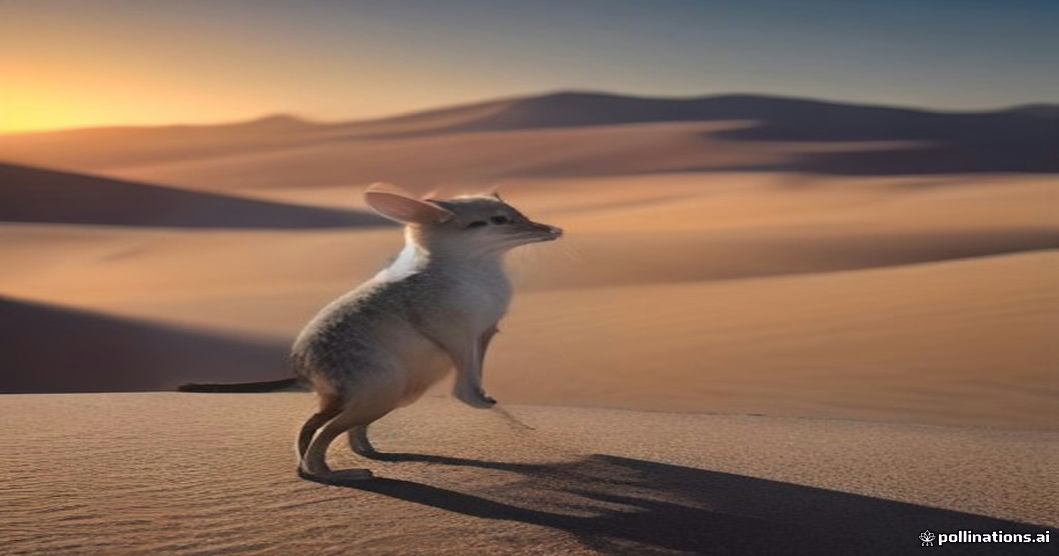
Introduction to the Dipodidae Family
The jerboa, a member of the Dipodidae family, is a small to medium-sized rodent that has perfected the art of survival in some of the world’s harshest environments. Native to steppes, semi-deserts, and arid deserts, these resilient creatures have fascinated naturalists for centuries. The word “jerboa” itself traces back to Turkic roots, such as the Kazakh word for ‘mouse,’ though their physical capabilities far exceed those of your typical house mouse.
A Specialized Anatomy for Survival
From a physiological perspective, the jerboa is a marvel of evolutionary adaptation. They possess a distinctive appearance characterized by a short, stout body and incredibly elongated, powerful hind legs. In many species, these hind limbs are four times longer than the front legs, providing the leverage necessary for high-speed travel. Their front legs are comparatively small and are primarily used for handling food and grooming rather than locomotion.
The Multi-functional Rudder and Signaling System
One of the most striking features of the jerboa is its tail, which ranges from 7 to 30 cm in length—often significantly longer than the animal’s actual body. This tail is not merely an appendage; it is a critical tool for survival. Many species feature a flat black-and-white tuft at the end of the tail, which serves as a dynamic rudder to help the jerboa change direction mid-air during high-speed maneuvers. Additionally, the tuft acts as a visual danger signal to warn other jerboas of nearby predators.
Mastering the Art of Ricocheting Jumps
The way a jerboa moves is truly unique in the rodent world. While some species may occasionally use all four legs for slow-speed foraging, most rely exclusively on their hind legs for movement. When threatened or traveling long distances, jerboas switch to a style of movement known as ‘ricocheting’ jumps. The Great Jerboa, for instance, can clear up to 3 meters in a single bound. These explosive movements are so powerful that a jerboa can cover a distance up to 10 times its body length in one leap, making it one of the most efficient and elusive jumpers in the animal kingdom.
Written by Mohammed Murtaja
Editor-in-Chief & Executive Publisher of ZooPulse. Senior investigative journalist directing evidence-based research, veterinary science verification, and editorial governance.
Related Stories
 Uncategorized
Avian Elegance of the North: The Fascinating Bohemian Waxwing
Introduction to the Bohemian Waxwing As a veterinarian and avian enthusiast, I am always captivated by the remarkable adaptations of northern wildlife. The Bohemian Waxwing, scientifically known as Bombycilla garrulus, is a true masterpiece of the boreal forests of the Northern Hemisphere. Inhabiting sparse coniferous and mixed forests, overgrown mountainous regions, and clearings, this striking […]
 Uncategorized
The Scarlet Secret: Decoding the Biology and Beauty of the Waxwing
The Origin of a Unique Name Among bird enthusiasts and avian experts alike, the waxwing stands out as a masterpiece of nature. These birds are named for the brilliant, droplet-like red tips on their secondary wing feathers, which bear an uncanny resemblance to the crimson sealing wax historically used for correspondence. This striking feature is […]
 Uncategorized
Exploring Yosemite National Park with Your Canine Companion: A Veterinarian’s Guide
Yosemite National Park stands as one of America’s most breathtaking natural wonders, offering majestic granite cliffs, giant sequoias, and cascading waterfalls. For pet parents, sharing this iconic California landscape with a furry best friend can be the adventure of a lifetime. However, exploring national parks with animals requires careful planning to ensure your pet stays […]