Unveiling the Mysteries of Kozlov’s Dwarf Jerboa: A Desert Marvel
Introduction to Kozlov’s Dwarf Jerboa Kozlov’s Dwarf Jerboa (Salpingotus kozlovi) is one of the most fascinating and elusive small mammals on the planet. Inhabiting the harsh landscapes of Southern and Southeastern Mongolia, Inner Mongolia, and Northern China, this extremely rare creature captures the imagination of wildlife enthusiasts and researchers alike. Historically documented by early expeditions […]
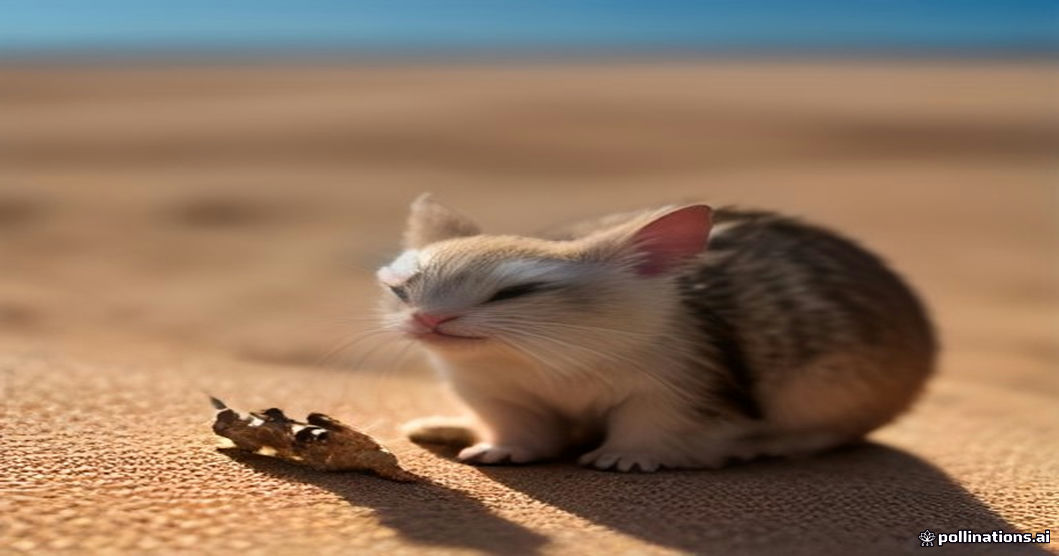
Introduction to Kozlov’s Dwarf Jerboa
Kozlov’s Dwarf Jerboa (Salpingotus kozlovi) is one of the most fascinating and elusive small mammals on the planet. Inhabiting the harsh landscapes of Southern and Southeastern Mongolia, Inner Mongolia, and Northern China, this extremely rare creature captures the imagination of wildlife enthusiasts and researchers alike. Historically documented by early expeditions near the ancient ruins of Khara-Khoto in the Central Gobi, very little was initially known about their wild populations and precise distribution.
Unique Physical Characteristics
Measuring a mere 5 centimeters in length with an impressive 12-centimeter tail, this tiny jumper is a marvel of desert adaptation. One of its most distinctive features is its disproportionately large head compared to its diminutive body. Interestingly, unlike most other three-toed jerboa species, female Kozlov’s Dwarf Jerboas are significantly larger than their male counterparts, presenting a unique subject of study for mammalian biologists and veterinary researchers.
Behavior, Diet, and Habitat
As nocturnal creatures, Kozlov’s Dwarf Jerboas spend the scorching daytime hours safely tucked away in underground burrows to escape the extreme temperatures of the sandy desert. When night falls, they emerge to forage. Their natural diet primarily consists of desert seeds and insects, which provide them with the necessary hydration and nutrients. As winter approaches, these resilient animals enter a state of hibernation to survive the freezing desert conditions.
Conservation and Modern Care
While once known only from sparse museum specimens and historical expedition logs, modern insights—including footage from Chinese sources—reveal that these delicate jumpers are occasionally housed in specialized zoological settings. Understanding their complex nutritional, environmental, and behavioral needs remains paramount for experts dedicated to the preservation and health of rare desert rodents.
Written by Mohammed Murtaja
Editor-in-Chief & Executive Publisher of ZooPulse. Senior investigative journalist directing evidence-based research, veterinary science verification, and editorial governance.
Related Stories
 Uncategorized
Bioluminescent Marvels of the Deep: Unveiling the Rare Planctoteuthis Squid
A Remarkable Deep-Sea Encounter In the relentless pursuit of ocean exploration, scientists from the Schmidt Ocean Institute recently made a breathtaking discovery using an advanced remotely operated vehicle (ROV). Venturing into the pitch-black depths of the ocean, researchers captured footage of a remarkably rare Planctoteuthis squid. This mesmerizing cephalopod instantly captivated marine biologists with its […]
 Uncategorized
Unveiling the Depths: The Fascinating Biology of Japetella diaphana
Introduction to a Deep-Sea Marvel In the vast, mysterious realms of our planet’s oceans, extraordinary creatures continue to baffle and amaze marine biologists. Among these elusive inhabitants is Japetella diaphana, a captivating species of pelagic octopus that thrives far beyond the reach of sunlight. As a veterinary and animal health professional, exploring the unique physiological […]
 Uncategorized
Exploring the Rock of Cashel: A Veterinary and Pet-Friendly Journey Through Ireland’s Ancient History
When travelers think of Ireland’s most iconic historical landmarks, the majestic Rock of Cashel—also famously known as St. Patrick’s Rock, situated in the heart of Cashel, Ireland—immediately comes to mind. Rising high above the Tipperary plains, this medieval architectural wonder offers breathtaking views and a deep dive into ecclesiastical history. But for animal lovers and […]