
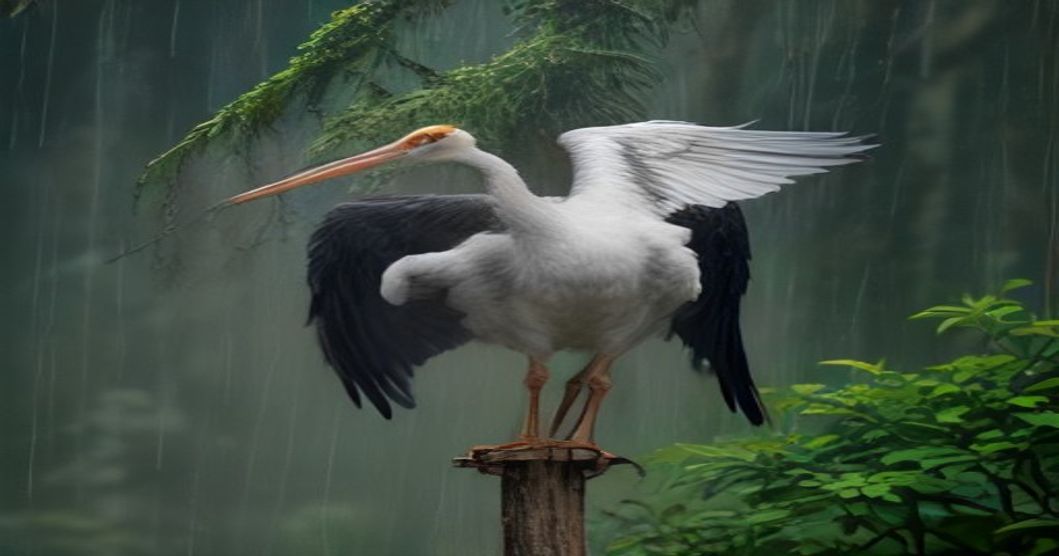
The Return of the Storks
After spending the harsh winter months in warmer southern climates, majestic storks make their triumphant return to their ancestral nesting sites perched high atop trees, chimneys, and utility poles. This instinctive migration marks the beginning of the breeding season, where these dedicated birds work tirelessly to prepare their massive twig nests for the next generation.
Helpless Hatchlings and Tag-Team Parenting
Stork chicks enter the world entirely altricial—meaning they are born blind, featherless, and completely helpless. Because the vulnerable hatchlings cannot regulate their own body temperatures or defend themselves against predators, the parents establish a strict, round-the-clock guardianship. For the first two crucial months of the chicks’ lives, one parent is always present at the nest while the other forages for food. As a rule, the father takes the day shift keeping a watchful eye over the brood, while the mother assumes guard duty through the night.
Shielding Against Scorching Sun and Driving Rain
Nature can be relentlessly unforgiving, and nestlings face immediate danger from sudden downpours, severe winds, and scorching heatwaves. To combat this, adult storks exhibit remarkable sheltering behavior. When the sun beats down relentlessly or cold rain begins to fall, the parent will stand over the nest and spread its broad, powerful wings wide. Acting as a living umbrella and thermal blanket, the adult gently encapsulates the chicks, shielding them from overheating, dehydration, or fatal hypothermia until the weather passes.
A Timeless Symbol of Hope and Fertility
Beyond their impressive parenting instincts and fascinating avian biology, storks have captured human imagination for centuries. Across numerous global cultures and folklore traditions, these striking birds have long been revered as timeless symbols of fertility, new life, and good luck—a fitting reputation for creatures so deeply devoted to nurturing their young.