
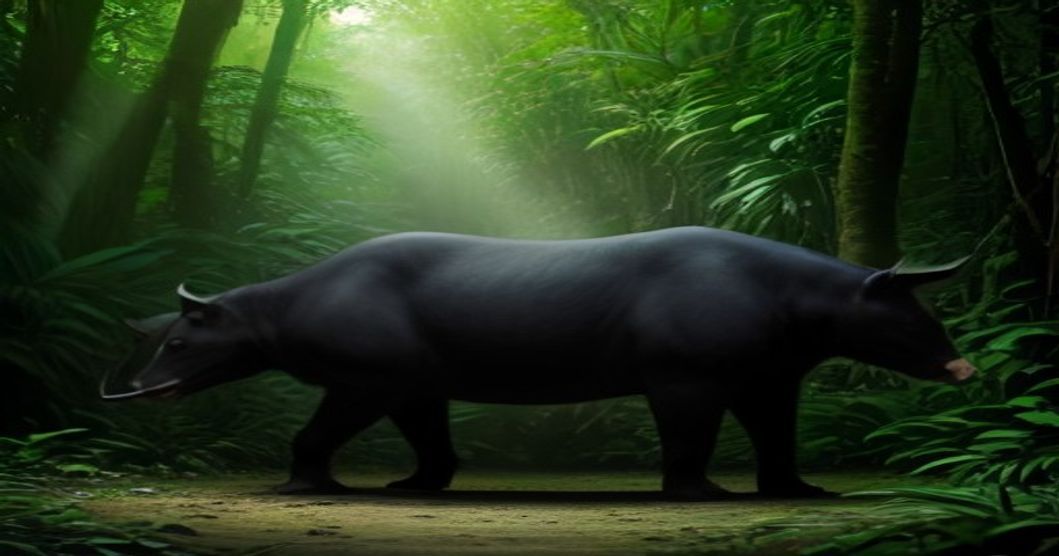
Introduction to an Ancient Survivor
As a veterinarian and wildlife enthusiast, I am always fascinated by species that have stood the test of time. The Malayan Tapir (Tapirus indicus) is a living fossil, an ancient animal that has roamed the Earth for an incredible 30 million years. While their prehistoric ancestors once inhabited the landscapes of Europe, North America, and China, modern tapirs are primarily found in Central and South America—with one remarkable exception.
The Unique Asian Tapir
The Malayan tapir stands apart as the only Asian species of its family. In Thailand, locals affectionately call it “p’somm-sett,” which translates to “mixture.” This poetic name is well-deserved, given their distinct physical characteristics. They feature unusual three-toed hind legs and four-toed front legs, complete with horse-like calluses that hint at their evolutionary history.
Master of Disguise: Anatomy and Appearance
You can easily recognize the Malayan tapir by its striking appearance. Adults boast a large, grayish-white saddle-like marking across their back and sides. Far from just being visually unique, this clever coloration acts as disruptive camouflage, helping the massive animal blend seamlessly into the deep shadows of the tropical rainforest. Meanwhile, newborn tapirs sport a completely different coat—a charming striped and spotted pattern that resembles a forest floor dappled in sunlight. This juvenile camouflage naturally fades away by the time the young tapir reaches 4 to 7 months of age.
Size and Physical Stature
Make no mistake, these are formidable mammals. A mature Malayan tapir typically measures between 1.9 to 2.5 meters in body length, stands 0.8 to 1 meter tall at the shoulder, and generally weighs anywhere from 245 to 330 kilograms. In some rare cases, exceptional individuals can tip the scales at an impressive 500 kilograms.
Behavior and Captivity Adaptability
Beyond their prehistoric charm and unique morphology, tapirs possess surprising intelligence. A fascinating fun fact about these gentle giants is that, much like domestic pigs, they adapt remarkably well to captivity. They are quick learners and have a notable capacity to understand and interact with humans, showcasing a sensitive and intelligent nature that continues to captivate zoologists and animal caretakers worldwide.