
America’s Unique Marsupial
As the only living marsupials of the order Didelphimorphia native to the Americas, opossums hold a truly unique place in wildlife biology. Often misunderstood as mere suburban pests, these remarkable creatures boast ancient evolutionary traits and incredible adaptations that allow them to thrive alongside human settlements.
Reproductive Marvels: Life Without a Traditional Pouch
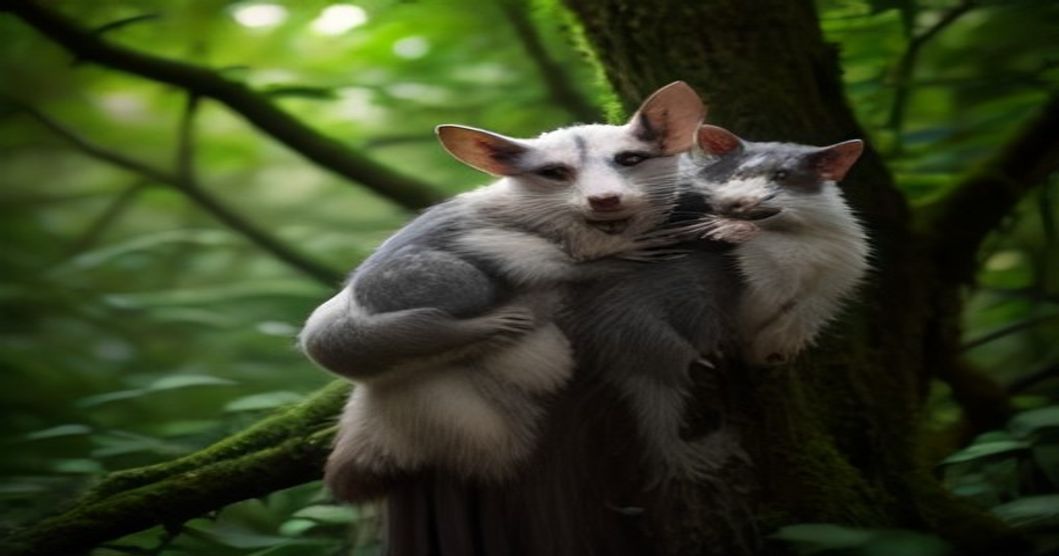
While many associate marsupials with the pouch-bearing mammals of Australia, not all opossums possess a fully enclosed pouch. In several species, evolutionary adaptations have led to a reduced or absent pouch structure. Immediately following birth, tiny, undeveloped neonates must make a perilous journey climbing up their mother’s belly to anchor themselves to her teats. As they mature, these resilient joeys transition from clinging to her abdomen to riding piggyback, creating the iconic image of a mother opossum carrying her entire litter wherever she travels.
Mastering Urban and Arboreal Navigation
Opossums are exceptional acrobats, equally comfortable on the forest floor and high above city streets. Equipped with opposable thumbs on their hind feet and a flexible prehensile tail, they navigate tree branches, utility wires, and fences with remarkable balance. This dexterity allows female opossums to forage efficiently for food while keeping their young securely attached.
Nature’s Living Antidote: Snake Venom Immunity
Perhaps one of the most astonishing biological feats of the opossum is its natural immunity to snake venom. Opossums produce specialized serum proteins that neutralize the lethal toxins of dangerous pit vipers, including rattlesnakes and cottonmouths. Unharmed by these bites, they can even hunt and eat venomous snakes, making them invaluable assets to local pest control and eco-balance.