
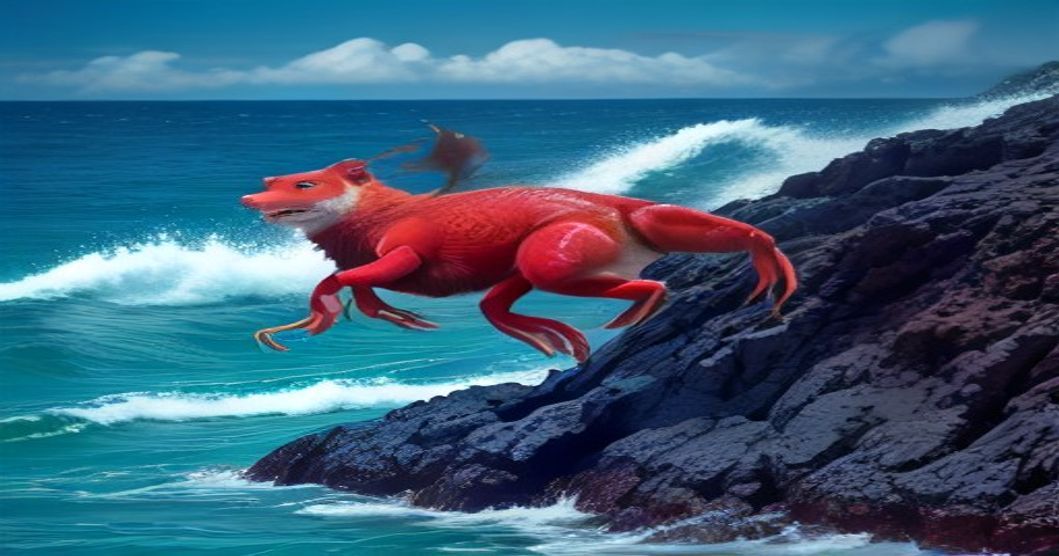
Meet the Galapagos Acrobat: Grapsus grapsus
In the breathtaking and unforgiving landscapes of the Galapagos Islands, nature constantly puts on a thrilling spectacle. Among its most dazzling performers are the Grapsus grapsus crabs, universally known as the Sally Lightfoot crabs. These vibrant crustaceans are famous for their brilliant coloration—featuring striking reds, oranges, yellows, and blues—and their astonishing agility. Leaping effortlessly from rock to rock, these creatures seem to defy gravity, but their acrobatics are driven by a matter of life and death.
Why Do They Avoid the Water?
While they live right at the edge of the ocean, these crabs go to great lengths to avoid plunging into the turbulent waters. For the Sally Lightfoot crab, the crashing waves harbor formidable predators, including marine iguanas, large fish, and cunning hunters from the deep. Furthermore, they are strictly land-dwelling as adults and lack gills adapted for prolonged underwater submersion. Their survival depends entirely on their ability to stay just out of reach of the incoming tide while still foraging on the nutrient-rich algae coating the intertidal rocks.
Unlikely Allies and Terrestrial Threats
Life on the shoreline is never dull, and the Galapagos ecosystem is full of surprising interactions. In a dramatic twist of marine behavior, other shoreline hunters like the Echidna catenata (chain moray eel) and local octopuses occasionally hunt in the shallow margins, sometimes exhibiting coordinated terrestrial ambushes that keep the agile crabs constantly on high alert.
The Legend Behind the Name
So, why are they called “Lightfoot”? Locals in the Caribbean and the Galapagos alike gave them the moniker “Sally Lightfoot” after a famous Caribbean dancer, inspired by their incredible speed, coordination, and rhythm. Capable of running in all directions, scaling near-vertical rock faces, and jumping significant distances, these crabs are true masters of parkour, making them nearly impossible for predators—and curious onlookers—to catch.