
Introduction to the Sultan’s Bird
The Purple Swamphen, scientifically celebrated and often romantically referred to as ‘Sultan’s Bird,’ is one of the most visually arresting avian species found across the Eastern Hemisphere. Spanning regions from Europe and Africa all the way to Australia and New Zealand, this remarkable bird thrives primarily in tropical and subtropical climates.
Habitat and Natural Behavior
In our temperate latitudes, encountering the Purple Swamphen is a rare privilege, earning it a coveted spot in the Red Books and conservation registers of several nations. These secretive birds prefer the tranquil yet dense environs of marsh shores, small lakes, and sheltered sea bays. They spend the vast majority of their lives hidden amongst thick stands of reeds, sedges, and bulrushes.
Diet and Physical Adaptations
As an omnivore with a predominantly vegetarian lifestyle, the Purple Swamphen feeds on various parts of lush aquatic plants. However, its diet is supplemented by snails, small crustaceans, insects, fish eggs, and frogs. A closer look at this magnificent creature reveals its extraordinarily long toes—a brilliant anatomical adaptation that allows it to walk effortlessly over shallow waters, treading lightly upon the leaves and roots of floating aquatic vegetation.
A Striking Appearance
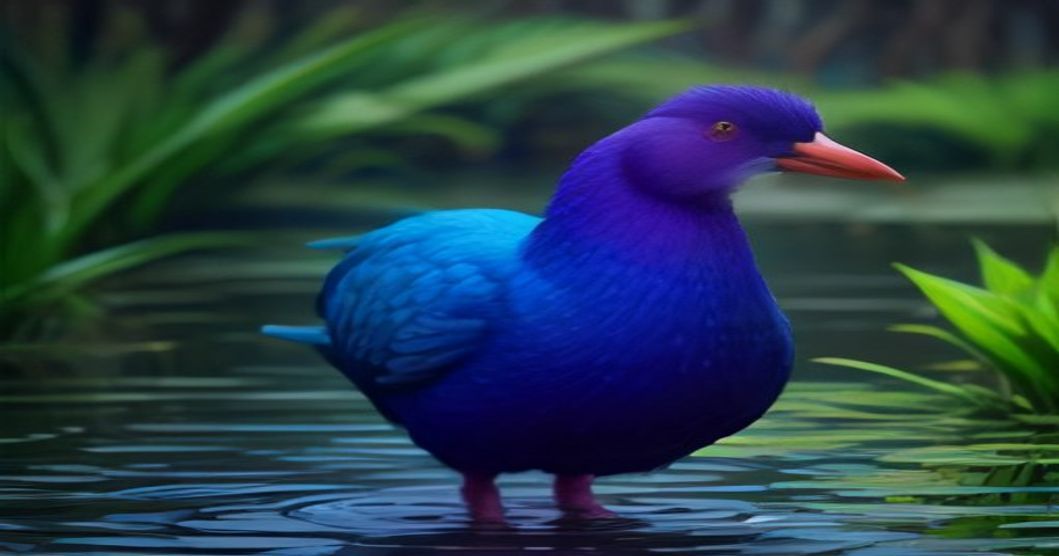
Beyond its ecological fascinating traits, the Sultan’s Bird is widely celebrated for its breathtaking aesthetics. It boasts vibrant, iridescent purple-blue plumage that shimmers in the light, contrasted sharply by a robust red bill and a prominent, distinctive white shield adorning its forehead.