
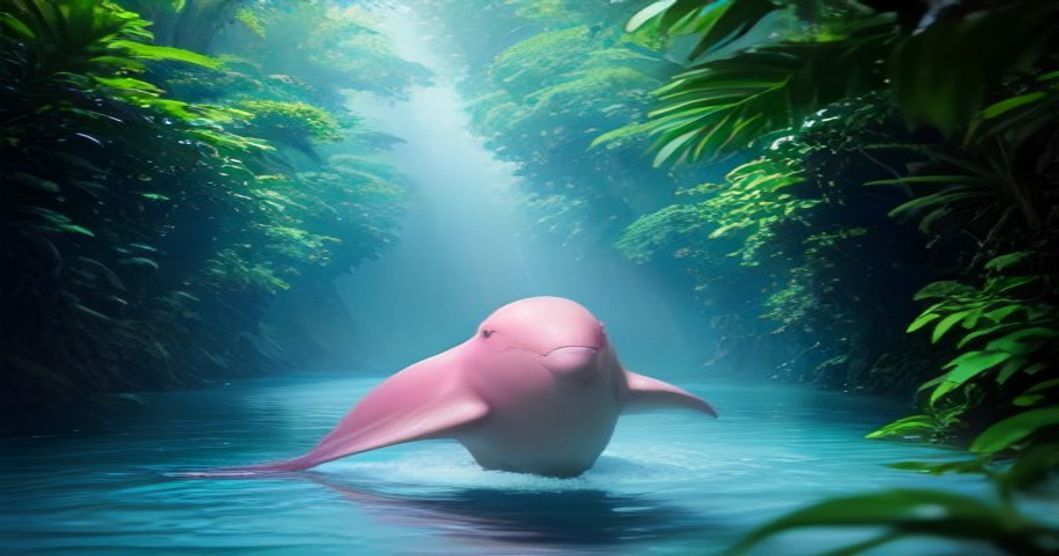
Introduction to the Mythical Boto
In the vast, winding waterways of South America swims one of the freshwater world’s most intriguing cetaceans: the Amazon River Dolphin (Inia geoffrensis), affectionately known in local folklore as the Boto or Iinia. Unlike their marine cousins, river dolphins have adapted to navigate complex, flooded forest environments, making them uniquely adapted apex navigators of tropical river systems.
Why Are Amazon River Dolphins Pink?
One of the most remarkable traits of the Boto is its striking coloration. Calves are born a subtle light gray, but as they age—particularly males—they develop a vivid pink hue. While popular myth often labels them as albino, their coloration is actually a result of blood vessels situated close to the skin surface, environmental temperature regulation, and scar tissue from playful or competitive interactions. As males mature, their intense pink shade becomes a testament to their growth and status.
A Rare Freshwater Marvel
River dolphins are exceptionally rare worldwide, with only four recognized species inhabiting systems such as the Amazon, Ganges, Indus, and Rio de la Plata. Among these rare aquatic mammals, the Amazonian Boto reigns as the absolute largest. Reaching impressive lengths of up to 3 meters (nearly 10 feet) and weighing up to 200 kilograms (440 pounds), their flexible unfused neck vertebrae allow them to maneuver easily around trees in submerged rainforests.
Intriguing Mating Dances and Social Behavior
The behavioral patterns of the Boto are as colorful as their appearance. During the mating season, males display remarkable courtship rituals rarely seen in other marine mammals. They carry objects such as Amazonian vegetation, tree branches, or small rocks in their beaks (rostra), performing energetic spins and surface displays. This striking behavior serves a dual purpose: attracting receptive females and asserting physical dominance against rival males.
Conservation and Veterinary Perspective
From a veterinary and ecological standpoint, the Amazon River Dolphin is a critical bioindicator of river health. Protecting these gentle giants from habitat degradation, pollution, and human encroachment is essential for preserving the rich biodiversity of the Amazon basin.