
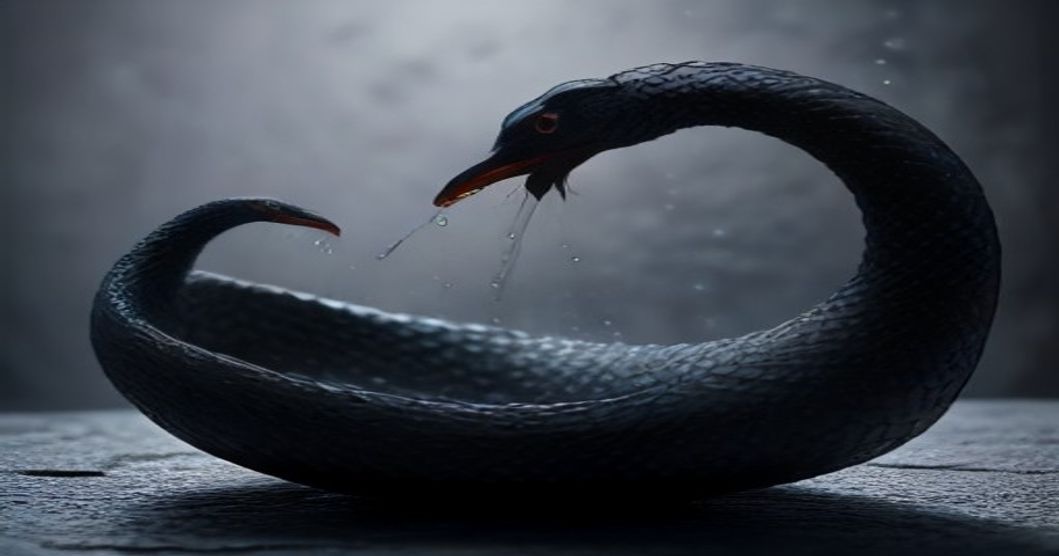
The Feared Defense of the Black-Necked Spitting Cobra
Have you ever paused to wonder how a snake quenches its thirst? While mammals lap up liquid with flexible, muscular tongues, reptiles have evolved strikingly different physiological adaptations. Among the world’s most fascinating venomous species is the black-necked spitting cobra (Naja nigricollis). Widely revered for its formidable self-defense, this African elapid can deliver a potent bite or accurately project venom up to three meters forward, aiming directly for an aggressor’s eyes to induce severe pain and temporary blindness.
The Vulnerability of Ecdysis: Thirst Over Defense
Despite its dangerous reputation, the black-necked spitting cobra experiences moments of profound vulnerability. Prior to shedding its skin—a biological process known as ecdysis—the cobra undergoes intense dehydration and fluid shift. During this phase, fluid builds up beneath the old layer of skin, leaving the snake severely thirsty. Remarkably, the urge to hydrate becomes so overwhelming that the cobra’s primary self-preservation instincts take a back seat. In controlled environments, an experienced keeper can safely offer water to an ecdysial cobra with little risk of defensive strikes, as the reptile prioritizes hydration above all else.
How Snakes Drink: A Unique Anatomical Mechanism
Observer queries often center around the mechanics of serpent drinking. Unlike mammals, a snake cannot lap water with its thin, forked tongue. Instead, its drinking mechanism relies on a sophisticated anatomical design. When the cobra lowers its snout into water, tiny specialized folds lining its mouth absorb the liquid. The snake then utilizes rhythmic muscular contractions along its jaw and throat to push the water downward through the esophagus and into the stomach.
Tasting the Air and Recognizing Human Scents
While the tongue is not involved in drinking, it plays a vital role in sensory perception. Cobras flick their delicate, forked tongues to capture chemical particles suspended in the air. These scent particles are delivered to the vomeronasal organ, or Jacobson’s organ, located in the roof of the mouth, allowing the snake to ‘taste’ its surroundings, track prey, and navigate complex terrain. Through this heightened chemical awareness, captive cobras frequently learn to recognize the familiar scent profile of their primary caretakers, displaying calm behavior in their presence.