
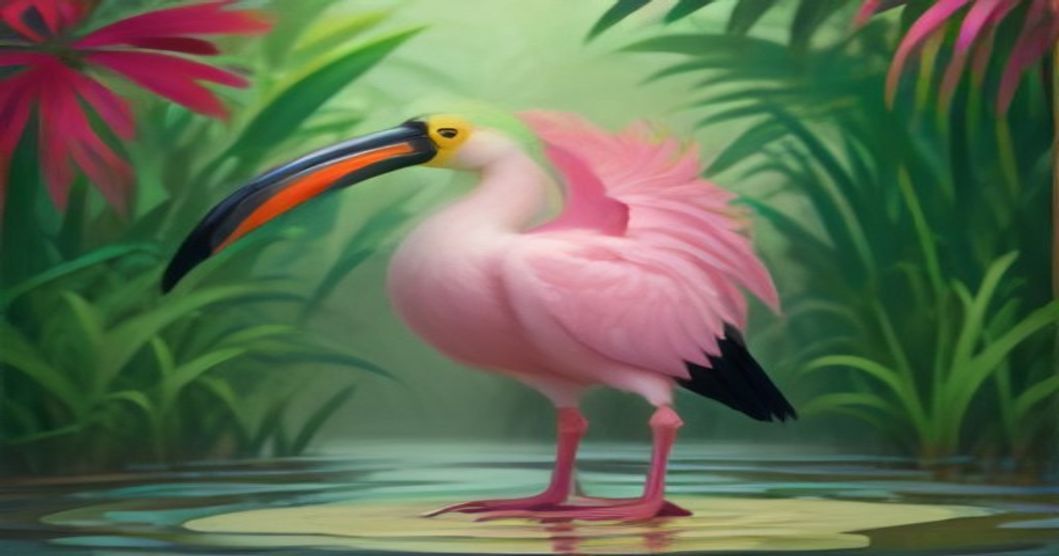
A Peaceful Yet Quirky Coexistence
In the vibrant tapestry of the avian world, few scenes are as captivating as the one where Keel-billed Toucans (Rhamphastos sulfuratus) and Roseate Spoonbills (Ajaia ajaia) share a tranquil pond habitat. Despite their vastly different appearances and behaviors, these species manage to coexist peacefully, even if the ever-graceful spoonbills sometimes carry themselves with an air of superior importance.
The Marvel of the Spoon-Shaped Bill
Have you ever marvelled at the Roseate Spoonbill’s most distinctive feature? That funny, specialized spoon-shaped bill is an evolutionary masterpiece, perfectly engineered for straining mud and murky waters. This unique feeding apparatus allows them to forage efficiently for a diverse diet consisting of small aquatic animals. Their preferred menu includes crustaceans—which are actually responsible for their striking pink and red coloration—alongside insects and their larvae, mollusks, frogs, and small fish.
Conservation History and Migration Threats
As a veterinary and pet care perspective reminds us, understanding wildlife history is crucial for modern conservation. Historically, the breathtaking plumage of Roseate Spoonbills made them prime targets for the fashion industry, where their feathers were highly prized to adorn ladies’ dresses, pushing the species dangerously close to extinction. While current conservation efforts have helped secure their nesting sites, these magnificent birds still face significant anthropogenic threats from hunting, particularly during their winter migrations across South America.
Behavioral Quirks and Roosting Habits
Like many stork-like wading birds, Roseate Spoonbills exhibit distinct flight and resting behaviors. In flight, they extend their heads forward in a long, elegant line. Throughout the day, it is common to observe them dozing while standing steadfastly on one leg, gently tucking their signature bill against their chest or completely under a wing. As night falls, they seek out security by roosting in well-hidden, secluded spots nestled deep within impenetrable swamps, ensuring safety from nocturnal predators.