
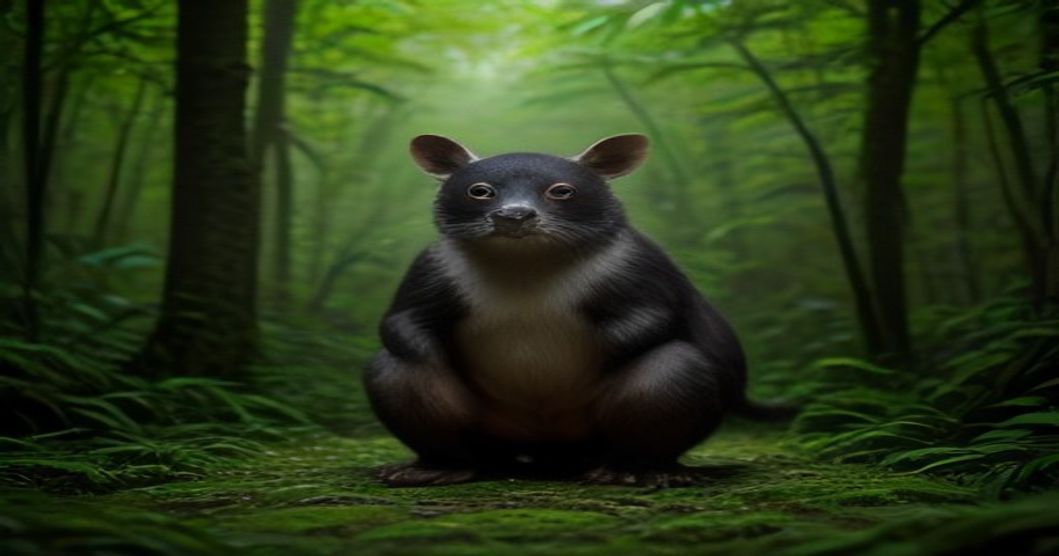
In the lush, mist-shrouded rainforests of South America lives one of the rodent world’s most intriguing yet least understood creatures: the pacarana (Dinomys branickii). Despite its scientific genus name deriving from the Greek deinos mys, meaning ‘terrible mouse,’ this remarkable mammal is anything but terrifying. As a veterinarian and animal specialist, examining species with unique evolutionary traits offers valuable insight into mammalian adaptation, reproductive biology, and wildlife conservation.
Physical Characteristics and Unique Classification
The pacarana holds a prestigious position in the animal kingdom as the world’s fifth-largest rodent, surpassed only by the capybara, beaver, crested porcupine, and mara. Adult pacaranas reach impressive proportions, featuring a body length of 70 to 80 centimeters and a healthy body weight ranging between 10 and 15 kilograms, placing them just slightly smaller than their cousin, the mara. Taxonomically, the species name branickii honors the Polish nobleman and naturalist Count A. Branicki, who aided in bringing this rare mammal to scientific attention.
Habitat and Elusive Nature
Inhabiting the dense, tropical rainforests of the Andes region, the pacarana prefers the lower reaches of rocky mountain slopes and forested valleys. Their vertical habitat range spans elevations from 200 to 2,000 meters above sea level. Due to their preferred terrain and naturally low population densities, pacaranas are exceptionally difficult to observe in the wild, leaving large gaps in our current ecological understanding of their natural behavior and wild lifespan.
Behavioral Demeanor and Temperament
While their size and name might suggest an intimidating presence, pacaranas possess a surprisingly gentle disposition. Observers often describe wild pacaranas as slow-moving and phlegmatic, taking a deliberate, unhurried approach to navigating their environment. In managed care or captivity, they demonstrate remarkably peaceful, calm, and non-aggressive temperaments, showing a high degree of tolerance and curiosity toward human caretakers.
Monogamy and Reproductive Biology
From a reproductive standpoint, pacaranas exhibit fascinating biological traits. They are among the select mammalian species that practice strict monogamy, forming lifelong pair-bonds once they select a partner. Their gestation period is unusually long for a rodent, lasting up to eight months. Females typically give birth to a small litter of just two offspring. Despite the protracted pregnancy, the young are born precocial and remarkably independent—starting to sample solid food within just a few days of birth while maintaining a remarkably low-maintenance development profile.