
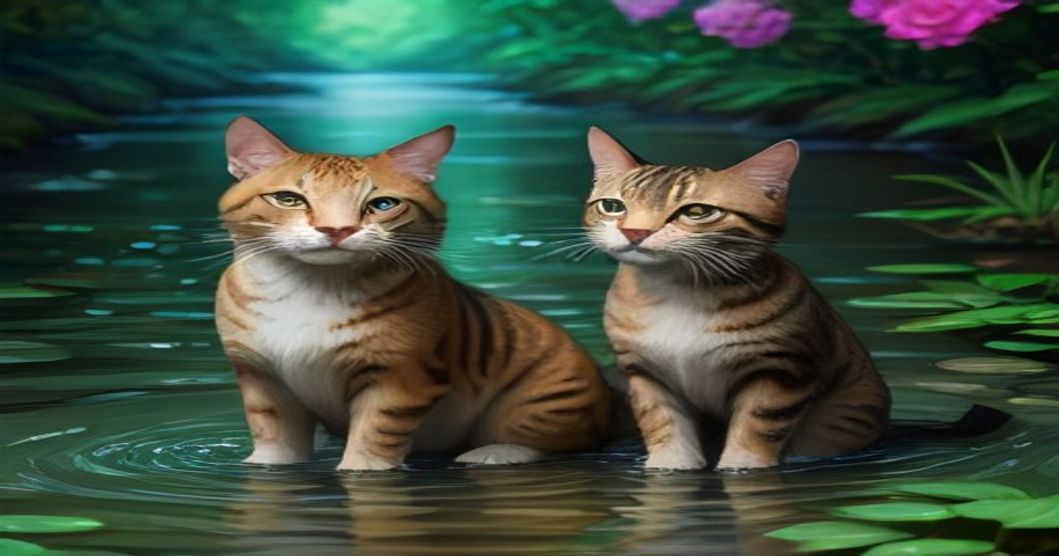
Introduction to Bengal Cats and Their Unique Aquatic Affinity
When most people think of domestic cats, they picture a creature that avoids water at all costs. However, the Bengal cat breaks this stereotype entirely. Renowned for their striking leopard-like coats and energetic personalities, Bengals harbor a fascinating trait that sets them apart from typical felines: an innate love for water and an uncanny ability to swim.
Ancestral Origins: The Asian Leopard Cat Connection
To understand why Bengals are drawn to water, we must look at their genetic lineage. The Bengal breed originated by crossing domestic cats with the Asian Leopard Cat (Prionailurus bengalensis). In the wild, Asian Leopard Cats inhabit environments near rivers, streams, and wetlands. They are skilled fishers and natural swimmers, routinely entering the water to hunt fish, amphibians, and aquatic prey. This ancestral instinct remains strong in today’s domestic Bengals.
Why Bengal Cats Chase Prey in the Water
A Bengal’s high prey drive and hyper-focused intelligence extend seamlessly into aquatic settings. Unlike most domestic breeds that instinctively retract from wet surfaces, a Bengal is captivated by ripples, splashes, and underwater motion. Whether it is fish in a pond, floating toys in a basin, or running bath tap water, Bengals will enthusiastically pounce, wade, and submerge themselves to capture their target.
Physical Adaptations and Swimming Ability
Bengals possess long, athletic, and highly muscular bodies that enable agile movement both on land and in water. Their sleek, pelt-like coat sheds water more efficiently than denser feline coats, making swimming less cumbersome for them. Their natural curiosity combined with physical power allows them to paddle through water with impressive confidence and grace.
Pet Care Tips: Safe Water Enrichment for Bengals
As a pet owner, encouraging your Bengal’s aquatic interests can provide excellent physical exercise and sensory enrichment. You can set up shallow water play basins with floating toys, install pet fountains, or allow supervised play in a bathtub with shallow water. Always ensure water play environments are safe: cover deep outdoor pools when unsupervised, keep water clean, and avoid exposure to harmful chemicals like pool chlorine.