
Introduction to the Galapagos Coastline
The enchanting shores of the Galapagos Islands are home to some of the most fascinating and dramatic wildlife interactions on the planet. Among the rocky volcanic terrain, coastal creatures must constantly adapt to extreme challenges, where a single misstep can mean the difference between life and death.
Meet the Grapsus grapsus: The Sally Lightfoot Crab
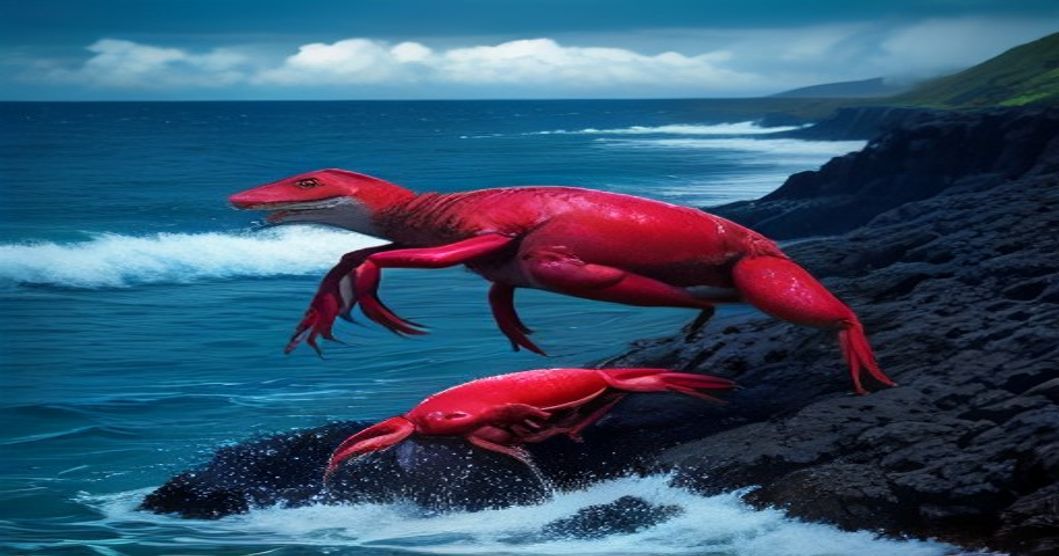
Meet the Grapsus grapsus crabs, brilliantly colored crustaceans that spend their days jumping from rock to rock. Curiously, they are almost desperate to avoid deep water, yet their lives completely depend on the ocean’s splash zone. Known locally and internationally as the Sally Lightfoot crab—named after Caribbean dancers due to their incredible agility and speed—these remarkable animals are true acrobats of the animal kingdom. They are absolute experts at jumping, running, and even climbing near-vertical rock faces, making them notoriously difficult for predators to catch.
An Unusual Coastal Ambush
Life on the rocks is never easy, especially when unexpected alliances form. In a thrilling display of predatory strategy, the Echidna catenata (chain moray eel) and an opportunistic octopus have been observed joining forces in the intertidal zone. These clever hunters will even navigate shallow pools and damp coastal rocks to set up coordinated ambushes, testing the legendary reflexes of the Sally Lightfoot crabs to their absolute limits.
Conclusion
The coastal ecosystem of the Galapagos is a masterclass in survival, showcasing the incredible physical adaptations of species like the Sally Lightfoot crab. Their vibrant colors, lightning-fast reflexes, and death-defying leaps across jagged volcanic rock make them one of the most captivating spectacles in marine biology.