
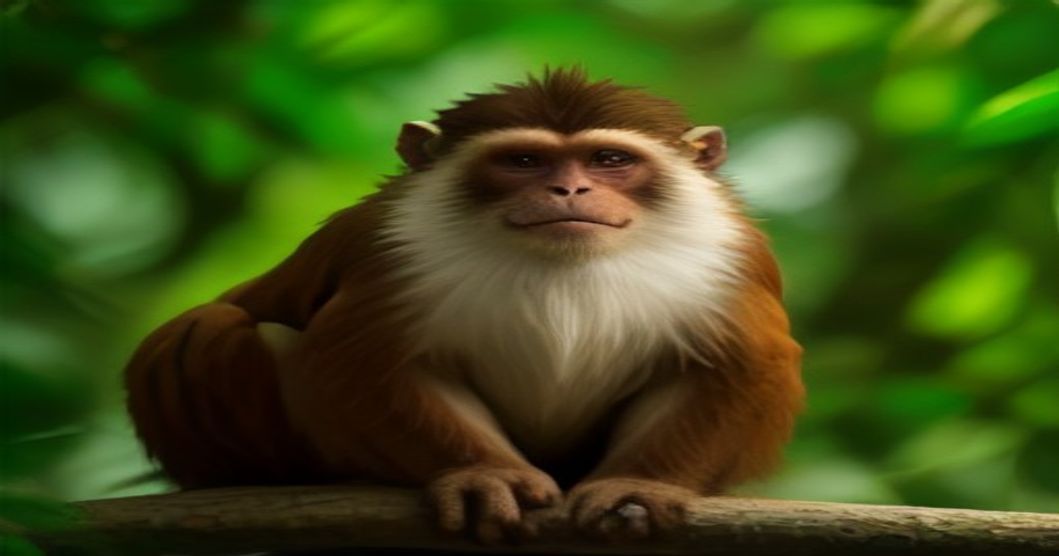
Introduction to De Brazza’s Monkey
De Brazza’s Monkey (Cercopithecus neglectus) is one of the most visually striking and fascinating primate species native to the lush landscapes of Central Africa. Named in honor of the renowned French explorer Pierre de Brazza, this arboreal marvel captivates wildlife enthusiasts and researchers alike with its unique appearance and remarkable survival strategies.
Distinctive Appearance and Natural Camouflage
Did you know that De Brazza’s monkeys are nature’s ultimate masters of disguise? They feature a highly distinctive bright orange forehead stripe paired with striking white facial fur that creates the illusion of a distinguished beard and mustache. These unique physical markings serve a vital evolutionary purpose in the wild.
Habitat and Environmental Adaptation
These adaptable primates thrive in a diverse range of environments throughout Central Africa, including dry mountain forests as well as marshy wetlands abundant with tall grasses. Their coat colors blend seamlessly with the surrounding green vegetation. When faced with a potential threat, De Brazza’s monkeys exhibit a remarkable defensive behavior: they freeze completely in place, rendering themselves nearly invisible to predators.
Social Structure and Sexual Dimorphism
De Brazza’s monkeys typically live in tight-knit, small family groups. These groups are led by a single dominant male who oversees the troop. The species exhibits pronounced sexual dimorphism, with adult males growing to be nearly twice the size of females, a physical trait that underscores their leadership and protective role within the family unit.
Diet and Foraging Behavior
Primarily arboreal creatures, De Brazza’s monkeys spend a significant portion of their lives high in the tree canopy. Their natural diet is rich and varied, consisting primarily of seeds, tender leaves, fresh fruits, and insects. However, they are opportunistic feeders; they will occasionally consume bird eggs, nestling chicks, and small reptiles. While they prefer the safety of the trees, they will readily descend to the forest floor or marsh ground in search of essential food resources.