
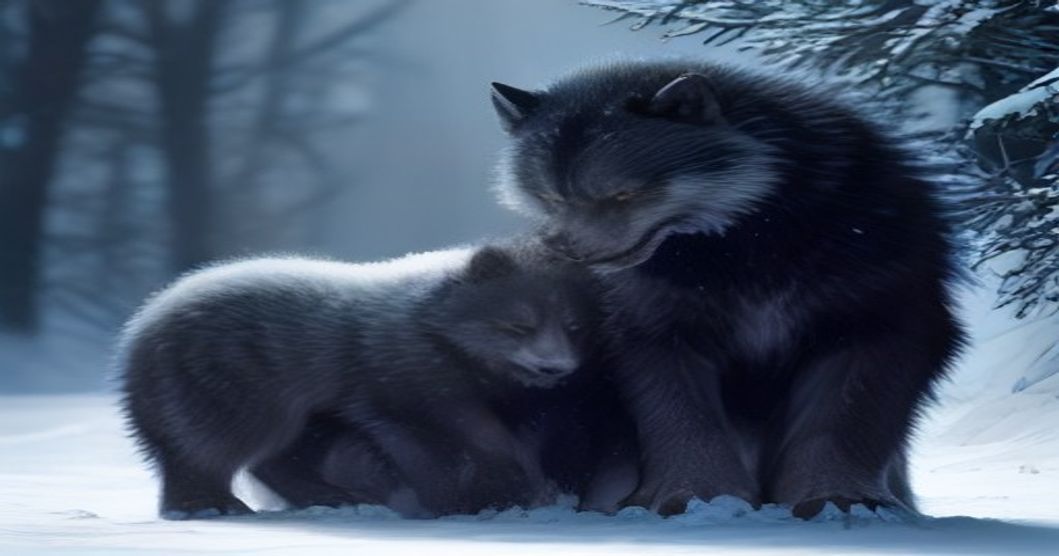
Nature’s Most Fearless Defender
In the unforgiving wilderness, few scenes capture the raw intensity of survival quite like a mother’s protective instinct. Picture a stunning yet brutal moment in the wild: a mother wolverine, shielding her vulnerable cub, locked in a tense standoff. Opposing her is a hungry, battle-worn wolf desperate for a meal. Despite the vast difference in size, the wolf hesitates, and for good reason—wolverines are legendary for a tenacity that defies their compact stature.
Pound-for-Pound Powerhouses
Known scientifically as Gulo gulo, wolverines are the largest terrestrial members of the Mustelidae (weasel) family. As professional veterinarians and wildlife observers often note, these animals possess a disproportionate combination of incredible physical strength, specialized jaws capable of crushing frozen bones, and an unmatched ferocity. This allows them to successfully defend their territory and even take down prey significantly larger than themselves when resources are scarce.
Mastery of Reproduction: Delayed Implantation
Beyond their fierce defensive capabilities, wolverines possess one of the most fascinating reproductive adaptations in the animal kingdom: delayed implantation (or embryonic diapause). This unique biological mechanism allows the fertilized egg to float freely in the uterus for months before actually implanting. By pausing development, the mother ensures that her cubs are born during the spring when environmental conditions and food availability are optimal for survival.
Conclusion
From their cunning reproductive strategies to their fearless defense against apex predators like wolves, wolverines (Gulo gulo) stand as true marvels of evolutionary adaptation. Their ability to thrive in harsh, freezing climates serves as a powerful reminder of nature’s resilience and the boundless dedication of maternal instinct in the wild.