
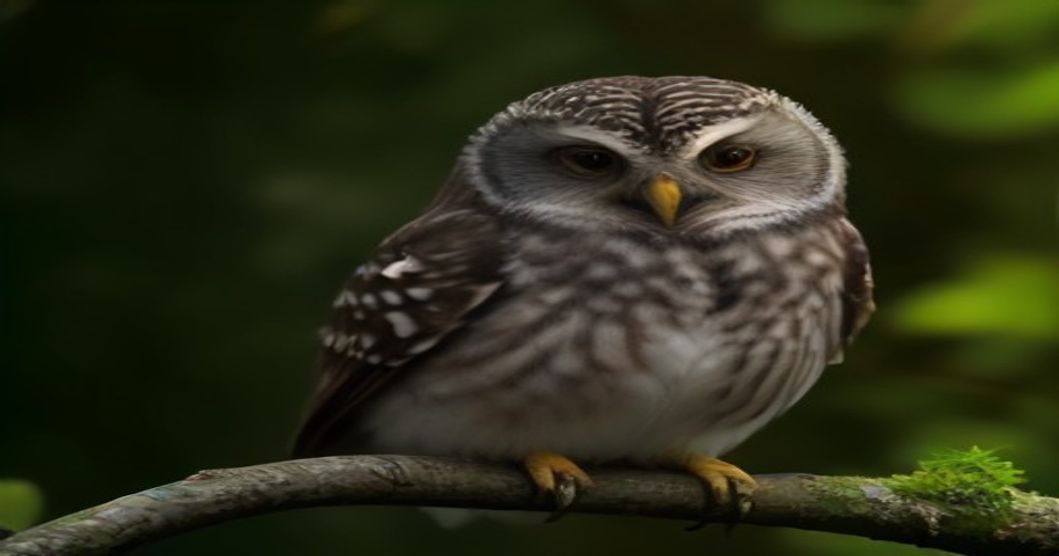
Introduction to Nature’s Pint-Sized Apex Hunter
In the avian world, size is often equated with strength and hunting capability. However, the Eurasian Pygmy Owl (Glaucidium passerinum) defies this expectation entirely. Measuring merely 15 to 19 centimeters in length and weighing barely as much as a tennis ball, this micro-raptor is Europe’s smallest owl species. Despite its diminutive frame, the pygmy owl possesses the predatory prowess, agility, and tactical intelligence of an apex hunter, often successfully tackling prey significantly larger than itself.
The Illusion of the False Eyes: Nature’s Ultimate Deterrent
One of the most fascinating evolutionary adaptations of the pygmy owl is the presence of distinct ‘false eyes’ or occipital face patterns on the nape of its neck. Composed of dark, contrasting plumage bordered by lighter feathers, these decoy markings remarkably mimic real eyes. In wildlife biology, this visual illusion serves multiple critical defensive functions.
Because owls cannot rotate their eyes within their sockets and must turn their heads up to 270 degrees, these false eyes give the illusion of constant 360-degree awareness. To potential predators approaching from behind—such as larger raptors or predatory mammals—the decoy spots signal that their stealth approach has been compromised. Furthermore, small songbirds that often gather to ‘mob’ and harass resting owls are effectively deterred, believing the owl is staring straight at them even when its back is turned.
Pound-for-Pound Prowess: Hunting Strategies and Diet
Unlike many strictly nocturnal owl species, the Eurasian Pygmy Owl is primarily crepuscular and diurnal, actively hunting during dawn, dusk, and overcast daylight hours. Their compact, muscular build and rounded wings grant them exceptional maneuverability through dense boreal and coniferous forests.
Their diet is remarkably diverse, consisting of small mammals such as voles, mice, and shrews, as well as various small-to-medium forest birds like thrushes, finches, and tits. In winter months, when prey is scarce, these industrious birds exhibit caching behavior, storing excess kills in tree hollows or nesting boxes to ensure a reliable food supply through freezing temperatures.
Acoustic Deception: The Art of Vocal Mimicry
Adding to their tactical repertoire, pygmy owls are known for their sophisticated vocal abilities. They frequently mimic the calls of other birds or emit high-pitched, melodic whistles that trigger the curiosity or territorial instincts of local passerines. Once curious songbirds approach to investigate the unfamiliar or deceptive sound, the owl strikes with astonishing speed and precision, capitalizing on the element of surprise.
Avian Health and Ecological Significance
As a specialized forest dweller, the Eurasian Pygmy Owl serves as a vital bioindicator of healthy, mature forest ecosystems with abundant deadwood and old-growth structures. Tree cavities left by woodpeckers are essential for their nesting and food storage needs. Conserving their habitats not only preserves this extraordinary raptor but also maintains the natural balance of forest rodent and passerine populations across their native range.