
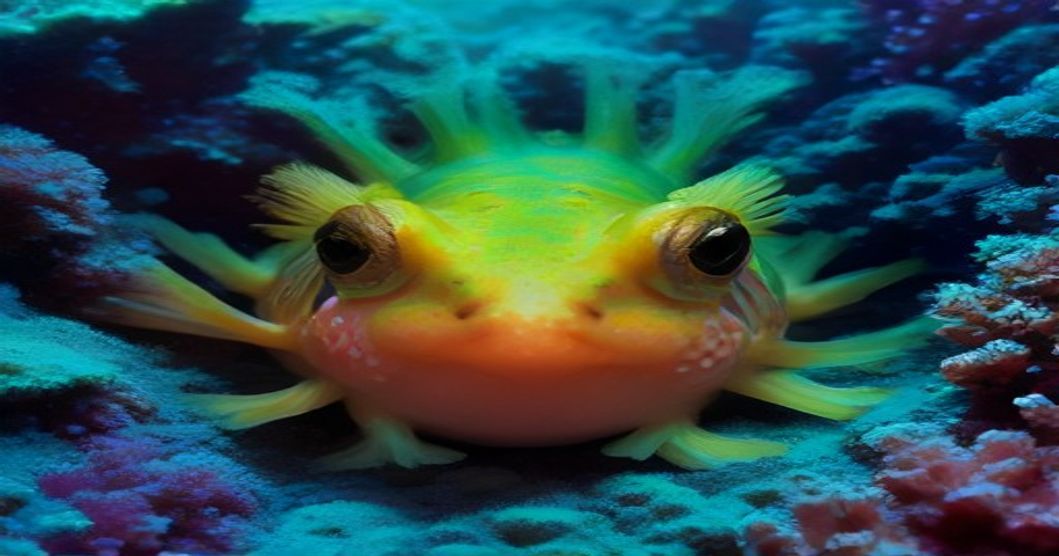
Introduction to a Master of Camouflage
In the diverse ecosystems of tropical coral reefs, few creatures display such specialized evolutionary adaptations as the painted frogfish, scientifically known as Antennarius pictus. While adult specimens are renowned for their remarkable ability to blend seamlessly into their surroundings, juvenile anglerfish possess these exact same predatory and survival mechanisms at a fraction of the size. Despite measuring merely a few centimeters, these young marine organisms exhibit sophisticated ambush tactics that rival any apex predator in the marine world.
Cryptic Adaptations and Disguise
The juvenile Antennarius pictus is an exceptional example of crypsis. From early development, its dermal structure, irregular skin texture, and variable pigmentation mimic surrounding sponges, macroalgae, and substrate. This biological camouflage serves a dual purpose: it shields vulnerable juveniles from larger reef predators while allowing them to remain completely undetected by potential prey. Rather than swimming actively, they rely on modified pectoral fins that function almost like terrestrial limbs, allowing them to crawl discreetly across the seabed.
The Biomechanics of Ultra-Rapid Suction Feeding
The predatory strike of Antennarius pictus is one of the fastest recorded feeding mechanisms in the animal kingdom. When a small crustacean or fish approaches, the young anglerfish expands its oral cavity within fractions of a millisecond. This sudden expansion creates an intense negative pressure zone, effectively generating a localized vacuum vortex. Water rushes into the wide-open mouth, dragging the unsuspecting prey along with the hydrodynamic current before it can initiate an escape reflex.
Dual Function: Predation and Respiratory Efficiency
This rapid buccopharyngeal expansion is not solely an offensive weapon; it is intimately linked to the fish’s respiratory physiology. The high-volume water influx created during a strike or routine buccal pumping passes directly over the branchial chambers, facilitating rapid oxygen exchange across the gills. The water is then expelled through specialized, restricted gill openings located behind the pectoral fins. This efficient system ensures optimal oxygenation even when the fish remains stationary for hours at a time.
Aquatic Care and Ecological Significance
For marine aquarists and biologists observing these specimens in specialized biotope systems, the young painted frogfish requires strict environmental parameters. Due to their sedentary ambush behavior and unique digestive metabolism, overfeeding or improper water flow can lead to gastrointestinal impaction and systemic stress. Maintaining pristine water quality with stable salinity, low nitrates, and peaceful, appropriately sized tank mates is vital for the health and longevity of these delicate yet formidable micro-predators.