
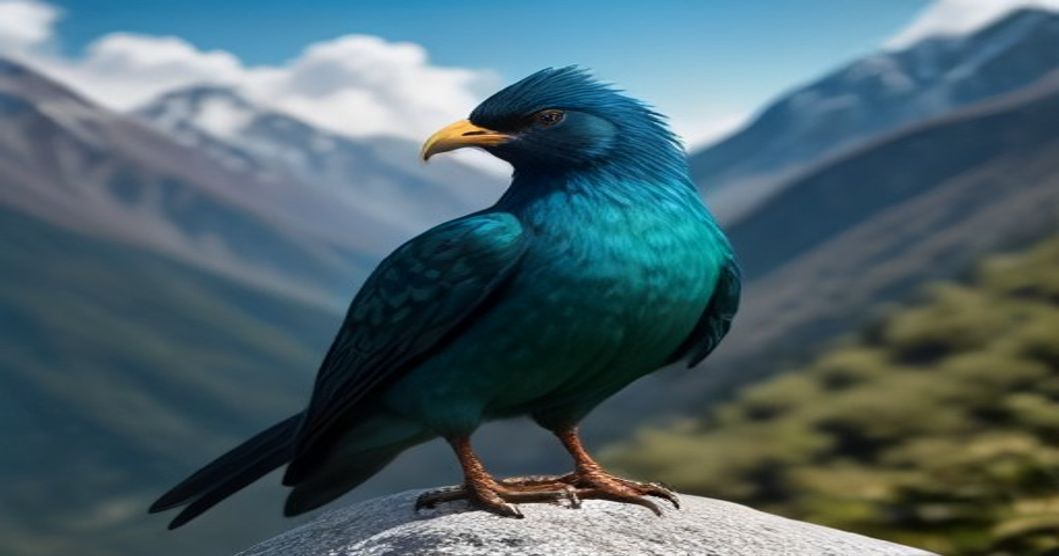
Introduction to the Himalayan Monal
The Himalayan Monal (Lophophorus impejanus) is a truly magnificent avian species belonging to the pheasant family (Phasianidae). Renowned not only as a marvel of natural engineering but also holding the prestigious title of the national symbol of Nepal, this bird captures the imagination of ornithologists, birdwatchers, and animal lovers alike.
Stunning Sexual Dimorphism and Plumage
This species exhibits striking sexual dimorphism. The male Himalayan Monal is a living rainbow, boasting a plumage that shimmers with iridescent green, rich red, deep purple, and vibrant blue hues. Complementing this breathtaking coloration are a striking white rump, a warm copper-colored tail with a contrasting black underside, and an elegant golden crest atop its head. In stark contrast, the female sports a more camouflaged yet equally intricate brown plumage adorned with light stripes and brown-to-black cross-lines, alongside a delicate white throat. Notably, both sexes share a distinct and captivating blue eye-ring.
Size and Physical Characteristics
In terms of dimensions, adult males can reach an impressive length of up to 70 centimeters, with a substantial 23 centimeters dedicated to their magnificent tail. Females are slightly smaller in stature and uniquely lack the prominent golden crest found on their male counterparts.
The Dramatic Mating Dance and Structural Coloration
One of the most fascinating aspects of the Himalayan Monal is its behavioral repertoire, particularly its dramatic mating dances. During the breeding season, males perform elaborate visual displays designed to captivate females. These mesmerizing performances include wing spreading, dramatic tail fanning, and showcasing their vibrant color spectrum. Interestingly, the stunning, jewel-like colors of the male are not merely the result of pigments, but rather a product of structural coloration. Microscopic structures in their feathers refract and reflect light in unique ways, creating an unforgettable, iridescent visual effect in the alpine light.